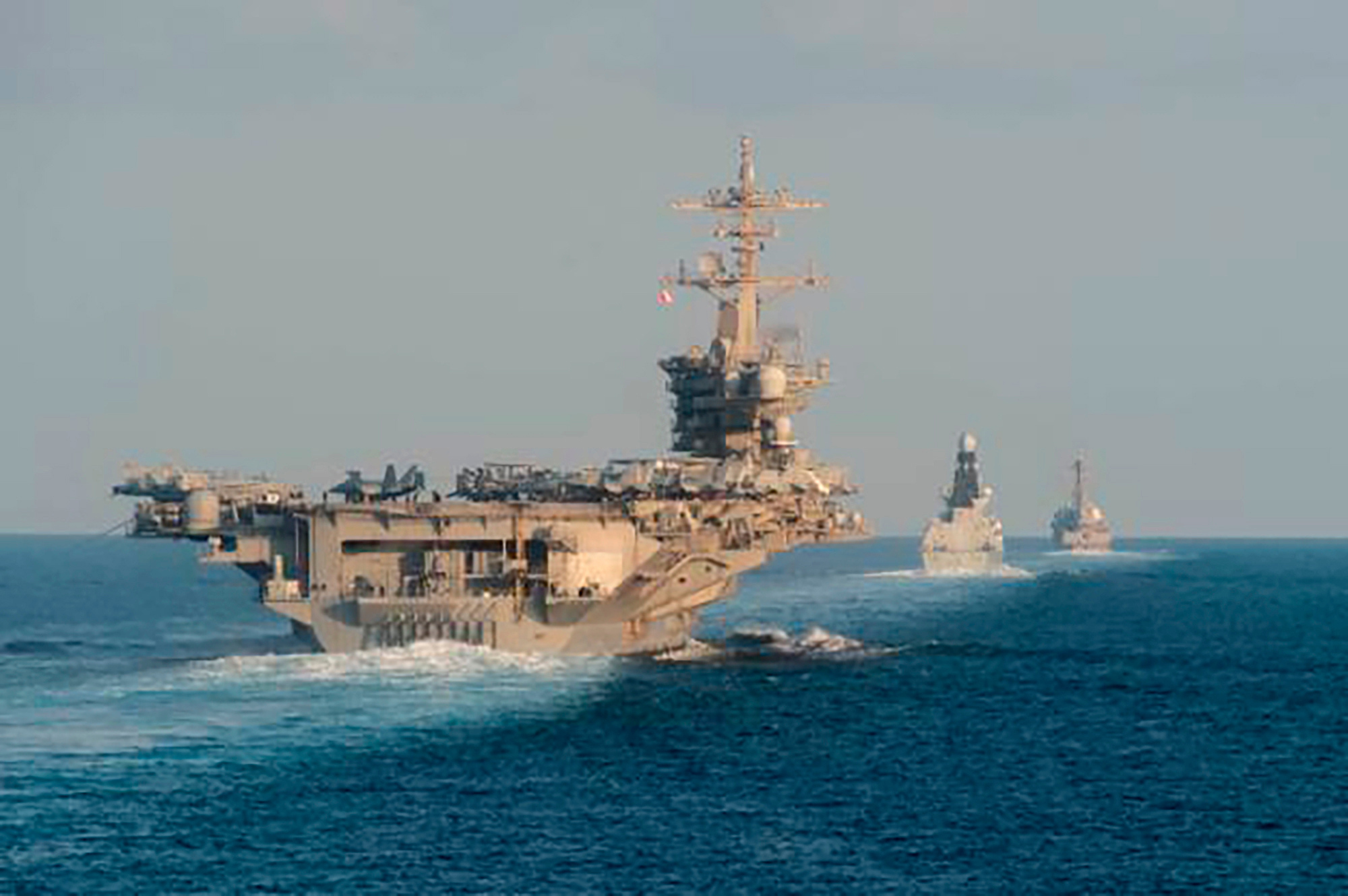
The zero-sum success of a naval blockade is measured not by the tonnage of cargo seized, but by the complete suppression of commercial intent. Recent reports from United States naval commanders indicating that no merchant vessels have successfully breached the exclusion zones around specific Iranian ports represent more than a tactical update; they signal the transition of maritime interdiction from a physical skirmish to a totalizing psychological and technological quarantine. This operational reality is governed by a tripartite framework of detection, deterrence, and de-escalation, where the mere presence of advanced sensor suites and kinetic readiness prevents the necessity of actual engagement.
The Architecture of Total Interdiction
The current naval blockade functions as a multi-layered filter, leveraging a "Zone of Non-Permittance" that extends far beyond the visual horizon. Standard maritime security usually relies on reactive intercept protocols, but the modern blockade of Iranian ports utilizes a proactive denial structure. This architecture is built on three fundamental pillars: Meanwhile, you can read other events here: The Iron Walls of Tehran and the Long Shadow of the 1979 Ghosts.
- Sensor Saturation and Persistent ISR: Intelligence, Surveillance, and Reconnaissance (ISR) assets, ranging from high-altitude long-endurance (HALE) drones to subsurface acoustic arrays, create a continuous data stream. Every vessel within a 500-mile radius is categorized by its Automatic Identification System (AIS) signature, hull displacement, and historical trade patterns.
- The Friction of Uncertainty: By maintaining a high-readiness posture, naval commanders increase the "risk premium" for commercial shipping. Insurance providers (such as Lloyd’s of London) and maritime underwriters are the silent enforcers of this blockade. When the probability of vessel seizure or damage reaches a specific threshold, the cost of coverage exceeds the potential profit of the cargo, effectively grounding the fleet through economic gravity.
- Kinetic Escalation Ladders: The blockade is not a static wall but a series of graduated responses. The progression begins with electronic hailing, moves to non-kinetic electronic warfare (signal jamming), and terminates in physical boarding or kinetic strikes. The success of the current operation is evidenced by the fact that no vessel has reached the second rung of this ladder in recent months.
Quantifying the Deterrence Gradient
The absence of traffic is the result of a calculated Deterrence Gradient. Every ship captain and shipping firm performs a subconscious cost-benefit analysis before entering contested waters. The formula for this decision-making process is:
$$P(Success) \times Value(Cargo) < P(Loss) \times (Value(Vessel) + Legal Liability)$$ To explore the complete picture, we recommend the excellent analysis by NBC News.
As the United States and its allies increase the density of their naval presence, $P(Loss)$ approaches 1.0. When the probability of interception is absolute, the rational actor ceases to attempt the transit. This explains why commanders report zero breaches; the "gate" is not just closed, it is perceived as impenetrable.
The Breakdown of Information Asymmetry
In historical blockades, smugglers relied on information asymmetry—knowing where the blockading ships were not. In the contemporary environment, the US Navy’s Cooperative Engagement Capability (CEC) allows multiple platforms to share a "Single Integrated Air Picture." If a satellite detects a vessel departing a dry dock, that data is instantly transmitted to the nearest destroyer and unmanned surface vehicle (USV). The "blind spots" that once allowed for blockade-running have been digitally erased.
The Economic Atrophy of Port Infrastructure
The primary goal of a naval blockade is not the capture of ships, but the systematic degradation of the target nation’s domestic logistics. When ports like Bandar Abbas or Chabahar see zero arrivals, the internal supply chain of Iran faces immediate "inflow shock."
- Inventory Depletion: Essential industrial components and refined materials have a finite shelf life or usage rate. Without replenishment, manufacturing output drops exponentially.
- Infrastructure Decay: Ports are living systems. Without the revenue generated by docking fees and cargo handling, the capital required for dredging, crane maintenance, and labor retention vanishes.
- The Pivot to Land-Based Inefficiency: To bypass the sea, the target must rely on rail and road networks. These are significantly lower in volume and higher in cost. A single Panamax vessel can carry the equivalent of 10,000 shipping containers; replacing one ship requires 10,000 truck trips. The fuel, maintenance, and time required for this transition create a massive inflationary spiral within the Iranian economy.
Operational Limitations and the Fragility of Silence
While the current reports suggest a flawless execution of the blockade, the system contains inherent vulnerabilities. Total interdiction is a high-energy state that requires constant resource expenditure.
The first limitation is Platform Fatigue. Maintaining a 24/7 presence in the Persian Gulf and the Gulf of Oman puts immense strain on the hulls and engines of the Arleigh Burke-class destroyers and Littoral Combat Ships. The longer the blockade lasts, the higher the risk of a mechanical failure that creates a temporary "window of opportunity."
The second limitation is the Asymmetric Counter-Response. Iran’s strategy often shifts from conventional blockade-running to "swarm-based" harassment or the use of loitering munitions (suicide drones). By forcing the US Navy to expend expensive interceptors (like the SM-2 or SM-6 missiles) against low-cost drones, Iran attempts to win an "attrition of value" even if they cannot win an "attrition of territory."
The Role of Autonomous Interdiction
A significant shift in this blockade’s effectiveness is the deployment of Task Force 59, which integrates AI and unmanned systems into everyday operations. These "uncrewed eyes" allow the Navy to expand its surveillance net without risking human life or the massive fuel costs of a carrier strike group.
Unmanned Surface Vehicles (USVs) act as persistent pickets. They do not need to rest, and they can be deployed in numbers that would be cost-prohibitive for manned vessels. Their presence ensures that the "No-Pass" zone is enforced by a mesh network of sensors rather than a few isolated ships. This technological layering is what has turned a leaky blockade of the past into the airtight vacuum described by current commanders.
Geopolitical Implications of the Null-Result
The report of "no ships passing" is a signal to three distinct audiences. To the Iranian government, it is a demonstration of absolute maritime superiority. To global markets, it is a confirmation of the US Navy's role as the guarantor of—or the gatekeeper to—energy security. To potential blockade-runners, it is a warning of the futility of effort.
However, the "Zero-Breach" status is a double-edged sword. It forces the adversary to innovate. If the sea is truly closed, the conflict will inevitably migrate to other domains: cyber-attacks on maritime logistics software, or kinetic strikes on the port infrastructure of neighboring allies.
The blockade has achieved its primary objective of isolating the ports. The strategic focus must now shift to the "Inland Pressure Point." As the maritime routes remain dormant, the internal pressures within Iran will build. The success of the naval operation has essentially transferred the theater of conflict from the water to the domestic economy and the border crossings.
The final strategic play is the maintenance of this high-pressure stasis. The US must continue to rotate autonomous assets to prevent platform fatigue while simultaneously monitoring the land-based "leakage" through neighboring territories. The blockade is not an end state; it is a catalyst for the eventual structural failure of the target's logistical autonomy.