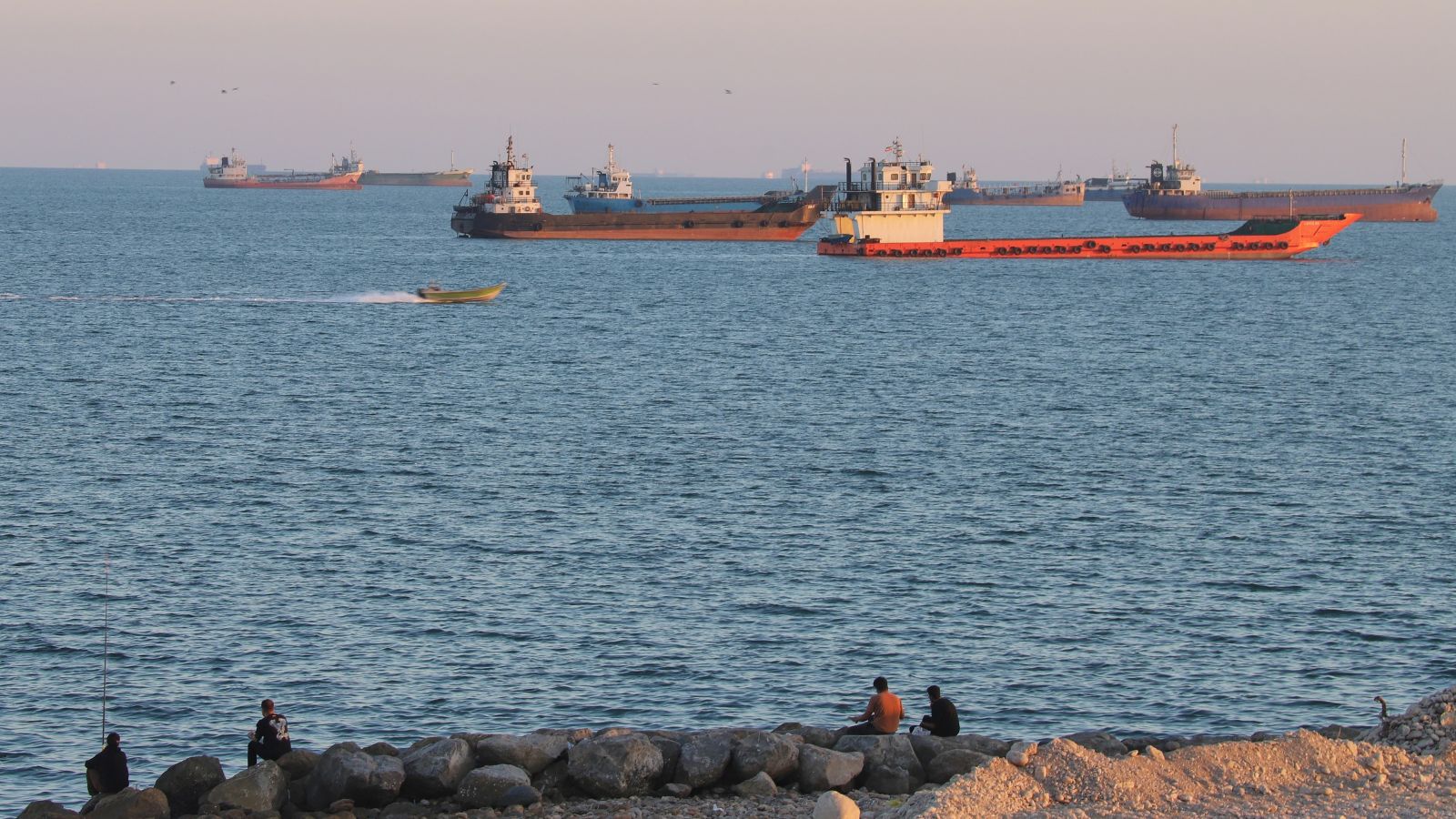
Two tankers catch fire in the Strait of Hormuz, and financial newsrooms immediately dust off the same tired playbook. Panic headlines. Oil spike predictions. Armchair admirals drawing red arrows across a twenty-one-mile-wide chokepoint on cable television.
It is lazy journalism, and it misses the actual story entirely.
While retail traders frantically buy out-of-the-money crude calls and pundits scream about imminent global supply collapse, the people who actually move physical barrels and underwrite maritime risk are doing something completely different. They are repricing paper. A burning hull in the Persian Gulf does not automatically mean an empty gas pump in Ohio. More often than not, it means a massive transfer of wealth from panicked speculators to maritime underwriters, freight brokers, and sovereign producers who know how to weaponize volatility without ever closing the waterway.
The Chokepoint Myth That Keeps Pundits Employed
Every single time an incident occurs near Bandar Abbas or Fujairah, the lazy consensus defaults to one binary scenario: either the Strait of Hormuz stays open, or Iran shuts it down and oil hits $150 a barrel by Tuesday.
That binary is fiction.
Physically blocking the Strait of Hormuz is an engineering and military nightmare that hurts Tehran far more than it hurts Washington. Iran relies on that exact stretch of water for its own critical imports and whatever crude it manages to move through shadow fleets. Closing the strait is suicide. Disrupting it just enough to spike war-risk premiums, however, is a masterclass in asymmetric economics.
I have watched commodity desks blow millions of dollars chasing geopolitical headlines in the Middle East over the past two decades. Every time a limpet mine goes off or a drone clips a superstructure, the amateur money buys front-month Brent futures assuming millions of barrels per day are about to vanish from the market.
They rarely vanish.
Look at the physical mechanics of modern maritime transport. Even when two tankers take damage and catch fire, the global fleet does not grind to a halt. Ships do not turn around and go home. Instead, the London insurance market—specifically the Joint War Committee at Lloyd’s—updates its Listed Areas, and war-risk premiums jump from fractions of a percent of a vessel's hull value to multiple percentage points in a matter of hours.
On a $100 million Very Large Crude Carrier (VLCC), an additional war-risk premium of 0.5% to 1% for a single seven-day transit adds $500,000 to $1,000,000 to the voyage cost overnight. Multiply that across dozens of vessels transiting the Gulf daily, and you start to see where the real money is moving. The physical oil keeps flowing, just with a hefty surcharge attached.
What the Maritime Insurance Cartel Won't Tell You
If you want to understand what is actually happening in the Strait of Hormuz, stop watching defense analysts and start reading charterparty agreements.
When a tanker catches fire, the immediate operational question is not about geopolitics; it is about General Average and Force Majeure.
In maritime law, General Average is an ancient principle requiring all parties in a sea venture—shipowners and cargo owners alike—to proportionally share any losses resulting from a voluntary sacrifice of part of the ship or cargo to save the whole in an emergency. When a vessel burns after a mine strike, salvage tugs mobilize, firefighting foam gets deployed, and lawyers immediately lock down the cargo claims.
Here is the part the mainstream news completely ignores: underwriters love controlled chaos.
An all-out regional war destroys balance sheets because catastrophic losses wipe out reinsurance treaties. A low-grade, simmering crisis with occasional mine incidents and burning hulls? That is pure rocket fuel for underwriting profits. It justifies massive rate hikes across the entire global shipping fleet—not just for vessels entering the Persian Gulf, but for tankers transiting the Red Sea, the Gulf of Oman, and even routes nowhere near the Middle East, simply because global hull capacity gets repriced upward.
Shipowners pass those costs directly to charterers. Charterers bake them into the delivered price of crude. Refiners pass them to distributors. You pay an extra ten cents at the pump, and the underwriters pocket the spread without a single major pipeline ever being severed.
The Spare Capacity Illusion and Pipeline Reality
Another glaring hole in the mainstream coverage of Hormuz incidents is the assumption that the world has zero workarounds.
Yes, roughly a fifth of the world's petroleum liquids pass through the Strait of Hormuz. That statistic gets repeated like a religious mantra in every single breaking news update. What gets left out of the copy is the infrastructure built specifically over the last fifteen years to bypass that exact bottleneck.
Saudi Arabia operates the East-West Pipeline (Petroline), capable of moving roughly 5 million barrels per day from the Eastern Province directly to the Red Sea port of Yanbu, completely avoiding the Strait of Hormuz. The United Arab Emirates operates the Habshan-Fujairah pipeline, which carries up to 1.5 million barrels per day straight to the Gulf of Oman, outside the chokepoint.
Do these pipelines replace 100% of Hormuz transit? No. If the strait were completely sealed with sea mines for six months, there would still be a severe supply deficit.
That is the entire point. The strait is never completely sealed. When two tankers catch fire, the market behaves as if 20 million barrels per day just evaporated, ignoring the fact that pipeline bypasses can absorb significant shock and that the remaining traffic simply pays higher insurance rates to keep moving under naval escort.
Why Asking "Will Oil Hit $120?" Is the Wrong Question
Search trends after any Gulf maritime incident always spike around the exact same queries: How high will gas prices go? Is World War III starting? Should I buy oil stocks right now?
Every one of those questions is rooted in a flawed premise. They assume the market reacts linearly to physical danger. It does not. The energy market is a forward-looking discounting mechanism dominated by algorithmic trading and sovereign positioning.
Let us break down what actually happens in the forty-eight hours following an incident like this:
- The Algorithm Spike: Natural language processing algorithms scan wire headlines for keywords like tanker, fire, mine, and Strait of Hormuz. Within milliseconds, automated funds buy crude futures, pushing prices up 3% to 5% before a single human trader has even read the location coordinates.
- The Physical Reality Check: Physical crude traders—the people at Vitol, Trafigura, and Mercuria—call their shipping desks in Dubai and Fujairah. They check AIS transponder data. They see that while two ships are burning, forty other VLCCs are still steaming through the traffic separation scheme at twelve knots.
- The Fade: Once the physical market confirms that loading terminals at Ras Tanura and Mina Al Ahmadi are operating normally, the physical traders sell into the algorithmic rally. The price spike evaporates, leaving retail traders holding the bag at the top of the wick.
Imagine a scenario where a major sovereign producer actually wants higher oil prices to balance its domestic budget, yet OPEC+ production quotas make an outright supply cut politically impossible. A tense geopolitical backdrop in the Strait of Hormuz achieves the exact same price floor without forcing anyone to forfeit market share. Nobody has to conspire in a dark room for aligned incentives to produce the exact same outcome.
How to Actually Navigate Maritime Geopolitical Shocks
If you manage supply chains, trade commodities, or simply try to protect your portfolio from headline-driven stupidity, stop treating breaking news alerts from the Persian Gulf as actionable intelligence.
1. Watch Freight Rates, Not Crude Futures
Crude futures are noisy and manipulated by paper speculators. If you want to know if a maritime incident is genuinely disrupting global supply, look at the Baltic Dirty Tanker Index (BDTI) and Time Charter Equivalent (TCE) rates for Middle East Gulf to China routes (TD3C). If VLCC day rates jump from $35,000 to $90,000 and stay there for a week, the disruption is real. If crude spikes 4% while tanker rates barely budge, the rally is fake.
2. Track AIS Dark Activity, Not Press Releases
Government statements from Tehran, Washington, or London during a maritime incident are tools of information warfare, not objective reporting. Ship transponders tell the truth. When vessels legitimately fear minefields or kinetic strikes, they drop anchor outside the Gulf of Oman or switch off their Automatic Identification System (AIS) transponders en masse. When ships keep their transponders on and maintain normal transit speeds past a burning wreck, the market has already priced in the risk.
3. Fade the Initial Headline Gap
History shows that unless a maritime incident physically destroys critical onshore loading infrastructure—like the 2019 Abqaiq-Khurais processing facility attacks in Saudi Arabia—purely naval incidents produce short-lived price spikes. Ships are mobile, replaceable assets. Refineries and stabilization towers are fixed, irreplaceable bottlenecks. Know the difference before risking capital.
The Uncomfortable Truth About Risk
There is a massive caveat to fading geopolitical panic, and ignoring it will eventually bankrupt you: tail risk is real.
The strategy of betting against Hormuz panic works ninety-nine times out of a hundred because every actor in the region understands the mutually assured economic destruction of closing the strait. The danger lies in miscalculation. A mine intended to merely damage a hull and rattle insurance markets can easily hit a fuel bunker, sink a vessel in a shallow shipping lane, or kill crew members from a nation that refuses to absorb the loss quietly.
When miscalculation happens, the math changes instantly. Insurance premiums stop rising because underwriters simply withdraw coverage altogether. Without valid Protection and Indemnity (P&I) insurance, no legitimate port in the world will allow a tanker to dock, effectively freezing trade without a single additional shot being fired.
Until you see P&I clubs pulling coverage entirely, ignore the cable news war rooms. Two tankers burning in the Strait of Hormuz is a tragedy for the crews and a headache for salvage operators, but for the global energy machine, it is just another Tuesday priced into the spread.


