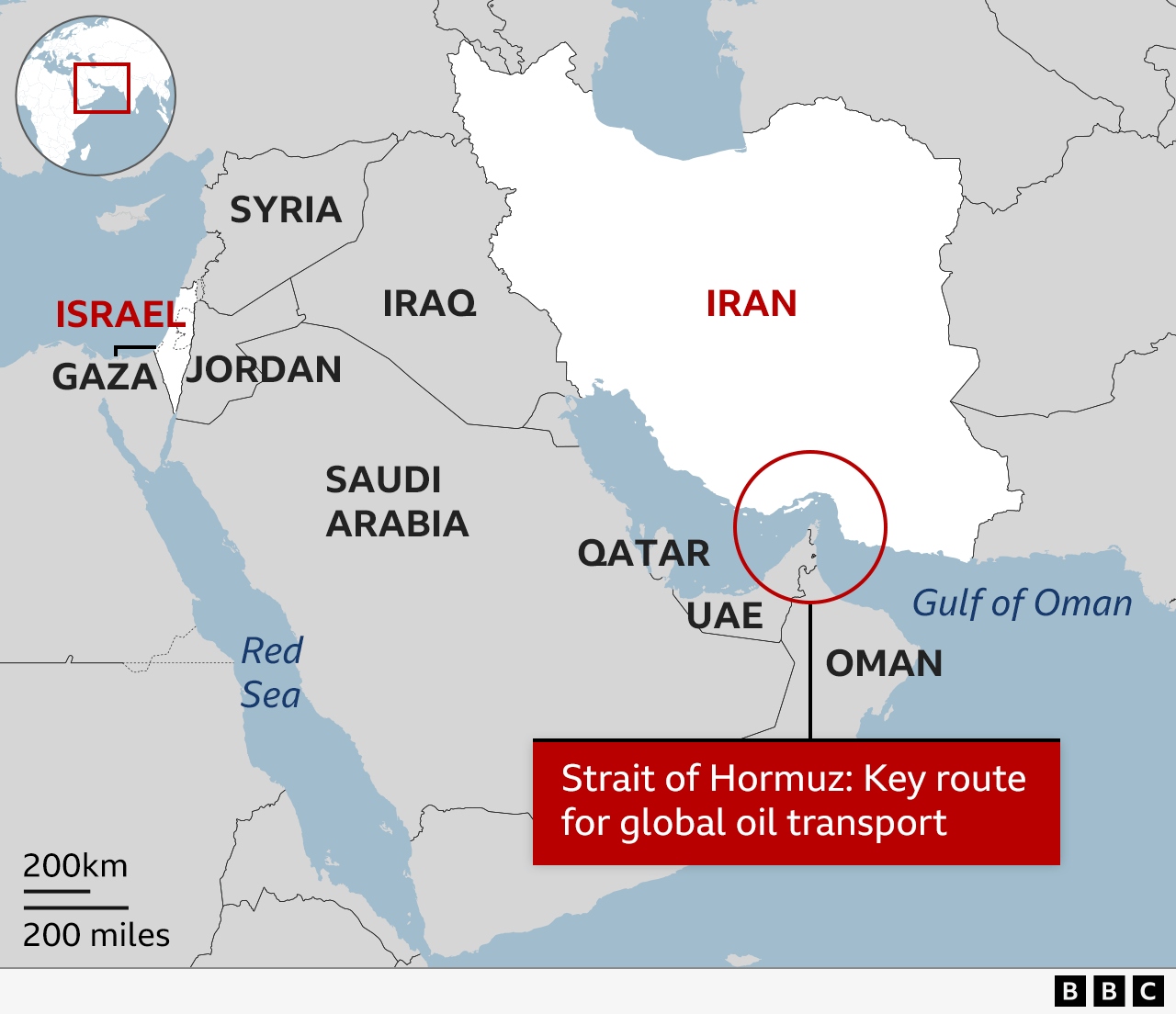
The Strait of Hormuz is the world's most sensitive choke point. It's a narrow strip of water where a single miscalculation can send global oil prices screaming toward $150 a barrel. While Washington often talks about the waterway as if it’s a private American lake, the reality on the ground—and in the water—is far more complicated.
Recently, the Supreme Leader’s representative in India, Mahdi Mahdavipur, made it clear that Iran views this stretch of sea as a shared global resource. He flatly dismissed threats of escalation, suggesting that despite the fiery rhetoric coming from the Trump administration, the status quo isn't as fragile as the headlines suggest. If you've been following the news, you've likely seen the back-and-forth about "closing" the strait. It's a favorite talking point for hawks, but it ignores the legal and economic realities that keep the tankers moving. If you enjoyed this piece, you should check out: this related article.
The Legal Reality of International Waters
Most people assume the Strait of Hormuz is a lawless zone where whoever has the biggest navy wins. That's wrong. The waterway is governed by the United Nations Convention on the Law of the Sea (UNCLOS). Even though the U.S. hasn't formally ratified it, they generally follow its rules. Under these rules, ships have the right of "transit passage." This means as long as a vessel is moving continuously and expeditiously from point A to point B, neither Iran nor Oman can legally stop it.
Iran’s stance, as articulated by Mahdavipur, is that they aren't looking to disrupt this flow. Why? Because they need it too. It’s a classic case of mutual assured destruction, but with oil barrels instead of nukes. If the strait closes, Iran’s own economy—already battered by sanctions—suffers a terminal blow. They aren't suicidal. They’re tactical. When Mahdavipur says the strait "belongs to all countries," he’s reminding the world that Iran plays the role of a maritime gatekeeper, not a maritime pirate. For another perspective on this event, see the latest update from The Washington Post.
The U.S. narrative often frames Iran as the sole aggressor. But from the perspective of Tehran, the aggression starts with the massive naval presence of the U.S. Fifth Fleet. It’s a high-stakes staring contest.
Trump and the Art of the Escalation
We’ve seen this movie before. The Trump administration’s strategy of "maximum pressure" relies on the idea that if you squeeze Iran hard enough, they’ll fold. It hasn't happened. Instead, it’s led to a series of "shadow war" incidents—seized tankers, downed drones, and mysterious limpet mine attacks.
Mahdavipur’s dismissal of these threats isn't just bravado. It’s based on a calculated bet that the U.S. doesn't actually want a shooting war in the Persian Gulf. A war would instantly halt 20% of the world’s liquid petroleum gas and oil exports. That’s roughly 21 million barrels a day. No president wants to explain a $7-per-gallon gas price to voters during an election cycle.
The representative’s comments in India are especially significant. India is a massive consumer of Iranian and regional oil. By speaking there, Mahdavipur is signaling to America’s partners that Iran is the stable partner, while the U.S. is the one "disturbing the peace" with sanctions and threats. It’s a clever bit of PR that works because it leans on the genuine fears of energy-hungry nations.
The Geography of a Choke Point
Look at a map. The strait is only 21 miles wide at its narrowest point. The shipping lanes themselves are even narrower—just two miles wide in each direction, separated by a two-mile buffer zone.
- The Northern Shore: This is entirely Iranian territory. They have high-ground advantage for anti-ship missiles and fast-attack boats.
- The Southern Shore: This belongs to Oman. Oman traditionally plays the "Switzerland of the Middle East" role, staying neutral and keeping lines of communication open between DC and Tehran.
- The Islands: Iran controls several islands like Abu Musa and the Greater and Lesser Tunbs. These are basically stationary aircraft carriers bristling with surveillance tech.
Because of this geometry, any attempt to "secure" the strait through military force alone is a nightmare. You can't just sail a carrier group through and expect everything to be fine. The shallow waters and tight turns make big ships sitting ducks for asymmetric warfare. Iran knows this. They don't need a massive navy; they just need enough "nuisance power" to make the cost of conflict too high to pay.
What Washington Gets Wrong About Tehran
The biggest mistake Western analysts make is treating Iran like a monolith. There’s a constant tug-of-war between the hardliners and the pragmatists. But when it comes to the Strait of Hormuz, they usually find common ground. They use the threat of closure as a diplomatic lever.
Mahdavipur’s comments represent the "rational actor" side of Iranian foreign policy. He’s essentially saying, "We’re ready to share the playground, but don't try to kick us out." This is a direct response to the U.S. trying to drive Iranian oil exports to zero. If Iran can't sell its oil, they have zero incentive to let anyone else sell theirs.
We also have to talk about the role of regional players like Saudi Arabia and the UAE. They’ve spent billions on pipelines to bypass the strait—like the East-West Pipeline in Saudi or the ADCOP pipeline in Abu Dhabi. But these pipelines only handle a fraction of the total volume. The strait remains the only way to move the massive quantities needed to keep the lights on in Beijing, Tokyo, and New Delhi.
Misconceptions About Seizing Tankers
You often hear that Iran is "pirating" ships. Usually, when Iran seizes a ship, they cite a legal pretext—a collision, a fuel smuggling charge, or an environmental violation. It’s a "lawfare" tactic. It allows them to retaliate for Western sanctions while maintaining a thin veneer of legality. It’s frustratingly effective because it makes a direct military response by the U.S. look like an overreaction to a maritime dispute.
The India Connection
Why was this statement made in India? Because India is caught in the middle. They want to maintain a strategic partnership with the U.S., but they also need cheap energy and a gateway to Central Asia via Iran’s Chabahar Port.
Mahdavipur is playing on India’s desire for "strategic autonomy." He’s basically telling New Delhi that Washington’s belligerence is the only thing standing between them and a stable energy market. It’s a message that resonates in capitals across Asia, where the appetite for another Middle Eastern war is exactly zero.
If you’re looking at your portfolio or just wondering why your heating bill is up, keep an eye on the rhetoric coming out of these diplomatic meetings. The "threats" are often theater, but the underlying geography and law are what actually keep the oil flowing.
To stay ahead of the curve, stop looking for "all-out war" headlines. Instead, watch the insurance rates for tankers in the Gulf (known as "War Risk" premiums). When those spike, it means the players on the ground think the "rational actor" model is breaking down. Until then, it’s mostly just loud talk from two sides that both have too much to lose. Pay attention to the movements at the Chabahar and Jask ports; those are the real indicators of how Iran plans to bypass or control the flow of goods in the coming year.