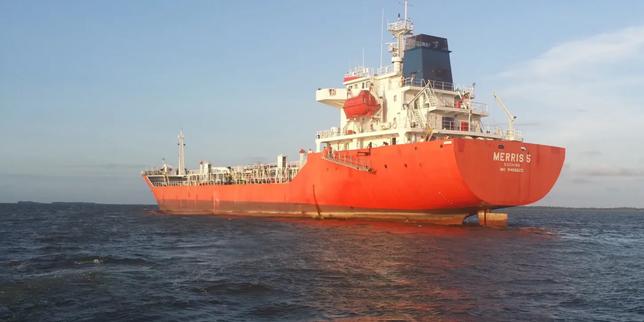
The first non-Iranian oil tanker to transit the Strait of Hormuz since the ceasefire marks a precarious milestone for global energy markets. While headlines focus on the physical movement of a single vessel, the underlying reality is far more complex than a simple return to business as usual. This transit represents a high-stakes stress test of a fragile truce, signaling to global insurers and naval commands that the world’s most vital maritime chokepoint is, for the moment, breathing. However, one ship does not make a recovery. The "why" behind this specific crossing reveals a calculated risk-sharing agreement between private shipping interests and regional power players who are desperate to prove they can still manage the flow of 20% of the world's oil consumption.
The Calculus of Risk at the Chokepoint
Shipping companies do not move multi-million dollar assets through volatile waters out of a sense of optimism. They do it because the math of the "war risk premium" has finally dipped just low enough to justify the gamble. For months, the Strait of Hormuz has been a theater of shadow warfare, where seizures and drone strikes became the baseline. The arrival of this first non-Iranian tanker suggests that behind-the-scenes diplomatic channels have provided enough private assurance to satisfy the underwriters at Lloyd’s of London. You might also find this related story insightful: The Mechanics of Backchannel Diplomacy: Switzerland as the Facilitator of US-Iranian Strategic De-escalation.
Insurance is the invisible hand that rules the waves. When a tanker enters a "high-risk area," the costs skyrocket. For this transit to occur, the operator likely secured a specific "letter of comfort" or observed a significant cooling in the rhetoric coming from Tehran. It is a fragile equilibrium. If a single mine or missile disrupts this flow now, the precedent of the ceasefire dies with it, and the cost of moving crude will spike globally, hitting every gas pump from Berlin to Bangkok.
The Strategy of the First Mover
Why this vessel? Why now? The "first mover" in a post-conflict zone is often a proxy for broader geopolitical testing. By sending a non-Iranian flagged vessel—likely one with a complex web of international ownership—the shipping industry is probing the limits of the current peace. As discussed in detailed coverage by The Washington Post, the results are worth noting.
- Flag of Convenience vs. Political Shield: Most tankers fly flags of nations like Panama or the Marshall Islands. This provides a layer of legal insulation, but in the Strait, the only thing that matters is the "true" owner and the destination of the cargo.
- The Escort Factor: While official reports may not emphasize it, no tanker of this size moves through the Strait right now without heavy electronic surveillance and likely over-the-horizon naval support from the U.S. Fifth Fleet or regional partners.
- The Cargo Destination: Who is buying this oil? The buyer is just as much a part of the peace equation as the seller. If the oil is destined for a major Asian economy, the risk of interference drops because no regional power wants to alienate their primary customers.
The Strait is less than 21 miles wide at its narrowest point. In these shipping lanes, there is no room for error. The Iranian Revolutionary Guard Corps (IRGC) maintains a constant presence, and their fast-attack craft are never more than a few minutes away. This transit wasn't just a voyage; it was a choreographed performance.
The Illusion of De-escalation
It is a mistake to view this transit as a sign that the region has moved past its core grievances. The ceasefire that allowed this tanker through is a tactical pause, not a strategic shift. Iran still views the Strait as its primary lever against Western sanctions. For the West, the Strait remains a vulnerability that cannot be fully mitigated.
We see a pattern emerging in maritime intelligence. Groups that previously targeted shipping have not disbanded; they have simply moved to "monitor" status. The infrastructure of disruption—the coastal radar stations, the hidden drone launch sites, and the intelligence dhows—remains fully operational. The current peace is being maintained by a "balance of pain." Each side has calculated that, for this week, the economic benefits of allowing trade outweigh the political benefits of stopping it.
The Economic Ripples of a Single Transit
When a tanker clears the Strait safely, the "fear index" in the oil markets takes a visible hit. Traders in London and New York look for these physical signals to price futures contracts.
Why the Market is Still On Edge
- Inventory Lag: Refineries need a consistent flow. One ship is a data point; ten ships is a trend.
- Sovereign Risk: National oil companies in the Gulf are watching this transit to see if they can ramp up production without fearing their exports will be seized as political bargaining chips.
- The Shadow Fleet: While this "clean" tanker makes the news, a fleet of older, uninsured vessels continues to move sanctioned oil under the radar. This creates a two-tiered market that destabilizes the very maritime laws the ceasefire is supposed to uphold.
The global economy cannot survive on "one-off" successes. The maritime industry requires predictability. If shipping lanes are only open at the whim of a regional commander, the supply chain remains broken. We are currently in a period of "armed commerce," where every merchant sailor is an unwitting participant in a grand geopolitical standoff.
Structural Fragility of the Shipping Lanes
The geography of the Middle East dictates that there are few alternatives to the Strait of Hormuz. Pipelines across Saudi Arabia or the UAE exist, but they lack the capacity to replace the sheer volume moved by sea. This means the world is stuck with the Strait.
The technical reality of navigating these waters involves a mandatory "Traffic Separation Scheme." It is a highway at sea. By forcing tankers into these narrow lanes, the geography makes them easy targets. The ceasefire doesn't change the map; it only changes the intent of those holding the binoculars on the shore. To believe that the danger has passed is to ignore thirty years of maritime history in the Persian Gulf.
The Burden on the Crew
Behind the talk of geopolitics and oil prices are the twenty or thirty people living on that ship. For them, a "ceasefire" is a word used by politicians hundreds of miles away. On the deck, the reality is "piracy drills," "blackout procedures," and the constant scanning of the horizon for small craft.
The psychological toll on merchant mariners in the Middle East is an overlooked factor in the global shipping crisis. If the risk remains high, companies will struggle to find crews willing to man these routes. This leads to higher wages, which leads to higher freight rates, which eventually shows up in the price of every consumer good transported by sea. The first tanker through the Strait is a win for diplomacy, but for the men and women on the bridge, it was a gauntlet.
What This Signals for the Coming Quarter
Expect a cautious increase in traffic, but don't expect the heavy hitters to rush back in. The major energy conglomerates—the Shells and Exxons of the world—have long memories. They will wait for a sustained period of quiet before they stop demanding naval protection.
The real test will be the first "incident." How the parties respond to a minor provocation—a laser pointed at a bridge, a close approach by a patrol boat—will determine if this ceasefire has teeth. If the response is restraint, the "Hormuz Premium" will continue to fade. If the response is a return to "eye-for-an-eye" maritime seizure, this first transit will be remembered as a brief, expensive fluke.
The Strait remains the world’s most dangerous bottleneck. This tanker didn't just carry oil; it carried the hopes of a global economy that is exhausted by volatility. But in these waters, hope is never a strategy. The "peace" we are seeing is a cold one, enforced by the proximity of warships and the exhaustion of combatants, rather than a genuine resolution of the underlying conflicts. The maritime world is holding its breath, waiting to see if the second, third, and fourth tankers receive the same safe passage. Until then, the Strait of Hormuz remains a theater where the play can change from a drama to a tragedy in the time it takes to change a watch.
Shipowners should keep their damage control teams on high alert. The "all clear" has not been sounded; the volume has simply been turned down for the moment.