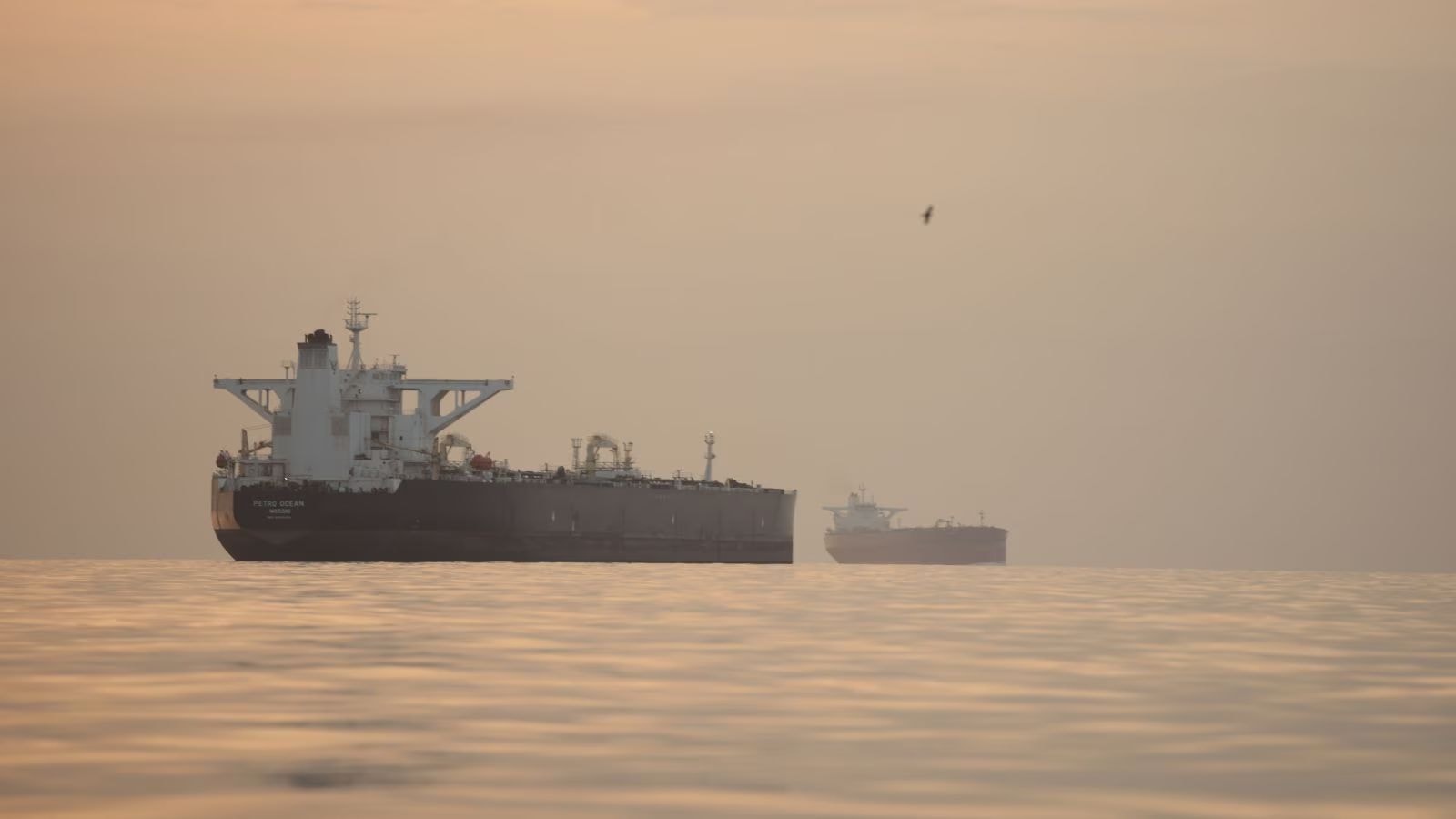
The maritime industry loves a good panic. Right now, the collective gaze is fixed on the Strait of Hormuz, watching 14 stranded Indian vessels like they are the only pieces on a global chessboard. The narrative is predictable: "How can India secure its energy lifeline?" and "Why aren't the escorts moving faster?"
These are the wrong questions.
If you think sending a few destroyers to shadow tankers is a victory for Indian energy security, you aren’t paying attention to the math of modern warfare. The obsession with "safe passage" through a 21-mile-wide choke point ignores a brutal reality: the era of the physical escort as a primary security tool is dead. We are watching a 19th-century solution fail against 21st-century friction.
The Escort Fallacy
The headlines scream about the 10 ships that made it through and the 14 left behind. This binary view—Safe vs. Stranded—is a dangerous oversimplification.
I’ve spent years analyzing supply chain bottlenecks and watching government committees "deliberate" on maritime safety. The consensus is always the same: more hulls in the water. But here is what the bureaucrats won't tell you: an Indian Navy frigate cannot stop a swarm of low-cost loitering munitions or a cyber-spoofing attack that misdirects a tanker’s GPS into hostile waters.
We are playing a game of lopsided economics. A single Project 15B destroyer costs over $1 billion. A drone that can disable a tanker’s rudder costs less than a used Maruti Suzuki. When we brag about "escorting" ships, we are bragging about using a Ferrari to protect a fleet of bicycles from kids with slingshots. It is an unsustainable drain on naval resources that does nothing to solve the underlying vulnerability.
The "14 stranded" are not a failure of naval protection; they are a symptom of an antiquated logistics model that relies on a single, predictable artery.
Your GPS is a Liar and Your Hull is a Liability
People also ask: Is the Strait of Hormuz safe for Indian ships? The honest answer is: No, but not for the reasons you think. It isn't just about kinetic strikes or boardings. The real threat is the invisible disruption of the Electronic Order of Battle (EOB).
In the last three years, we’ve seen a massive spike in GNSS (Global Navigation Satellite System) interference. Ships aren't just being stopped; they are being "ghosted." Their systems show them in international waters while they are actually drifting into territorial limits that trigger a legal seizure.
If India wants to protect its interests, it shouldn't just be sending ships with guns. It should be sending signals. We need a sovereign, hardened PNT (Positioning, Navigation, and Timing) framework that doesn't rely on civilian GPS. Relying on US-controlled GPS or even Russia’s GLONASS in a contested Hormuz is like asking your rival for a map to his own backyard.
The Crude Reality of Energy Diversification
The competitor's piece focuses on the "safe passage" of oil. This ignores the fact that the oil itself is the liability.
India’s dependence on the Persian Gulf is a choice, not a destiny. Every time we stress about the Hormuz, we validate the leverage of regional actors. True maritime security isn't about fighting through the Strait; it's about making the Strait irrelevant.
- The Strategic Pipeline Myth: We talk about bypassing the Strait with pipelines through Iran or Oman. These are geopolitical pipe dreams. Pipelines are static targets. They are easier to sabotage than ships.
- The Refining Bottleneck: We focus on the ships coming in, but we ignore the concentration of our refining capacity on the West Coast. One well-placed disruption at a port terminal in Gujarat does more damage to India’s economy than ten tankers stalled in Hormuz.
We are obsessed with the "transit" while ignoring the "destination" vulnerability.
Stop Treating Merchant Sailors Like Soldiers
There is a disturbing trend in policy circles of expecting merchant mariners to act as the first line of defense.
When a ship is "stranded," the crew is under immense psychological pressure. Expecting a civilian crew to navigate a high-intensity electronic warfare environment while potentially being shadowed by hostile fast-attack crafts is absurd.
The industry’s "Best Management Practices" (BMP5) are essentially a list of ways to hide and hope. They are reactive. India needs to stop asking what it can do for "safe passage" and start asking why it continues to allow its merchant fleet to operate with such thin margins of safety. We need automated, remote-capable vessels that can be navigated out of danger zones without risking Indian lives.
If the ship is empty of humans, the leverage of "hostage-taking" vanishes.
The Cost of Neutrality
India prides itself on its "strategic autonomy." In the Hormuz, this translates to: "We talk to everyone so nobody hits us."
It’s a charming sentiment that fails the moment a real conflict breaks out. In a hot war scenario, "neutrality" is just another word for "unprotected." The 14 stranded ships are experiencing the first taste of this. If you aren't part of a hardened security bloc, you are a target of convenience for anyone looking to send a message to the global markets.
We have to choose: either we build a blue-water navy capable of true, sustained power projection that can close a strait, or we pivot our entire energy infrastructure to the East and South. Anything in between is just expensive theater.
The Actionable Pivot
If I were sitting in the Ministry of Shipping, I’d stop counting the ships that made it through and start doing the following:
- Weaponize Transparency: Use ISRO’s NavIC system to create a real-time, public-facing "Risk Map" for Indian vessels. If a ship ignores the data and enters a high-risk zone without authorization, the insurance liability shifts to the owner, not the state.
- Mandatory Hardening: Any vessel flying the Indian flag or carrying Indian crude must have redundant, non-satellite-based navigation systems. If they can be spoofed, they shouldn't be in the Strait.
- The Africa-Russia Pivot: Aggressively subsidize the shipping lanes from the Russian Far East and Atlantic Africa. It’s longer. It’s more expensive. But it doesn't go through a 21-mile-wide death trap controlled by two regimes on the brink of collapse.
The Illusion of Control
The competitor article wants you to feel better because "10 ships crossed safely."
That is survivorship bias at its finest.
In a high-stakes maritime environment, "safe" is a temporary state. The 14 ships currently stranded are the only ones telling the truth about the situation. They are the proof that our current maritime strategy is a house of cards. We are one "navigation error" or one "unidentified drone" away from an energy crisis that no amount of naval escorting can fix.
Stop looking at the destroyers. Look at the map. Look at the technology. Look at the fact that we are still fighting for a drop of oil in a corridor that the rest of the world is desperately trying to outgrow.
The Strait of Hormuz isn't a problem to be solved. It's a trap to be escaped.
Indian shipping doesn't need more "safe passage." It needs a new direction entirely. If we continue to measure success by how many tankers we can squeeze through a needle's eye, we've already lost the war.
Move the refineries. Change the routes. Harden the tech. Or get used to the sight of stranded ships.