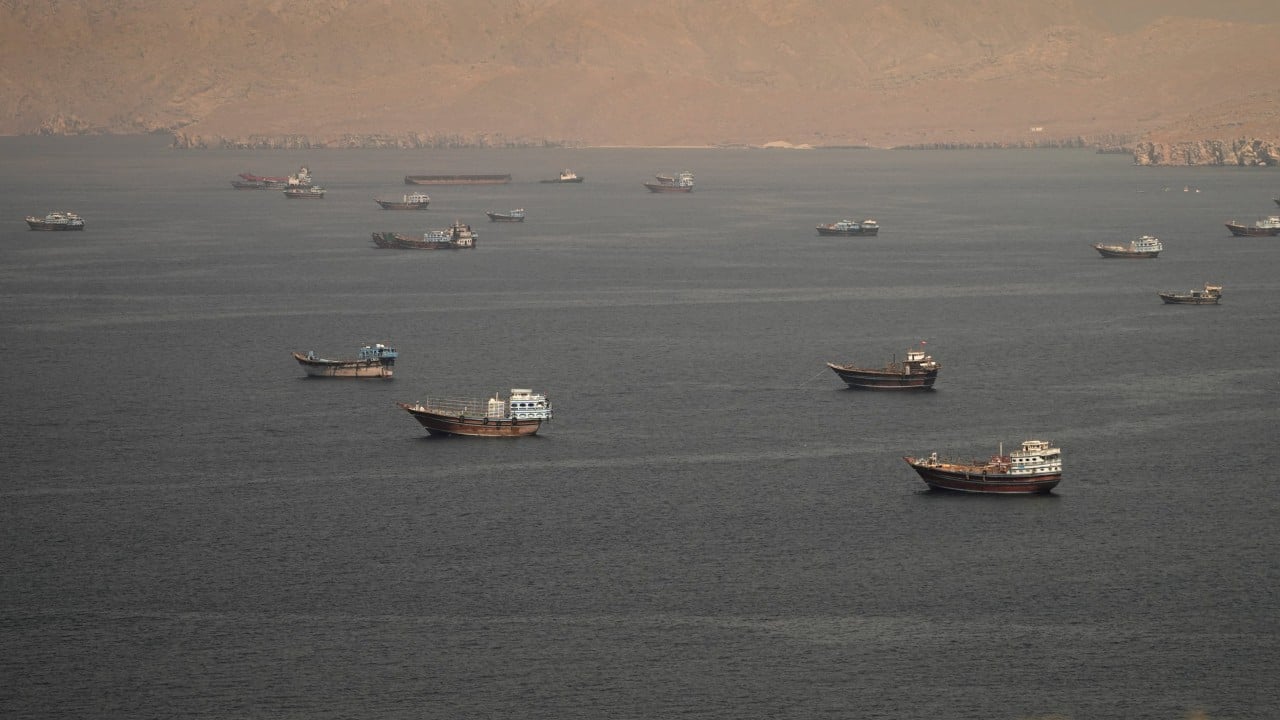
A ballistic projectile tears through the hull of an oil tanker in the outer reaches of the Strait of Hormuz, igniting a fire that illuminates the vulnerabilities of global energy supply chains. Within hours, wire services run the standard copy: a ship was hit, a crew was evacuated, and oil prices ticked upward by a percentage point. But this familiar narrative skims over a much uglier reality. The recurring targeting of commercial vessels in these waters is no longer just a series of isolated geopolitical provocations. It is the predictable outcome of a systemic breakdown in international maritime deterrence, exposing a reality where cheap, asymmetrical weapons can paralyze billions of dollars in global trade.
Western naval coalitions have spent years deploying advanced missile defense destroyers to guard these vital shipping lanes. Yet, the attacks keep happening. The hard truth is that the current framework for protecting commercial shipping is failing, and the maritime industry is quietly preparing for a future where the world's most critical chokepoint becomes an permanent red zone. If you liked this post, you should read: this related article.
The Flawed Calculus of Naval Deterrence
The mathematical equation governing modern maritime security is broken. When a state-backed militia or a regional power launches a drone or a low-tech anti-ship missile costing $20,000, Western navies counter it with interceptor missiles that cost upwards of $2 million each. This is an unsustainable economic drain. More importantly, it transfers the entire burden of risk onto civilian seafarers and private commercial entities.
Naval escorts cannot be everywhere at once. The Strait of Hormuz is a narrow passage, with inbound and outbound shipping lanes measuring just two miles wide each. This tight geography turns massive, slow-moving crude carriers into sitting ducks. When a projectile strikes a tanker, the immediate focus is always on the physical damage to the hull or the status of the cargo. The deeper crisis is psychological. For another angle on this development, refer to the recent update from The New York Times.
Ship captains and international crews are being asked to sail into active combat zones without the means to defend themselves. Insurance syndicates look at these odds and adjust their premiums accordingly. War risk surcharges in the region have skyrocketed, a cost that is quietly passed down to every factory, gas station, and consumer on the planet.
Why the Shadow Fleet Alters the Equation
To truly understand why the Strait remains so volatile, one must look beyond the official shipping manifests. A massive portion of the oil moving through the region now travels via the so-called shadow fleet. These are aging, poorly maintained vessels operating under flags of convenience, often with obscured ownership and fraudulent insurance documentation.
- Accountability vacuum: When a mainstream corporate tanker is hit, international legal frameworks swing into action. When a shadow fleet tanker is struck, there is no transparent corporate entity to hold accountable, and no reputable insurer to cover the environmental cleanup.
- Environmental roulette: Many of these ships lack the double-hull construction mandated by modern international maritime law. A single direct hit on an obsolete tanker could trigger an ecological disaster that would force the absolute closure of the Strait for weeks, halting one-fifth of the world’s petroleum supply.
- Enforcement blind spots: International naval task forces are designed to protect legitimate commerce. They are structurally unequipped to police a parallel, lawless maritime economy that thrives on the instability of the region.
The presence of these substandard vessels creates a chaotic environment where miscalculation is inevitable. A missile intended for a political adversary can easily strike an unflagging shadow tanker, triggering a chain reaction of finger-pointing and military retaliation that no diplomatic channel is prepared to deescalate.
The Illusion of Alternative Routes
Whenever tensions spike in the Middle East, industry analysts point to pipelines and alternative transit routes as the ultimate safety valve. This is a comforting myth. Saudi Arabia operates the East-West Pipeline, capable of moving crude across the peninsula to the Red Sea, bypassing Hormuz entirely. The United Arab Emirates possesses the Habshan–Fujairah pipeline, which delivers oil directly to the Gulf of Oman.
The capacity of these pipelines is a drop in the bucket compared to the sheer volume that must move by sea. The East-West Pipeline can handle roughly 5 million barrels per day under optimal conditions. The Habshan line adds another 1.5 million. Together, they cannot accommodate even half of the 20 million barrels that transit the Strait of Hormuz on an average day.
Furthermore, these pipelines terminate in waters that are increasingly subject to the exact same drone and missile threats. The Red Sea is no longer a safe haven, as recent history has brutally demonstrated. Shipping companies that reroute vessels around the Cape of Good Hope to avoid these chokepoints face an extra 10 to 14 days of transit time. This delays supply, burns millions of gallons of additional fuel, and severely reduces the global availability of empty shipping containers. There is no viable macroeconomic escape hatch from the geography of the Middle East.
The True Cost of a Rerouted World
| Route taken by tanker | Average transit time | Risk profile | Economic impact |
|---|---|---|---|
| Strait of Hormuz | Direct | High kinetic threat | Low fuel cost, extreme insurance premiums |
| Cape of Good Hope | +12 days | Low kinetic threat | Massive fuel burn, severe supply chain delays |
| Regional Pipelines | Limited capacity | Moderate sabotage risk | Inefficient, unable to meet global demand |
The Failure of Corporate Diplomacy
For decades, the commercial shipping industry operated under the assumption that global trade transcended regional politics. Big oil syndicates and sovereign wealth funds believed that because every major global power—including China, Europe, and the United States—relied on the free flow of oil through Hormuz, an unwritten agreement would protect the ships.
That era of corporate immunity is over. Regional actors have realized that targeting commercial shipping is the most effective way to exert asymmetric leverage over global superpowers without triggering an all-out land war. By holding the global economy hostage through the threat of disrupted energy supplies, small factions can force major concessions from international coalitions.
The maritime industry has responded with passive defense measures. Ships turn off their Automatic Identification System (AIS) transponders to go dark while transiting the Gulf. They hire private, unarmed security advisors to scan the horizons with binoculars. They paint encouraging messages on their decks to signal neutrality. These tactics are laughably inadequate against modern anti-ship cruise missiles and loitering munitions.
The Looming Institutional Collapse
The international bodies charged with maintaining order on the high seas are paralyzed by internal politics. The International Maritime Organization (IMO) can issue guidelines and pass resolutions, but it possesses no enforcement arm. The United Nations Security Council is fundamentally fractured, with vetoes blocking any coordinated international response to state-sponsored maritime piracy.
This institutional vacuum means that individual shipping lines are left to fend for themselves. The largest container and tanker companies are quietly making decisions that will reshape global trade routes for a generation. They are beginning to treat the Middle East not as a volatile region to be managed, but as an uninsurable no-go zone.
When private insurance syndicates eventually refuse to write hulls for any vessel entering the Persian Gulf, the flow of oil will not just slow down; it will stop. The global economy is built on the assumption of frictionless, cheap transport. That assumption burns every time a projectile finds its mark in the waters off Hormuz, proving that the lines on our maritime maps are drawn in sand, easily washed away by the next conflict.