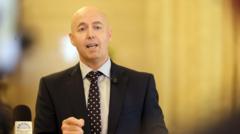
The political theater playing out at Stormont follows a predictable script. Mike Nesbitt falls on his sword, Jon Burrows scrambles to announce a replacement, and the commentariat acts surprised that a regional health minister got caught in the grinder of local hospital politics.
Let us dispense with the polite fiction immediately. The obsession over who takes over the Department of Health on Thursday misses the entire point. The structure itself is broken. Expecting any individual politician to survive the structural contradiction of managing a collapsing health service while pandering to local parochialism is an exercise in political self-harm.
The Geography of Medical Delusion
The core dispute that triggered this resignation—emergency general surgery at Causeway Hospital—exposes the fatal flaw in how healthcare is debated in Northern Ireland. Clinical consensus points toward centralisation. Safety data confirms that low-volume emergency surgical hubs produce worse patient outcomes than high-volume centres.
Yet, local politicians treat every rural clinic and district hospital as a sacred monument that cannot be touched.
Imagine a scenario where a regional health system has finite staffing, chronic waiting lists, and skyrocketing deficits, but every local representative demands an fully staffed emergency department and acute surgical ward within twenty minutes of every voter's front door. It is mathematically impossible.
When party leaders like Burrows drop into town hall meetings and pander to local crowds by opposing the rationalisation of services recommended by their own health trusts, they pull the rug out from under their own ministers. Nesbitt was entirely justified in calling out this shadow governance. No minister can execute a long-term transformation strategy when their party leader is cutting deals in local car parks.
The Powerless Portfolio
We treat the Health Minister position like a poisoned chalice, but we keep drinking from it expecting a different vintage. The office comes with immense public blame and zero structural leverage.
- Budgets are rigid: The block grant dictates the ceiling, and acute care demands consume the floor.
- Workforce is capped: You cannot simply magic up consultants and specialist surgeons who refuse to work in isolated, low-volume units.
- Veto politics rule: Every executive decision is subject to cross-community friction or backroom party discipline.
When a minister tries to make hard, evidence-based choices on reconfiguration, they run straight into the brick wall of local electoral survival. The system is designed to preserve status-quo mediocrity. Changing the nameplate on the door on Thursday changes nothing about the incentives.
Stop Fiddling While Waiting Lists Grow
The public discussion focuses endlessly on the interpersonal drama between party leaders and their cabinet appointees. Did Burrows communicate clearly enough? Did Nesbitt jump too fast?
Who cares?
While politicians trade letters on Twitter and posture over red lines regarding surgical footprints and policy trials, patients languish on the longest waiting lists in the United Kingdom. The debate we should be having is not about who gets the portfolio next, but whether regional ministries should be stripped of local health trust micro-management entirely.
Until health strategy is insulated from the petty geography of constituency politics, every health minister is just a temporary placeholder waiting for their own inevitable explosion.
Stop asking who is stepping into the office. Ask why the office is designed to destroy anyone who tries to fix it.
:max_bytes(150000):strip_icc():focal(662x226:664x228)/Aimee-Lou-Wood-attends-the-Los-Angeles-Premiere-of-HBO-Original-Series-The-White-Lotus-Season-3-030525-c07a5396c79e43baa1869779c8797ca4.jpg)