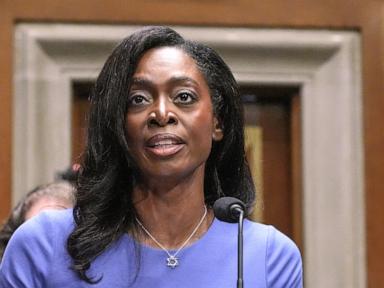
Another week, another institutional ritual. Dr. Erica Schwartz stepped up to the podium as the twenty-second director of the Centers for Disease Control and Prevention, faced an auditorium of exhausted staffers, and delivered the classic bureaucratic sermon. She acknowledged the burnout, lamented the loss of over three thousand employees, promised to advocate for the Atlanta headquarters, and swore she would push back against Health Secretary Robert F. Kennedy Jr.
There was just one catch. She plans to do all her fighting behind closed doors.
The media treats this as a heroic act of stabilization. The lazy consensus says the agency simply needs time, better morale, competent leadership, and a return to the good old days before political shockwaves hollowed out a quarter of its workforce. That perspective is not just naive. It is dangerous.
The public health apparatus is broken beyond the point of polite remediation. When an institution loses over twenty-five percent of its personnel, watches its guidance turn into partisan footballs, and leaves congressionally funded programs as functional zombies with nobody left to turn the lights on, patching the drywall is a fool's errand.
The Myth of Private Resistance
Schwartz leaned heavily on her background in uniformed services—the U.S. Coast Guard and the Public Health Service—to justify her commitment to internal dissent. Disagreement happens behind closed doors, she argued, because that is how disciplined organizations operate.
Military chains of command rely on private dissent because operational security demands a unified public front. A warship cannot survive a crew debating steering coordinates on the open deck during a firefight. But the Centers for Disease Control and Prevention is not a destroyer in hostile waters. It is an information engine meant to protect a civilian population through empirical truth.
When you shroud scientific disagreement in institutional secrecy, you destroy the very currency the agency needs to survive: trust.
Imagine a scenario where a regulatory body debates the safety of an intervention behind closed doors, compromises to appease political leadership, and emerges with a watered-down consensus stamped with the seal of objective science. That is not discipline. That is a cover story. If the director of public health disagrees with political appointees over vaccine schedules or surveillance data, the public has an absolute right to witness that collision in real time. Private pushback is just compliance with better manners.
The Zombie Program Delusion
Let us address the so-called zombie programs highlighted in recent investigative reports. Congress passes appropriations for specific health initiatives. The money sits in accounts. The legislative mandate exists on paper. But the desks are empty because thousands of career scientists were shown the door or placed on indefinite leave.
The mainstream press writes about this as an administrative tragedy, a mechanical failure that can be fixed by hiring new personnel and printing updated organizational charts.
This diagnosis completely misunderstands the nature of modern federal bloat. Those programs were often bloated, bureaucratic feedback loops that prioritized administrative self-preservation over actual epidemiological outcome. The sudden vacuum left by thousands of departures is not an excuse to rebuild the exact same machinery. It is a rare, accidental window of radical deconstruction.
Throwing fresh bodies into a broken statutory framework guarantees nothing except a return to the sluggish, risk-averse paralysis that crippled the agency long before recent political battles began.
The False Choice Between Politics and Science
The public discourse frames the current crisis as a turf war between pure science and dirty politics. On one side, you have career bureaucrats longing for evidence-based governance. On the other, you have political appointees and external panels questioning long-held orthodoxy regarding childhood immunization schedules and surveillance protocols.
Both sides are selling a fairy tale.
Science is not a monolith housed in an Atlanta office building, waiting to be rescued by a Senate-confirmed director. It is a messy, decentralized process of falsification. When an agency grows so massive and bureaucratic that its primary output is defensive consensus rather than rapid, clear risk assessment, it ceases to be a scientific institution. It becomes a political shield.
Dr. Schwartz promises radical transparency and scientific rigor. Yet her first major policy pronouncement is that her disagreements with political masters will remain strictly confidential. You cannot promise transparency while practicing operational omertà.
What Actually Needs to Happen
If we want a functional public health infrastructure, we have to stop trying to preserve a dying leviathan.
- Decentralize surveillance: Strip the federal agency of its monopoly on disease tracking. Empower state and university labs to publish raw, unvarnished epidemiological data directly, bypassing Washington bottlenecks.
- Abolish internal secrecy: Mandate that any scientific dispute between agency leadership and political appointees be made public within forty-eight hours. No closed-door compromises on public safety data.
- Sunset automatic funding: Force every program with congressional appropriations to prove its efficacy annually or face permanent defunding, eliminating the phenomenon of zombie bureaucracy once and for all.
The new director wants to project calm competence and steady the ship. But the ship hit the rocks years ago. Stop bailing water out of a hull that should have been decommissioned a decade ago. Let it sink.