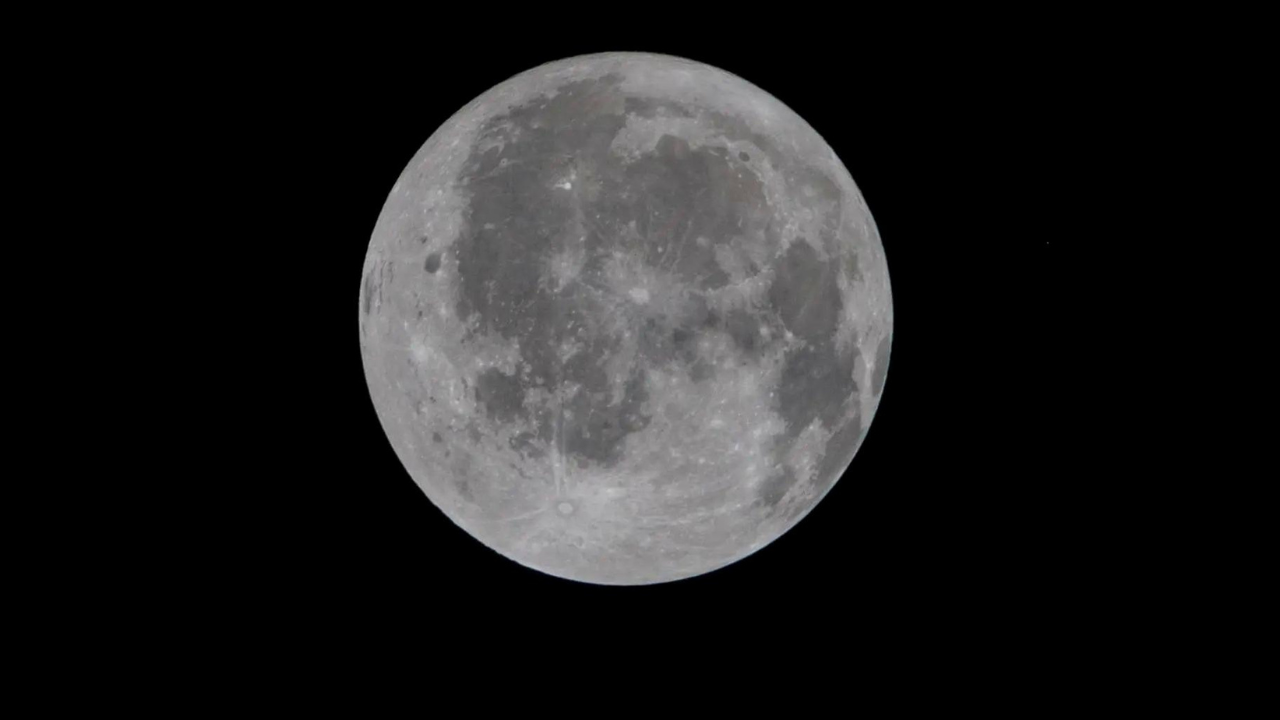
The narrative surrounding Artemis II has become an exercise in scientific regression. We are being sold a story about the "human spirit" and the "unrivaled power of the biological eye" to mask a glaring technical compromise. The claim that the Artemis II crew will study the lunar surface "mainly with their eyes" isn't a testament to human capability. It is an admission that our current deep-space sensor integration is lagging behind our PR machine.
The human eye is an evolutionarily miraculous piece of hardware for surviving the African savannah. It is a mediocre tool for orbital geological survey. By framing this mission as a return to "analog observation," we aren't advancing. We are retreating into nostalgia because it's easier to market a brave pilot looking out a window than it is to explain why we haven't perfected autonomous, high-frequency hyperspectral mapping for crewed capsules.
The Myth of Superior Biological Perception
The "best camera to ever exist" isn't in your skull. It’s a comforting lie.
Let’s talk about the hardware specs of the human eye. We operate on a ridiculously narrow band of the electromagnetic spectrum (roughly 380 to 700 nanometers). The Moon, however, is a treasure trove of data that exists almost entirely outside that range. When an astronaut looks at the lunar surface, they see shades of grey. They see shadows. They see what their brain expects to see based on terrestrial lighting models.
A basic multispectral imager can detect titanium distributions, iron concentrations, and water ice signatures in the lunar regolith from hundreds of miles up. The human eye cannot. We are sending four of the most highly trained professionals on the planet to perform a task that a $50 million sensor suite does better, faster, and without the need for oxygen.
To suggest that a human looking through a thick pane of polycarbonate and glass—distorting the light before it even hits the retina—is the "gold standard" for lunar observation is scientifically dishonest. It’s like claiming a painter is a better surveyor than a LIDAR system because they "feel the landscape."
The Cognitive Trap of First-Hand Observation
There is a phenomenon in aerospace psychology often ignored by the "eyes-on" enthusiasts: cognitive bias under duress.
I have watched flight crews miss screamingly obvious instrumentation warnings because they were fixated on what they thought they saw out the cockpit. In the high-stakes, high-CO2 environment of an Orion capsule, the human brain is a flighty narrator.
- The Contrast Problem: The Moon has no atmosphere to scatter light. The contrast between sunlit areas and shadows is absolute. The human eye struggles to adjust to this dynamic range, leading to "blackout" in crater floors where critical data hides.
- The Velocity Issue: At orbital speeds, the window of observation for specific geological features is incredibly tight. By the time an astronaut identifies a feature, describes it into a comms link, and processes the visual data, the opportunity for follow-up is gone.
- The Memory Gap: We know from the Apollo missions that "eyewitness" accounts of lunar color and texture were often contradicted by the return of actual physical samples.
We are prioritizing a subjective "vibe" over objective data. This isn't science; it's tourism with a high tax bracket.
The Weight of Nostalgia vs. The Reality of Mass
The real reason NASA is leaning into the "eyes-on" narrative is mass. Every pound of high-end, stabilized, externally mounted sensor equipment is a pound of life support, fuel, or shielding.
Instead of admitting that the Orion's mass budget is so tight that we can't carry the full suite of desired automated scanning gear, the PR departments have pivoted. They’ve turned a limitation into a feature. "We don't need the sensors; we have the human eye!" is the ultimate cope for a mission architecture that is struggling to balance payload requirements.
If we were serious about "studying" the surface, we would be saturating the orbit with CubeSats and autonomous drones that feed data back to the crew. Instead, we’re asking them to take notes like it’s 1968.
The Danger of the "Pilot-Centric" Status Quo
The aerospace industry is obsessed with the "Pilot in the Loop" philosophy. This is the belief that a human must be the primary sensor and decision-maker to justify the cost of crewed flight. But we have reached a point where the human is the bottleneck.
Consider the data throughput. A modern CMOS sensor can capture gigabits of data per second across dozens of spectral bands. A human eye captures zero data—it captures an impression. That impression then has to be translated into language, which is the most lossy compression algorithm known to man.
"It looks kind of sparkly near the rim of Shackleton," is not a data point.
$$R = \frac{L_{reflected}}{L_{incident}}$$
That simple ratio for reflectance (Albedo) is what actually tells us what the Moon is made of. An astronaut cannot calculate $R$ in real-time while staring through a window. They can’t even see the ultraviolet components necessary to define it.
Stop Asking if Humans Can See the Moon
The question we should be asking is why we are still using humans as a primary data collection method for geological surveys.
The value of Artemis II is not in what the crew sees. The value is in testing the life support, the heat shield, and the communication arrays. That is the "real" mission. Everything else—the "studying the surface with their eyes"—is fluff designed to make the mission feel more like an adventure and less like a dangerous, expensive plumbing test.
We need to stop pretending that being "there" makes you a better sensor. In fact, being there makes you a biased, limited, and fragile sensor. If we want to understand the Moon, we need to look at it through the cold, unblinking lens of a machine that doesn't care about the "majesty" of the view.
The Actionable Pivot: Augmented Reality or Bust
If NASA wants to salvage the "human as observer" model, they need to stop talking about the naked eye and start talking about sensor fusion.
The crew shouldn't be looking out a window; they should be looking through a window that is overlaid with a Transparent Head-Up Display (THUD).
- Real-time mineral mapping overlaid on the craters.
- Thermal gradients highlighted in the shadows.
- Distance markers and topographical contour lines.
Unless we are augmenting the biological eye with the very technology the "purists" claim we don't need, we are just wasting a trip. We are sending a 19th-century observational method on a 21st-century rocket.
The "eyes-on" strategy is a PR win but a scientific surrender. We aren't going back to the Moon to look at it. We’ve looked at it for millennia. We are going back to measure it. If you can’t measure it, you aren't doing science; you’re just sightseeing.
Turn the cameras back on. Put the binoculars away. Stop lying to the public about the "miracle" of human vision. It’s time to grow up and admit that the best way to see the Moon is to keep the human out of the optics.


.jpg?width=1200&auto=webp&trim=0%2C27%2C0%2C173)