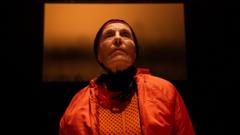
The feel-good profile of the 86-year-old dancer is a staple of modern media consumption. You know the drill: soft lighting, a few quotes about being "incredibly blessed," and the vague "secret" of staying active. It is designed to make you feel warm inside while ignoring the brutal mechanics of physical reality and the opportunity costs of a life spent in one room.
This narrative isn't just sweet; it's a lie.
The secret to a 70-year career in a high-impact physical field isn't passion or a positive attitude. It is a combination of freakish genetic durability, survivor bias, and—more often than we admit—a refusal to evolve. We celebrate the octogenarian on stage because we are terrified of our own obsolescence, not because their career path is a viable blueprint for success.
The Myth of the "Blessed" Career
When a veteran performer says they are "blessed," they are using a linguistic shield to avoid discussing the cold, hard math of their survival. For every 86-year-old still hitting their marks, there are ten thousand others with ruined knees, shattered dreams, and empty bank accounts.
Survivor bias is the primary driver of these fluff pieces. We look at the one person who didn't break and conclude that "staying active" is a magic pill. In reality, longevity in the arts is an outlier, not a standard. If you treat it as a standard, you are setting yourself up for a psychological collapse when your body inevitably refuses to cooperate at 45.
Professional dance, athletics, and even high-stakes stage performance are extractive industries. They take your youth, your cartilage, and your peak earning years. To pretend that the "secret" is a smile and a stretch is an insult to the people who did everything right and still had to quit because their L5-S1 vertebrae decided they were done.
Genetic Lottery vs. Disciplined Effort
Let’s talk about the biological reality that the "feel-good" press refuses to touch.
Collagen density is a roll of the dice. Joint laxity is largely hereditary. The ability to recover from repetitive strain without developing chronic inflammation isn't a "mindset"—it's a cellular function.
The Biological Floor
- Bone Density: Some people are born with the skeletal integrity of a granite slab; others are more like limestone. No amount of "passion" changes your fracture threshold.
- Neuromuscular Efficiency: The speed at which your brain communicates with your extremities naturally declines. Those who stay on stage at 80 are usually those whose baseline was 4 standard deviations above the norm.
- Inflammatory Response: Systemic inflammation is the silent killer of careers.
If you don't have the hardware, the software (your "will to succeed") is irrelevant. Telling a young artist that they can dance forever if they just "love it enough" is a cruel deception. It’s like telling a 5'5" basketball player that they’ll make the NBA if they just practice their jump shot.
The Stagnation of the Specialist
The competitor article frames a 60-year career as a triumph. I see it as a potential failure of imagination.
In the business world, if you stay in the same entry-level or mid-level role for six decades, you aren't an "inspiration"—you're stuck. Why do we treat the arts differently? There is a profound difference between mastery and repetition.
Many long-term performers aren't actually evolving; they are just clinging to the only identity they have. They are terrified of the "Small Death" that comes with reinventing oneself. True brilliance often requires the courage to kill your current persona to allow a more mature version of yourself to emerge.
Consider the "Polymath Pivot." The most successful humans in history didn't do one thing forever. They mastered a craft, extracted its lessons, and then applied those lessons to a completely different domain.
- The Athlete who becomes a venture capitalist.
- The Dancer who becomes a choreographer, then a director, then a tech founder.
- The Musician who masters acoustics and then pioneers hearing-aid technology.
These people aren't "blessed" to stay in one lane; they are brave enough to switch lanes when the engine starts smoking.
The Financial Irresponsibility of Artistic Longevity
The "starving artist" trope is romanticized until the artist is 70 and has no retirement fund.
The industry loves the 86-year-old dancer because they provide cheap, nostalgic labor. They are a "story." But look at the economics. If you spend your entire life in a low-paying, high-risk physical field, you are essentially gambling that you will never get sick or that you will die on stage.
I’ve seen legendary performers in their 70s forced to teach "masterclasses" to teenagers just to pay their rent. It’s heartbreaking, and it’s a direct result of the "follow your heart forever" advice that ignores the Compound Interest Table.
The Realistic Career Timeline
If you want to survive the arts without ending up as a cautionary tale masquerading as a feel-good story, you need to view your career in phases:
- Phase 1 (The Burn): Ages 18–32. Maximum physical output. Low overhead. High risk.
- Phase 2 (The Shift): Ages 33–45. Transition from execution to strategy. This is where you move from "doing" to "designing" or "directing."
- Phase 3 (The Legacy): Ages 46+. You should be an owner, not a worker. You should own the studio, the IP, or the consultancy.
If you are still just a "worker" (a performer) at 86, you haven't conquered the industry—the industry has successfully used every last drop of your utility.
Stop Asking "How Can I Keep Doing This?"
People constantly ask, "How do I stay in this career for 50 years?"
That is the wrong question. It’s a scarcity-mindset question. It assumes that this one thing is the only value you have to offer the world.
The right question is: "How can I use this career to build a foundation for the next three careers?"
We need to stop praising people for simply lasting a long time. Longevity is a metric of endurance, not necessarily quality or growth. A three-year career that changes the world is infinitely more valuable than a seventy-year career that merely occupies space on a stage.
The Danger of "Staying Active" as a Personality Trait
The secret to a long life isn't staying in your career; it's staying curious.
When your career becomes your only method of "staying active," you are vulnerable. If you lose your job, you lose your health. If you lose your health, you lose your identity. This is the "Identity Trap."
The 86-year-old dancer isn't "lucky" because they are still dancing. They are in a precarious position where their entire sense of self is tied to a physical vessel that is objectively failing. That isn't a dream; it's a high-wire act with no net.
The Pivot is the Only Real Skill
If you want to actually be "blessed," learn how to quit.
Learn how to recognize when a chapter is over before the book catches fire. The most "successful" people I know in the creative industries are the ones who walked away at the height of their powers to do something completely different. They didn't wait for the industry to discard them or for their bodies to betray them. They took the discipline, the rhythm, and the spatial awareness of dance and used it to dominate something else.
True longevity is the ability to survive the death of your first ambition.
The media will keep feeding you the story of the elderly dancer because it makes you feel like you have plenty of time. It tells you that you don't have to worry about the future because "passion" will carry you through.
It won't.
Gravity always wins. The market always corrects. Your joints have an expiration date.
Stop looking for the "secret" to a 60-year career in the spotlight. Start building the skills that will make you relevant when the lights go out. The most impressive thing an 86-year-old can do isn't a pirouette; it's being a person who doesn't need the pirouette to be whole.
Stop dancing for the crowd and start building something you actually own.