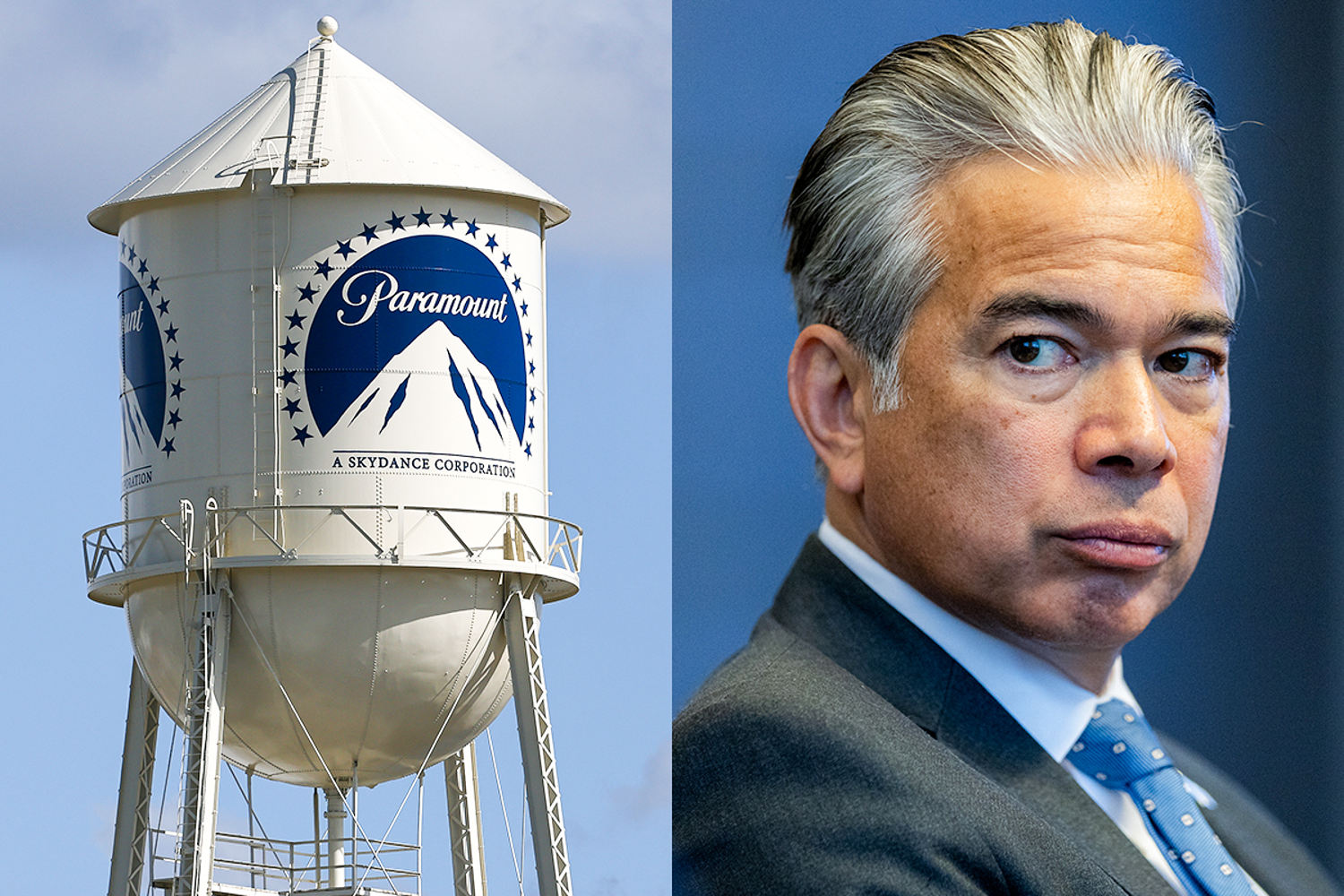
The headlines write themselves with lazy, predictable cadence. A historic Hollywood studio attempts a complex structural realignment, state attorneys general swoop in waving antitrust banners, and the press dutifully reports on a heroic defense of consumer choice. It is a comforting narrative for anyone who misses the comforting glow of a standard cable box and a five-dollar movie ticket. It is also entirely detached from economic reality.
When a handful of state regulators line up to block or condition media consolidation, they are not protecting you from skyrocketing subscription prices or ensuring creative diversity. They are running a shakedown. They are extracting political concessions, securing headlines for regional ambitions, and engaging in bureaucratic theater over an industry that is already circling the drain.
Let us dismantle the polite fiction governing modern media commentary. The lazy consensus states that keeping legacy media companies fractured and weak preserves competition. The truth is much darker, much simpler, and entirely ignored by those who refuse to look at a balance sheet. The traditional studio model is not being saved by regulatory roadblocks; it is being strangled by them.
The Nostalgia Trap Destroying Modern Media
Walk into any boardroom in Century City or Manhattan and you will hear executives whispering the quiet part out loud. The 500-channel cable era is never coming back. Linear television is a burning building, and the people still inside are arguing over who gets to rearrange the deck chairs. Yet, whenever two major players attempt to merge administrative overhead, eliminate redundant streaming tech stacks, and pool capital to survive the actual monopoly crushing the entertainment sector, the state regulators arrive.
Why? Because suing a legacy studio costs taxpayers very little and polls exceptionally well. It allows local politicians to posture as populist crusaders fighting the evil corporate machine.
Consider the fundamental math of streaming. Building a proprietary streaming app requires billions in upfront capital expenditure, massive ongoing server costs, global marketing distribution, and continuous content replenishment. When a mid-tier studio tries to stand alone in this arena, it burns through cash reserves at an astonishing velocity. When two struggling libraries attempt to combine forces to achieve operational scale, regulators suddenly discover a deep, burning passion for anti-competitive harms in the romantic comedy and cable news sectors.
It is economic illiteracy masquerading as consumer protection. Two dying horses tied together do not make a racehorse, but they do share the weight. Preventing them from pooling their hay does not help the consumer. It simply ensures both starve faster.
Follow the Settlement Trail
Look past the dramatic press releases announcing state-level pushback or negotiated settlements. What do these agreements actually achieve? Do they lower your monthly broadband bill? Do they stop algorithmic recommendation engines from burying independent cinema beneath ten-part superhero franchises? Of course not.
State-level settlements are designed to extract tribute. They secure job retention pledges for local production facilities that make no economic sense, fund local retraining programs, or exact legal fee settlements that flow straight back into state coffers. It is protectionism disguised as public interest litigation.
I have watched corporate legal teams burn tens of millions of dollars negotiating with regional bureaucrats who treat multi-billion-dollar transactions as a slush fund for local political capital. The lawyers get rich, the politicians get a press conference, and the underlying business remains crippled by the exact inefficiencies that necessitated the merger in the first place.
If state attorneys general genuinely cared about consumer welfare and market diversity, they would look at how bundling works across digital distribution networks. They would look at how device manufacturers extract thirty percent tolls on every transaction. Instead, they chase ghosts in Hollywood boardrooms because fighting a trillion-dollar technology conglomerate requires actual competence and political courage, whereas harassing a legacy studio requires only a press secretary and a microphone.
The Real Monopoly Everyone Ignores
To understand the absurdity of current regulatory posturing, you have to look at who actually controls cultural distribution today. Hollywood studios are no longer apex predators. They are content janitors renting space on infrastructure owned by companies whose market capitalization dwarfs the entire entertainment sector combined.
When a tech platform dictates your home screen, controls your payment gateway, harvests your viewing data, and decides whether your show gets recommended or buried based on proprietary ad-revenue formulas, that is a monopoly. When three massive operating systems control every device on which human beings consume media, that is market dominance.
Legacy studios fighting over who gets to own a backlot or a cable network library are arguing over deck chairs on the Titanic while the iceberg wears a silicon badge. Yet state regulators treat a studio merger like a threat to global capitalism while giving a free pass to the gatekeepers who control the digital turnstiles.
Imagine a scenario where every single traditional studio merged into a single entity tomorrow. Even then, they would still lack the distribution power, data dominance, and margin flexibility of the tech platforms financing their survival. Treating Hollywood consolidation as an existential threat to consumers is like breaking up a local diner alliance while ignoring the global grocery cartel that owns the entire supply chain.
Anatomy of a Regulatory Shakedown
Let us look closely at how these regulatory challenges operate in practice. A merger agreement is announced. It makes commercial sense: two companies with complementary libraries and overlapping overhead want to combine operations to cut fat, streamline distribution, and fund the massive engineering budgets required to compete against deep-pocketed tech giants.
Instantly, a chorus of state officials files formal inquiries or joins multi-state investigative task forces. They demand millions of pages of internal documents. They interview executives about pricing strategies for cable bundles that fewer people buy every single quarter.
The companies face a choice. They can litigate for three years through friendly and unfriendly jurisdictions while their stock price languishes, their best talent jumps ship, and their operational momentum dies, or they can settle. Settling means paying tribute. It means agreeing to keep redundant staff on the payroll for a mandatory transition window, funding local initiatives, and dropping legal challenges to state-level administrative overreach.
This is not antitrust enforcement. This is regulatory holdup. It is a tax on corporate restructuring levied by politicians who understand that delay is the death of a deal. By the time the settlement is reached, the economic rationale for the merger has often eroded, eaten away by legal fees and delayed integration timelines.
Why Broken Deals Produce Worse Outcomes than Bad Mergers
The defenders of the status quo love to claim that blocking mergers preserves jobs and protects market diversity. Let us examine what actually happens when a desperate media asset is forced to remain independent under regulatory duress.
When a company cannot merge its way to scale, it cuts costs the hard way. It fires line staff, cancels development budgets for risky or original content, slashes newsrooms, and sells off its crown-jewel assets piecemeal to private equity firms or foreign buyers who care nothing for cultural heritage or creative continuity.
A structured corporate combination preserves institutional knowledge and maintains operational infrastructure by eliminating redundancy at the top. A blocked merger results in liquidation, asset stripping, and quiet corporate death.
Private equity funds love regulatory roadblocks. When state attorneys general block strategic corporate combinations, they throw distressed assets straight into the arms of financial engineers who slice them apart, sell the real estate, license the library to the highest bidder, and leave behind an empty shell. If you want to see what happens when regulators successfully protect an industry from consolidation, look at local journalism over the last two decades. Private equity roll-ups and ghost newspapers are the direct harvest of policies that prevented media companies from scaling up to survive digital disruption.
The Uncomfortable Truth About Content Scarcity
The core premise underlying every antitrust challenge against media consolidation is that consumers benefit from an abundance of independent competitors bidding for their attention. That theory works wonderfully in introductory economics textbooks. It fails completely in an attention economy characterized by infinite supply and zero marginal cost of distribution.
We do not suffer from a shortage of content. We suffer from a severe deficit of curation and quality. There are more television series, films, and digital channels being produced right now than any human being could consume in ten lifetimes. Most of it is algorithmic sludge designed to hit metrics rather than tell stories.
When studios are forced to operate as fragmented, undercapitalized units, they cannot afford to take creative risks. They retreat to safe intellectual property, endless sequels, and cheap unscripted programming. Capital is cowardice when margins are thin. Only companies with genuine operational scale can absorb a major cinematic or televised failure without risking insolvency.
By preventing studios from achieving that scale, regulators ensure that the creative output becomes more homogenized, more risk-averse, and more dependent on formulaic formulas. The illusion of choice masks a profound impoverishment of substance.
The Final Reckoning for Legacy Media
The push to block studio mergers is a desperate attempt to freeze a dynamic, dying ecosystem in amber. It is an artifact of a regulatory mindset designed for standard industrial monopolies like steel mills and telecom wires, applied clumsily to a cultural marketplace defined by software and algorithms.
State attorneys general can posture all they want. They can extract their settlements, hold their press conferences, and pretend they are standing guard at the gates of Hollywood. They are not protecting the public. They are managing the hospice paperwork for an era that expired years ago.
The market will clear itself eventually, regardless of how many consent decrees or regulatory roadblocks politicians throw in the way. Companies that cannot adapt, scale, or find sustainable economic models will dissolve. The sooner we stop pretending that bureaucratic obstructionism is a form of consumer protection, the sooner we can confront the real power structures dictating what the world watches, reads, and remembers.
Stop cheering for the roadblocks. They are not saving the industry. They are just burying it in slow motion.