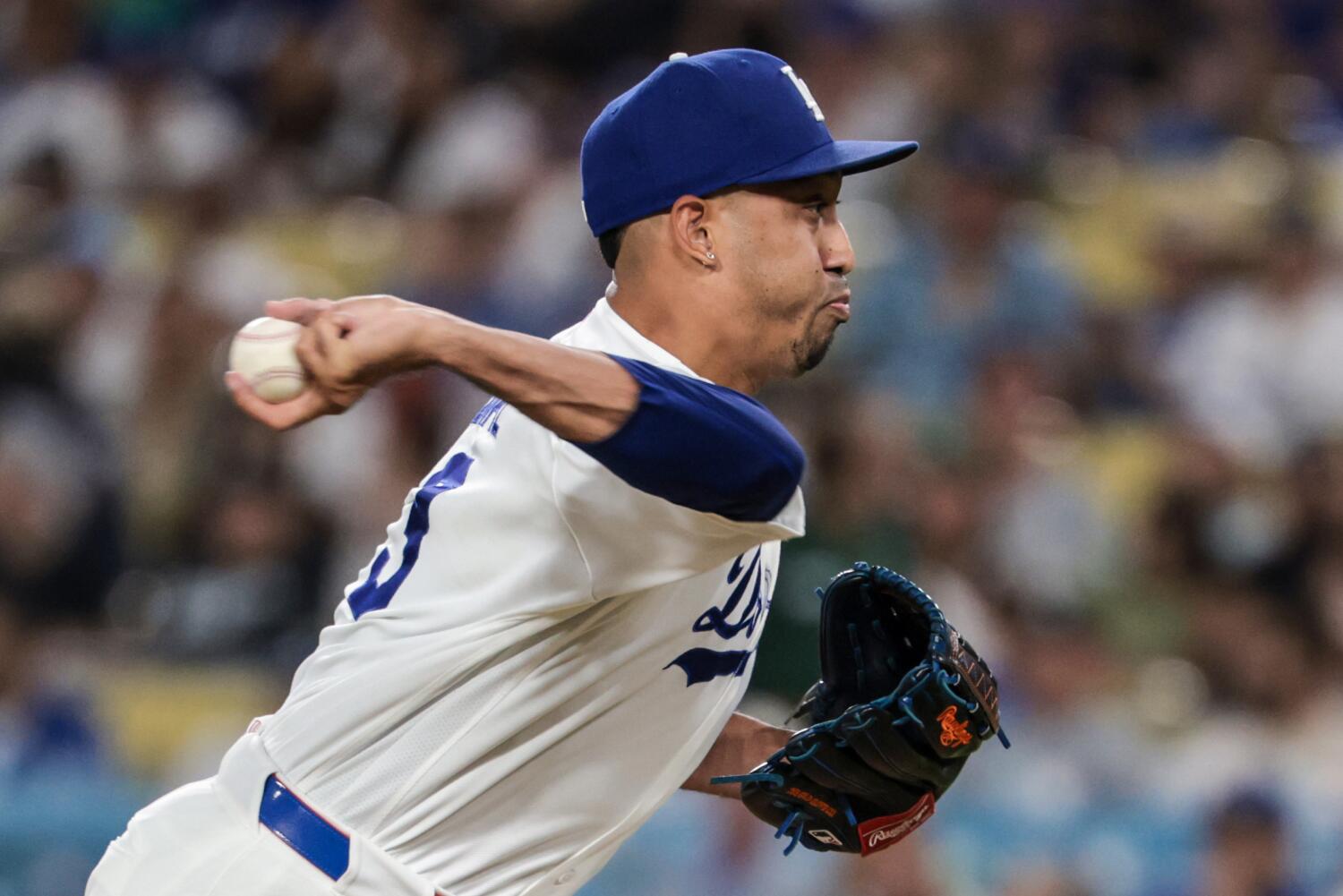
The media wants you to applaud the nobility of failure. When Edwin Díaz stood before reporters and uttered the mandatory penitent phrase of a high-priced athlete whose ERA sits in the stratosphere, the baseball world nodded in solemn agreement. "I haven't done my job," Díaz conceded, accepting Dodgers manager Dave Roberts' decree that he will return from the injured list to wallow in low-leverage mop-up duty.
Cue the emotional violins. We are supposed to admire the veteran taking his medicine, rebuilding his psyche, and plotting his glorious return to the ninth-inning throne.
It is a comforting narrative. It is also a complete delusion.
The lazy consensus in modern baseball analytics and mainstream beat reporting is that high-leverage failure for elite relievers is primarily a mental block or a confidence crisis treatable by soft-landing reps. Pitch him when the game is out of reach, let him throw his fastballs past a few bottom-of-the-order hitters, watch the velocity tick up, and presto—the 2022 version reappears.
This is not how physics or biomechanics work. And pretending that a three-year, 69-million-dollar investment can be salvaged by hiding him from pressure is organizational malpractice masquerading as patience.
The Mechanical Reality Behind The Collapse
Let us look past the noble quotes and examine what is actually happening on the rubber. Díaz has surrendered 18 earned runs in 13.2 innings for Los Angeles. That is not a slump. That is a structural malfunction.
A right elbow procedure followed immediately by recurring neck stiffness does not just drain a pitcher's confidence; it alters his kinetic chain. When a pitcher loses fractional degrees of thoracic rotation or deceleration control due to physical trauma, his release point shifts. Hitters at the Major League level do not care about your pedigree or your past walk-up music. They care about a fastball that has lost its invisible riding life through the top of the strike zone.
When Díaz was untouchable with the New York Mets, his slider horizontal break and fastball vertical approach angle created an impossible geometry for hitters. This season, those metrics have cratered because his body cannot repeat its delivery.
Putting him in the sixth inning against the bottom of a mediocre lineup does not fix a compromised arm path. If the extension is gone, throwing against down-10 opposition only preserves the status quo of inefficiency.
The Dangerous Fallacy of Leverage Management
Managers love the concept of building a reliever "back up." It sounds logical, mirroring how teams handle starting pitchers returning from extended absences. But a starter throws a hundred pitches and needs volume to rebuild stamina. A reliever's job is output execution under acute stress.
Imagine a scenario where a high-end sports car has a cracked transmission. Telling the mechanic to drive it slowly around a empty parking lot doesn't repair the gears; it simply delays the inevitable moment you put your foot down on the highway and the transmission shreds itself entirely.
By sheltering Díaz in low-leverage spots, the Dodgers are attempting to manufacture cheap success. But high-leverage pitching is not a skill unlocked by accumulating stats against low-tier hitters in blowout games. In fact, analytical studies on leverage response show that elite closers actually maintain their stuff regardless of pressure; their core mechanical baselines simply either function or they do not. If Díaz's baseline is broken, a low-leverage environment is nothing more than an expensive holding pattern for a roster spot that Los Angeles needs to win a World Series.
What Should Actually Happen
The Dodgers do not have the luxury of sentimental reclamation projects. With Tanner Scott, Evan Phillips, and Alex Vesia locking down high-pressure frames, the bullpen has functional architecture.
If Díaz cannot get major-league hitters out when his mechanics are strained, no amount of August low-leverage breathing room will alter his October readiness. The front office needs to stop worrying about protecting an asset's feelings or justifying winter ledger sheets.
Stop praising the humility of a broken arm. Cut the losses, demand a second opinion on the physical sequencing, or accept that the 69 million dollar gamble is a write-off.
The ninth inning waits for no man. And comfort never cured a velocity drop.