Every few months, an international monitoring group or diplomatic board drops a grim dossier on Gaza, predicting imminent ceasefire collapse unless outside powers intervene before midnight. The headlines follow a predictable script. Analysts wring their hands. Pundits demand immediate, sweeping diplomatic breakthroughs.
They are reading the dashboard backward.
Having spent two decades dissecting asymmetric conflicts and ceasefire architecture from Beirut to Baghdad, I can tell you the dirty secret of modern conflict resolution: a fragile, constantly teetering truce is not a sign that the mechanism is broken. In conflicts defined by irreconcilable core objectives, perpetual brinkmanship is the mechanism itself.
The recent warning from the Board of Peace—claiming that the Gaza truce faces total collapse without immediate external action—relies on the classic diplomatic fallacy that stability equals peace, and instability equals failure. When observers treat every violation, stalled prisoner exchange, or border closure as a fatal heart attack rather than chronic hypertension, they misdiagnose the entire conflict. Worse, they prescribe treatments that actually accelerate the violence they claim to prevent.
The Myth of the Self-Sustaining Truce
Mainstream coverage of the Board of Peace report treats a ceasefire like a bridge: build it right, pour enough international concrete, and traffic flows smoothly forever.
That model works for conventional state-on-state wars where both capitals want to stop bleeding money and soldiers. Look at the 1953 Korean Armistice or the 1979 Egypt-Israel peace treaty. Those agreements held because centralized states had clear borders, uniform chains of command, and more to lose from renewed war than from compromise.
Gaza does not fit that mold. Neither do most modern hybrid conflicts.
In reality, contemporary ceasefires function less like bridges and more like shock absorbers on a truck driving over boulders. Their job is not to eliminate the bumps; it is to absorb kinetic energy without snapping the axle. Political scientist Virginia Page Fortna, whose empirical work on ceasefire durability remains the gold standard in conflict studies, demonstrated decades ago that truces in asymmetric wars rarely fail because of a lack of diplomatic goodwill. They fail when the monitoring mechanisms try to force permanent political resolutions onto parties that still believe time is on their side.
When the Board of Peace demands "immediate action" to save the truce, they are usually asking mediators to force premature concessions on governance, disarmament, or border control. Pushing two mortal enemies to sign a permanent marriage contract while they are still holding knives does not save the ceasefire. It gives both sides a concrete reason to blow up the table before they get locked into unfavorable terms.
Why Brinkmanship Keeps the Guns Quiet
If both sides know a full-scale return to war carries catastrophic costs, why do they constantly push the truce to the absolute brink?
Because in protracted conflicts, crisis is the only currency that buys domestic legitimacy and international attention.
Imagine a scenario where a ceasefire in Gaza actually became quiet, boring, and self-sustaining for two straight years without any final political settlement. What happens to the militant factions? Their raison d'être evaporates, and internal rivals accuse them of surrendering without achieving statehood or lifting blockades. What happens to the Israeli government? Hardline coalition partners revolt over leaving an armed adversary intact on the southern border, while international pressure to make painful territorial concessions evaporates the moment the cameras leave.
Silence is politically lethal to leaders on both sides. Controlled crisis is politically profitable.
Therefore, each side engages in calibrated escalation—delaying an aid convoy, firing a stray rocket into an unpopulated zone, stalling a negotiation round, or leaking grim intelligence assessments. These actions generate the exact kind of panic reflected in the Board of Peace's report. Mediators rush in with fresh cash, fuel, diplomatic cover, or tactical concessions to "save" the truce. Both sides pocket the emergency payoffs, claim victory to their domestic audiences, and reset the clock for another six weeks.
I have watched negotiators in Cairo and Doha burn through millions of dollars in emergency stabilization funds just to buy thirty days of relative quiet. They call it crisis management. On the ground, operators call it paying the rent.
What the Headlines Get Wrong About Ceasefire Collapses
If you read standard news coverage or search for answers on why Middle East truces fail, you run into the same recycled talking points. Let us dismantle the three biggest misconceptions driving the current panic.
Does a ceasefire violation mean the truce has failed?
No. Treating every kinetic incident as the death of an agreement is amateur hour. In the study of conflict termination, scholars distinguish between isolating incidents and strategic defection. An isolating incident happens when a rogue cell fires mortar rounds or a local commander miscalculates rules of engagement. Strategic defection happens when leadership decides war is once again cheaper than peace.
When reports lump tactical friction together with strategic collapse, they create a self-fulfilling prophecy. If external backers believe the truce is already dead, they stop funding humanitarian corridors and pull back observers, removing the very friction that was slowing down a return to full-scale combat.
Will deploying more international monitors fix the problem?
Rarely, and often it makes things worse. International observers without an enforcement mandate—and no Western or Arab nation is volunteering troops to fight in Gaza—act as human tripwires rather than peacekeepers.
History proves this ruthlessly. From the United Nations Interim Force in Lebanon (UNIFIL) along the Blue Line to the OSCE Special Monitoring Mission in eastern Ukraine prior to 2022, unarmed or lightly armed monitors cannot stop a party determined to shoot. Worse, combatants routinely use international observers as shields, staging provocations near monitoring posts knowing the other side hesitates to return fire for fear of causing an international incident. Adding more clipboards to Gaza does not change the balance of power.
Is immediate diplomatic intervention always better than waiting?
Urgency is the enemy of leverage. Every time an outside body declares that the sky is falling and demands an emergency summit within 48 hours, they hand maximum leverage to whoever is most willing to walk away from the table.
Professional hostage negotiators know that showing panic validates the captor's timeline. Diplomatic boards that issue breathless warnings of imminent collapse signal to local actors that the international community is desperate to avoid headlines about renewed fighting. Local leaders immediately raise their price.
The Uncomfortable Truth About Asymmetric Leverage
To understand why the Board of Peace's prescription falls short, you have to look at the structural asymmetry of the battlefield.
One side possesses overwhelming conventional military superiority, precision intelligence, and total control over airspace, maritime borders, and utility grids. The other side possesses subterranean infrastructure, decentralized command cells, civilian human terrain, and the ability to impose prolonged psychological and economic attrition.
When external diplomats talk about "mutual compliance," they are speaking a language that does not translate across this divide.
- For a conventional military, compliance is binary and visible. Troops either withdraw from a corridor or they do not. Airstrikes either stop or they continue. Every movement is tracked by commercial satellites within hours.
- For an asymmetric insurgency, compliance is opaque and reversible. Fighters blend into civilian populations. Weapons are cached underground. Rebuilding tunnels or recruiting fighters violates the spirit of a truce without triggering a clear, undeniable breach on a satellite photograph.
Because compliance cannot be verified equally, any ceasefire built on mutual trust is dead on arrival. The truce only holds when the cost of restarting the war remains higher than the pain of enduring the stalemate for both leaderships simultaneously.
Right now, the Board of Peace is focused on patching diplomatic language and begging for emergency aid pledges. Neither of those things alters the core cost-benefit calculation of the men holding the triggers.
The Downside of the Cold-Blooded Approach
I will be the first to admit the brutal flaw in treating ceasefire fragility as normal: the human cost is staggering.
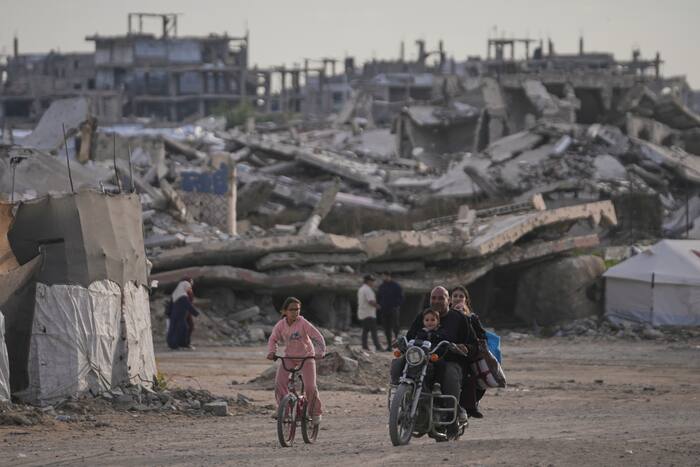
When you accept that a truce is an ugly, grinding holding pattern rather than a stepping stone to permanent peace, you are effectively accepting prolonged civilian misery. Living under a "managed crisis" means families remain displaced in temporary shelters, basic infrastructure stays half-rebuilt because donors refuse to fund projects that might be bombed next month, and an entire generation grows up measuring life between emergency summits.
Critics of realist conflict management rightfully point out that indefinite limbo breeds radicalization. When people have no horizon of hope, recruiting the next wave of fighters becomes effortless. That is a real, undeniable vulnerability in my argument. Cynical containment is not a moral victory.
However, pretending that a broken diplomatic framework can magically deliver permanent peace does not save a single civilian life. In fact, when poorly designed peace pushes collapse—as the Oslo process did in 2000, or as premature ceasefires did throughout the Syrian civil war—the resulting backlash is almost always bloodier than the stalemate that preceded it. Bad medicine kills faster than letting the fever run its course.
How Mediators Should Actually Handle the Gaza Stalemate
If you want to keep the guns quiet in Gaza without falling into the trap of panic diplomacy, stop trying to solve the entire conflict every time a warning report drops. Instead, shift from grand diplomatic theater to cold, mechanical friction management.
- Decouple humanitarian logistics from political milestones. Stop allowing aid trucks, water repairs, and medical evacuations to be used as bargaining chips in political negotiations. Automate the baseline flow of civilian essentials through third-party commercial contractors rather than political committees. When food and fuel stop being diplomatic hostages, local factions lose half their incentive to manufacture border crises.
- Replace public summits with silent backchannels. High-profile diplomatic conferences force leaders to perform for hardline voters and militant bases. The most durable de-escalations in Middle East history happened in unmarked hotel rooms in Oman, Jordan, and Egypt with zero press briefings. Take the microphones away, and the threats drop by half.
- Enforce automatic, pre-agreed penalties for violations. Instead of convening an emergency board every time a rocket flies or a border crossing closes, build automatic circuit breakers into the truce. If crossing X closes without cause, funding stream Y pauses automatically for 72 hours. Remove human drama from the punishment so neither side can claim they were bullied by foreign diplomats.
- Stop issuing apocalyptic deadlines. When monitoring boards publish dramatic warnings of imminent collapse, they validate the extremists who claim diplomacy is dead. Treat ceasefire violations like weather reports—routine, expected, and handled by technicians rather than heads of state.
Stop Mistaking Noise for the End of the World
The Board of Peace wants you to believe we are standing on a cliff edge, seconds away from an irreversible abyss unless world leaders scramble into action today.
Look closer at the ground beneath your feet. We are not on a cliff edge. We are walking across a permanent minefield that both sides have carefully mapped out to keep each other at bay without triggering total annihilation.
The truce in Gaza is bruised, cynical, and perpetually on life support—and that is precisely why it has survived longer than the pundits predicted. Stop demanding a miracle cure from diplomats who cannot deliver one, and start recognizing that in the wreckage of asymmetric war, an ugly, limping stalemate is often the closest thing to peace anyone is going to get.