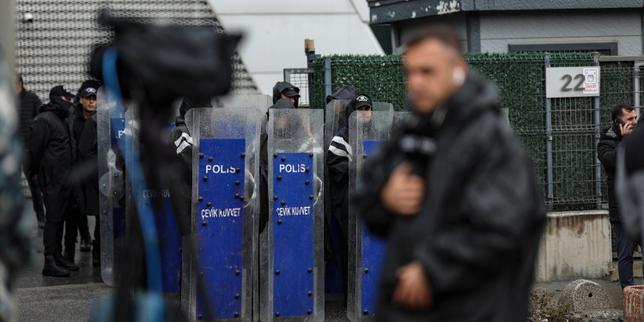
Courts raid newsrooms. Regulators slap fines on broadcasters. Reporters stand outside courthouses with press badges clipped to their lapels.
Every time a fresh crackdown hits Turkish journalism, foreign correspondents write the same elegy. They count seized assets, quote press freedom indexes, and frame the story as a simple duel between a heavy-handed state and fragile newsrooms.
That diagnosis is lazy. Worse, it misses why independent outlets in Turkey keep bleeding out even between headline-grabbing raids.
Censorship in Turkey does not run only on handcuffs and broadcast blackouts. It runs on balance sheets, ad boycotts, regulatory licensing, and legacy business habits that pretend the 2005 newspaper model still works in an era of state-aligned conglomerates.
If you want to understand what is actually squeezing independent media in Turkey, stop counting only arrests. Follow the cash flow, the regulatory chokepoints, and the habits newsrooms refuse to break.
The Lazy Consensus Around Turkish Press Freedom
Standard international reporting treats Turkey's media crisis like a slow-motion demolition derby. One building falls, then another, until almost nothing remains standing.
That framing feels tidy. It gives readers a clear villain and a clear victim. It also hides two huge realities that complicate the picture.
First, Turkish media has never been a single, uniform block of independent watchdogs that suddenly collapsed overnight. For decades, major outlets were tied to holding companies with broad commercial interests in energy, construction, telecoms, and banking. When business conglomerates have pipelines, public tenders, or credit lines at stake, editorial independence faces pressure long before a prosecutor picks up a pen.
Second, focusing almost exclusively on overt repression—court orders, RTÜK fines, detentions, accreditation blocks—treats independent outlets like passive targets. Repression is real and severe. Organizations like the Committee to Protect Journalists and Reporters Without Borders have documented recurring legal pressure, detentions, and broadcast penalties over many years. Yet treating newsrooms solely as victims ignores how structural economics and outdated audience models hollow them out from the inside.
I have worked on media sustainability and newsroom strategy across markets where state pressure and commercial distortion collide. I have watched outlets burn through donor grants or founder savings while clinging to high-overhead newsroom structures built for mass print or linear TV. When ad budgets follow political alignment and state-linked conglomerates dominate distribution, a traditional newsroom cost structure becomes a slow-motion suicide machine.
How the Squeeze Actually Works
To see why independent outlets struggle to survive, look at four interlocking mechanisms rather than a single lever.
1. Ownership Concentration and Commercial Leverage
Over the past two decades, Turkey's largest media assets consolidated heavily into hands closely aligned with the ruling Justice and Development Party (AKP) and business groups tied to state contracts. Media scholar Ceren Sözeri and researchers at the Media Ownership Monitor have long highlighted how conglomerate ownership links newsrooms to broader commercial empires.
When a conglomerate owns a television network alongside construction or energy firms, news coverage becomes an asset on a much larger ledger. Independent outlets do not have that cushion. When a downturn hits or advertisers pull back, there is no parent construction division to absorb the loss.
2. Regulatory Friction and Broadcast Chokepoints
Television and digital platforms face layers of oversight. The Radio and Television Supreme Council, known as RTÜK, has repeatedly issued fines and temporary broadcast suspensions against critical channels over coverage deemed contrary to legal standards or public interest rules.
Even when a channel survives a suspension, regulatory uncertainty raises the cost of every broadcast. Lawyers review scripts before airtime. Producers self-edit to avoid multi-day blackouts that wipe out weekly revenue. A fine or five-day suspension is not just a headline; it is a direct hit to cash flow and advertiser confidence.
3. The Ad Revenue Distortion
Commercial advertising in any market follows reach, demographics, and brand safety. In a polarized media environment, brand safety gets warped. Private corporations that rely on public procurement, zoning permits, or state banks think twice before placing ads on outlets that draw official criticism.
Meanwhile, state-linked advertising and public announcements flow disproportionately toward compliant media. Independent digital outlets and smaller broadcasters are left fighting over a shrunken pool of commercial sponsors, audience memberships, and international grants.
4. The Legacy Newsroom Trap
Here is the part press freedom advocates rarely say out loud: many independent outlets still run like miniature versions of the institutions they criticize.
They hire large editorial staffs without clear unit economics. They chase daily breaking news cycles where algorithmic platforms—not their own websites—capture the eyeballs and ad pennies. They treat audience revenue as an afterthought until crisis hits, then launch emergency fundraising appeals that spike once and fade.
Imagine a scenario where an independent investigative site builds sharp reporting on municipal budgets and supply chains, yet publishes ten thin wire-style updates a day just to keep traffic graphs moving. The thin updates eat reporter hours, dilute the brand, and earn pennies per view, while the high-value investigations that readers actually care about get buried in the feed.
Answering the Questions People Actually Ask
When people search for news on Turkish press freedom, they usually ask a few standard questions. Most of those questions carry hidden assumptions worth testing.
"Are there any independent media outlets left in Turkey?"
Yes, but "independent" is not a binary switch—it is a spectrum defined by funding, editorial autonomy, and distribution reach. A handful of television channels, digital news sites, podcasts, YouTube channels, and investigative desks still challenge official narratives.
What has shrunk dramatically is scale and commercial cushion. Reaching millions of households on linear television carries far higher regulatory and financial risk than publishing a newsletter, YouTube show, or independent web outlet. Calling the entire landscape dead is factually wrong; pretending small digital outlets have the same reach or leverage as legacy broadcasters is equally dishonest.
"Why don't independent outlets just rely on readers or crowdfunding?"
Because reader revenue in a high-inflation, cost-of-living-squeezed economy is hard to scale fast enough to fund heavy investigative reporting. Asking everyday readers—many dealing with steep household inflation—to pay recurring subscriptions is a steep climb.
Crowdfunding and reader memberships work best as one pillar of a diversified model, paired with niche events, specialized newsletters, licensing, or transparent philanthropic backing. Anyone claiming reader donations alone can replace an entire broadcast or print business model is selling fantasy.
"What happens when social media and YouTube become the main battleground?"
Independent journalists have increasingly moved to YouTube, X, podcasts, and independent digital platforms to bypass traditional gatekeepers. That shift opens real breathing room—lower overhead, faster formats, direct connection with audiences.
It also creates a new vulnerability: rented land. Platform algorithms shift without warning, accounts face takedown or visibility pressures, and digital ad rates rarely match legacy television margins. Moving to digital solves the broadcast tower problem; it does not solve sustainable business economics.
What Independent Outlets—and Their Supporters—Get Wrong
International observers often treat independent journalism like a charity case that just needs another grant round or a strongly worded diplomatic statement. That approach keeps outlets alive on life support without fixing why they bleed money every month.
Grant dependency has its own trap. Donor cycles end. Priorities shift. A newsroom built around external grants rather than domestic audience value and lean operations can fold the moment a program wraps up.
My contrarian take has real downsides, and I will state them plainly:
- Commercial discipline cannot out-muscle state power. No smart subscription funnel or lean newsroom structure can stop an arbitrary court order, asset freeze, or internet throttling on its own.
- Chasing profitability can tempt editorial compromise. If an outlet bends coverage to chase a commercial sponsor or algorithmic trend, it loses the exact trust that makes it valuable in the first place.
- Lean operations mean smaller teams. Fewer staffers means fewer simultaneous beats, longer hours, and real burnout risk for reporters already under heavy stress.
Ignoring politics in favor of pure business strategy is naive. Ignoring business strategy in favor of pure political outrage is fatal.
Unconventional Moves That Actually Work
If you run an independent outlet in Turkey—or fund one—stop repeating playbooks designed for healthy, open ad markets. Focus on survival mechanics that fit a high-friction environment:
- Cut low-margin volume; double down on irreplaceable beats. Stop competing with aggregators on commodity news. Put scarce reporting hours into original investigations, specialized sector coverage, or local accountability that no state-aligned outlet will touch.
- Build direct audience channels off rented platforms. Pair social distribution with email lists, audio feeds, and direct web memberships so an algorithm tweak or account restriction does not wipe out your entire audience overnight.
- Price memberships for real value, not pity. Do not ask people to subscribe just to "save democracy." Give paying members something concrete: deeper briefings, Q&As, early access, ad-free feeds, or community spaces.
- Diversify revenue before crisis hits. Combine small reader tiers, non-conflicted commercial sponsorships, specialized B2B or research products where appropriate, and multi-year institutional support—never rely on a single faucet.
- Audit legal and operational risk like a CFO, not just an editor. Keep clean corporate separation, clear editorial guidelines, secure communications, and cash reserves sized for sudden disruption rather than wishful thinking.
Stop treating Turkey's independent media story like a neat tragedy with no agency left in the room. Build durable unit economics, guard editorial independence fiercely, and make it as expensive and messy as possible to silence the work.