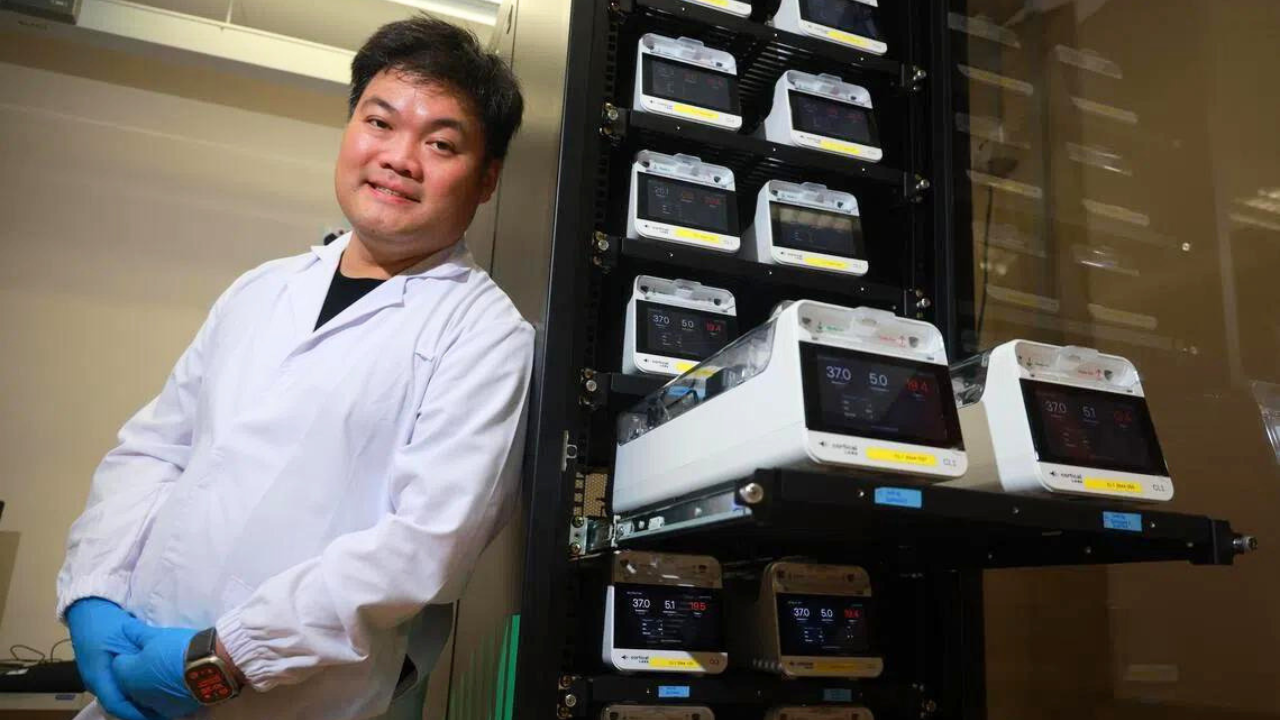
The tech press is hyperventilating over Singapore's new biological data centre prototype, painting a sci-fi picture of server racks powered by sixteen million living human neurons. Headlines scream about a revolution in artificial intelligence, energy efficiency, and wetware computing.
It is a fantastic story for grant committees and tech blogs. It is also an operational dead end. For a closer look into similar topics, we suggest: this related article.
I have watched enterprises blow millions chasing headline-grabbing architectural fantasies while ignoring basic infrastructure math. This biological computing pivot is not a stepping stone to smarter machines. It is a desperate distraction from the actual crisis plaguing modern data infrastructure.
The Energy Savings Myth
The primary argument for wetware architecture rests on power consumption. A traditional silicon rack packed with advanced graphic processing units devours kilowatts, generates staggering heat, and requires intensive liquid cooling. By contrast, a cluster of biological units running on microelectrode arrays sips minimal wattage. For further background on this topic, comprehensive analysis is available at Engadget.
Proponents point out that brain cells use a fraction of the energy required by digital silicon. What they omit in the press releases is the maintenance overhead.
Living human neurons do not run on electricity alone. They require a constant supply of specialized media: a precise chemical cocktail of glucose, amino acids, vitamins, and pH buffers. They need automated gas mixers pumping oxygen, nitrogen, and carbon dioxide. They demand sterile environments, biohazard protocols, and cell culture replacement cycles every few months because biological tissue degrades.
When you factor in the energy and capital expenditure required to manufacture growth media, maintain strict sterile sterilization, run life-support pumps, and manage biological waste disposal, the supposed carbon advantage evaporates. Trading a cooling tower for a multi-tiered biotech life-support farm solves nothing. You are simply swapping one set of heavy operational headaches for a much messier, hyper-fragile one.
The Scalability Wall
Imagine a scenario where a commercial cloud provider attempts to replace a standard hyperscale data hall with biological processing units.
Silicon scales through lithography. You shrink the transistor, stamp billions of copies, and clock them at gigahertz speeds with predictable, deterministic output. Biology scales through mitosis and cell signaling, two processes notoriously resistant to neat engineering constraints. Neural networks grown from stem cells are inherently stochastic. They drift, they fatigue, they mutate, and they die.
Brains are magnificent at running on low power, but they achieve this through massive, highly specialized parallel evolution tailored for survival in a wet, dangerous physical world—not for multiplying matrices or executing double-precision floating-point arithmetic. For deterministic data processing, biological wetware is like trying to use a bowl of live earthworms to calculate tax returns. It moves, but it gets the math completely wrong.
What They Should Be Building Instead
The fascination with human neurons in server racks reveals a profound lack of imagination regarding silicon efficiency. We are forcing organic chemistry into data centers because computer architects refuse to optimize software for raw hardware limits.
Instead of culturing human cells inside server chassis to shave off watts, engineering teams should focus on native neuromorphic silicon chips that mimic neural topology without the biological decay. True progress looks like asynchronous event-driven architectures, optical interconnects, and domain-specific accelerators built on solid state materials that do not need to be fed sugar water every seventy-two hours.
Stop treating data centers like petri dishes. If your computational model requires a lab technician in a white coat to pipet nutrients into a server rack, your architecture has already failed.