Every time a reporter gets their hard pass yanked at the White House, Washington breaks out the fainting couches. Politicians shrug for the cameras. Cable news panels hyperventilate about the death of the First Amendment. And the public gets fed a steady diet of manufactured outrage designed to keep eyes glued to screens while the real power plays happen off-camera.
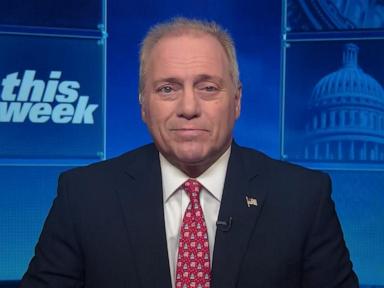
When House Majority Leader Steve Scalise recently offered his tepid "I don't know why he did it" response regarding a White House press ban, the political media class treated it like a breaking news revelation. They framed it as a mystery of executive temperament or a crisis of democratic norms.
They missed the entire point.
The lazy consensus in D.C. media circles is that White House press bans are emotional outbursts—impulsive punishments meted out by thin-skinned administrations against pesky truth-tellers. That narrative flatters journalists. It casts them as heroic martyrs standing athwart tyranny with nothing but a notepad and a microphone.
It is also completely wrong.
Having spent years watching political communications teams operate from the inside, I can tell you a hard truth that neither the West Wing nor the White House Correspondents' Association wants you to hear. Press bans are rarely about anger. They are calculated, cynical business transactions. Both sides profit from the fight, and the American voter is the only one getting fleeced.
The Manufactured Outrage Machine
Let’s strip away the constitutional cosplay and look at the mechanics of modern political media.
When an administration revokes a reporter's credentials—whether it was the Trump White House sparring with CNN's Jim Acosta, the Biden administration quietly rewriting credential rules to purge hundreds of legacy and independent pass holders in 2023, or any subsequent flashpoint—the playbook never changes.
First, the press shop creates a friction point. They deny access, revoke a badge, or freeze out an outlet.
Second, the targeted outlet turns that administrative action into a multi-day marketing campaign. Subscriptions spike. Cable ratings jump. The banished reporter suddenly becomes a household name, parlaying their "exile" into primetime appearances and seven-figure book deals.
Third, congressional leaders from the opposing or aligned party—like Scalise—step up to a bank of microphones in the Capitol basement and offer a non-answer. "I don't know why he did it."
Why do politicians play dumb? Because taking a hard stance costs political capital, while feigning confusion keeps the news cycle spinning on a trivial process story rather than substantive policy failures. If the media is spending 72 hours debating who gets to sit in the Brady Press Briefing Room, they are not spending 72 hours dissecting a bloated omnibus spending bill or a failing foreign policy initiative.
You Are Asking the Wrong Question
If you are searching for whether a White House press ban is legal, constitutional, or justified, you are asking the wrong question entirely.
The real question is: Why does anyone still pretend the White House briefing room produces actual journalism?
Let’s look at the actual output of that room. For decades, the daily press briefing has been an exercise in mutual deception. The Press Secretary stands at the podium to recite pre-approved talking points that reveal zero actionable information. Meanwhile, the reporters in the front rows ask theatrical, bad-faith questions designed specifically to generate a 15-second viral clip for social media.
Nobody breaks real news in the briefing room. Watergate was not uncovered by a guy shouting a question over a roaring helicopter on the South Lawn. The Pentagon Papers were not leaked through an official press credential.
When you understand that the briefing room is a television studio rather than an investigative hub, the stakes of a "press ban" collapse to zero. Being banned from the White House press corps today is the equivalent of being banned from a timeshare presentation. You aren't missing out on hidden truths; you're just missing out on the catering and the spin.
Dismantling the Common Myths Around Press Access
Whenever these credential fights erupt, the same predictable questions flood search engines and cable chyrons. Most of them are built on completely flawed premises. Let’s dismantle them with actual legal and historical facts.
Does the First Amendment guarantee a reporter a White House press pass?
No. And anyone telling you otherwise hasn't read the case law.
The First Amendment prevents the government from censoring speech or restricting publication. It does not obligate the President of the United States to invite specific individuals onto private or restricted government property for a Q&A session.
The legal standard here actually comes from a 1977 D.C. Circuit Court of Appeals ruling, Sherrill v. Knight. In that case, the court ruled that while the White House cannot deny a press pass arbitrarily or without due process—meaning they must have clear standards and provide notice and an opportunity to respond—the Secret Service and the press office retain broad authority to set the rules of access. The Constitution protects your right to publish a newspaper; it does not guarantee you a front-row seat in the West Wing.
Why did Steve Scalise say he didn't know why the ban happened?
Because in Washington, ignorance is the ultimate shield.
If a senior lawmaker defends a press ban, they get hammered by the press corps for attacking free speech. If they condemn the ban, they alienate their own base, which overwhelmingly views legacy media outlets as partisan adversaries. Saying "I don't know why he did it" is a calculated punt. It allows the politician to acknowledge the news cycle without stepping on a landmine. It is cowardice dressed up as candor.
Do press bans actually silence journalists?
This is the most absurd myth of all. In an era where any reporter with an internet connection can broadcast to millions of people instantaneously, revoking a physical plastic badge does nothing to silence anyone.
In fact, it does the exact opposite. It amplifies them.
Think about the Streisand Effect—the phenomenon where attempting to hide or censor something only draws massive public attention to it. Every single time a White House tries to freeze out a journalist, that journalist’s influence skyrockets. If an administration actually wanted to neutralize an adversarial reporter, they wouldn't ban them. They would call on them every single day, give them dull, hyper-technical 10-minute answers, and bore their audience into changing the channel.
The Quiet Purge Nobody Talked About
To see the hypocrisy of the political media class in full bloom, you don't need to look at loud, theatrical bans. Look at the quiet ones.
In May 2023, the Biden White House implemented a strict new set of criteria for hard passes. Overnight, more than 440 reporters lost their permanent credentials—roughly a third of the entire press corps.
Did cable news run non-stop chyrons about the death of democracy? Did congressional leaders rush to the microphones to express their bewilderment?
Hardly. Because the reporters purged in that sweep were mostly freelancers, independent bloggers, and smaller regional outlets who lacked the institutional muscle of the major networks. The legacy media giants largely shrugged—or quietly cheered—because fewer bodies in the briefing room meant less competition for their own correspondents.
This exposes the dirty secret of the Washington press corps. Their outrage over "press freedom" is entirely selective. When a superstar anchor from a legacy network loses a badge, it is treated as a constitutional crisis. When hundreds of independent journalists get locked out by bureaucratic rule changes, it is treated as routine housekeeping.
The Downside of the Contrarian View
Now, let's be brutally honest about the risks of dismissing these bans entirely.
If you take the stance that press credentials don't matter, you run into a legitimate governance problem: the normalization of executive insulation.
Presidents already live inside the thickest bubble on earth. They are surrounded by sycophants, shielded by massive security apparatuses, and fed curated intelligence briefings. When an administration successfully walls off adversarial questioning—even theatrical questioning—it lowers the friction for bad policy. Even if the briefing room is 90% theater, that remaining 10% forces press secretaries to go on the record. Having an official lie or dodge documented on video in the National Archives still carries historical weight.
Furthermore, if the rules for credentialing become purely arbitrary, every incoming administration will simply purge the entire press corps on January 20th and replace them with partisan cheerleaders. Imagine a scenario where a Republican president only allows conservative podcasters in the room, and four years later, a Democratic president replaces them exclusively with progressive Substack writers. At that point, the White House press corps ceases to exist as an institution and officially becomes a state-sponsored fan club.
So yes, process matters. Due process matters. Arbitrary revocations are bad precedent.
How Real Journalism Actually Works (And What You Should Do Instead)
If you are a news consumer, a political observer, or a working journalist who actually cares about accountability, stop watching the palace intrigue over who gets a seat in the West Wing. You are letting the magicians direct your eyes to their left hand while their right hand picks your pocket.
Here is how real accountability journalism happens in Washington, and how you should adjust your media diet to find it:
- Follow the FOIA filers, not the TV anchors. The reporters doing the heaviest lifting in D.C. rarely appear on Sunday morning talk shows. They are filing Freedom of Information Act requests, digging through procurement databases, and reading 800-page inspector general reports.
- Watch how politicians vote, not what they say in hallways. When a leader like Scalise or any member of Congress offers a pithy quote about a media dust-up, ignore it. Track their committee markups and campaign donor disclosures. Speech in Washington is free; legislative action costs favors.
- Reward outlets that break stories without access. When a reporter loses their White House pass, watch what they do next. Do they pivot to cultivating mid-level agency sources who actually know where the bodies are buried? Or do they just go on TV to complain about losing their pass? That tells you immediately whether they were a journalist or a celebrity.
The next time a politician shrugs at a White House press ban and says they don't know why it happened, don't buy the act. They know exactly why it happened. It happened because conflict sells, distraction works, and keeping you focused on a plastic badge keeps you from looking at what they are actually doing with your money.
Turn off the briefing room feed, open a federal spending ledger, and start reading the documents they hope you never find.