Read the standard coverage of the Inglewood and SoFi Stadium ballot clash, and you get the same polite, two-sided fairy tale. Mayor James Butts and Stan Kroenke had a falling out. Digital billboards clashed with corporate sponsor exclusivity. A judge ruled the 2015 development agreement invalid. Now voters get to decide at the ballot box.
Boring. Lazy. Dead wrong.
This is not a story about rogue billboards or a sudden personality clash between City Hall and Hollywood Park. It is a structural collision between a cash-starved city facing a reported $30.8 million budget deficit and a private sports-and-real-estate empire that built a fortress on municipal concessions. Calling this a "billboard dispute" is like calling a bank heist a disagreement over lobby decor.
The Lazy Consensus Around the Ballot Fight
Most coverage treats Measures BB and AT on the November 3 ballot as a neat policy tug-of-war. One side supposedly wants cleaner streets and more tax cash for Inglewood. The other side supposedly wants to protect corporate sponsors and stop a sudden power grab.
That framing misses the entire mechanism of how mega-stadium deals actually work.
Cities routinely sign sweetheart agreements when they are desperate for capital, jobs, or civic prestige. When Mayor Butts took office in 2011, Inglewood was staring down severe financial distress. Bringing back the NFL—and eventually landing marquee spectacles like the 2027 Super Bowl and the 2028 Olympics—looked like salvation. Developers put up massive private capital for the stadium and surrounding district, and in exchange, they secured favorable reimbursement structures, infrastructure arrangements, and commercial protections.
The lazy consensus assumes those contracts are carved in stone until someone gets mad. In reality, municipal mega-deals are built on asymmetric leverage that lasts right up until the city realizes how much upside it gave away or how much reimbursement liability it racked up.
Once Superior Court Judge David K. Reinart ruled in September 2026 that the 2015 development agreement was void from the start—citing the 2018 Moreno Valley precedent on how development agreements are formed—the ground shifted underneath both sides. Suddenly, a $448 million reimbursement claim from Kroenke's companies and a $20 million payment Inglewood made in May 2025 before reversing course became open warfare. Add a city-funded $325,000 audit into ticket taxes, and the ballot box turns into proxy artillery.
Why "Who Is Right?" Is the Wrong Question
Ask most voters or observers who is in the right here, and you are already asking the wrong question. Both sides are acting like rational economic players operating inside a broken incentive system.
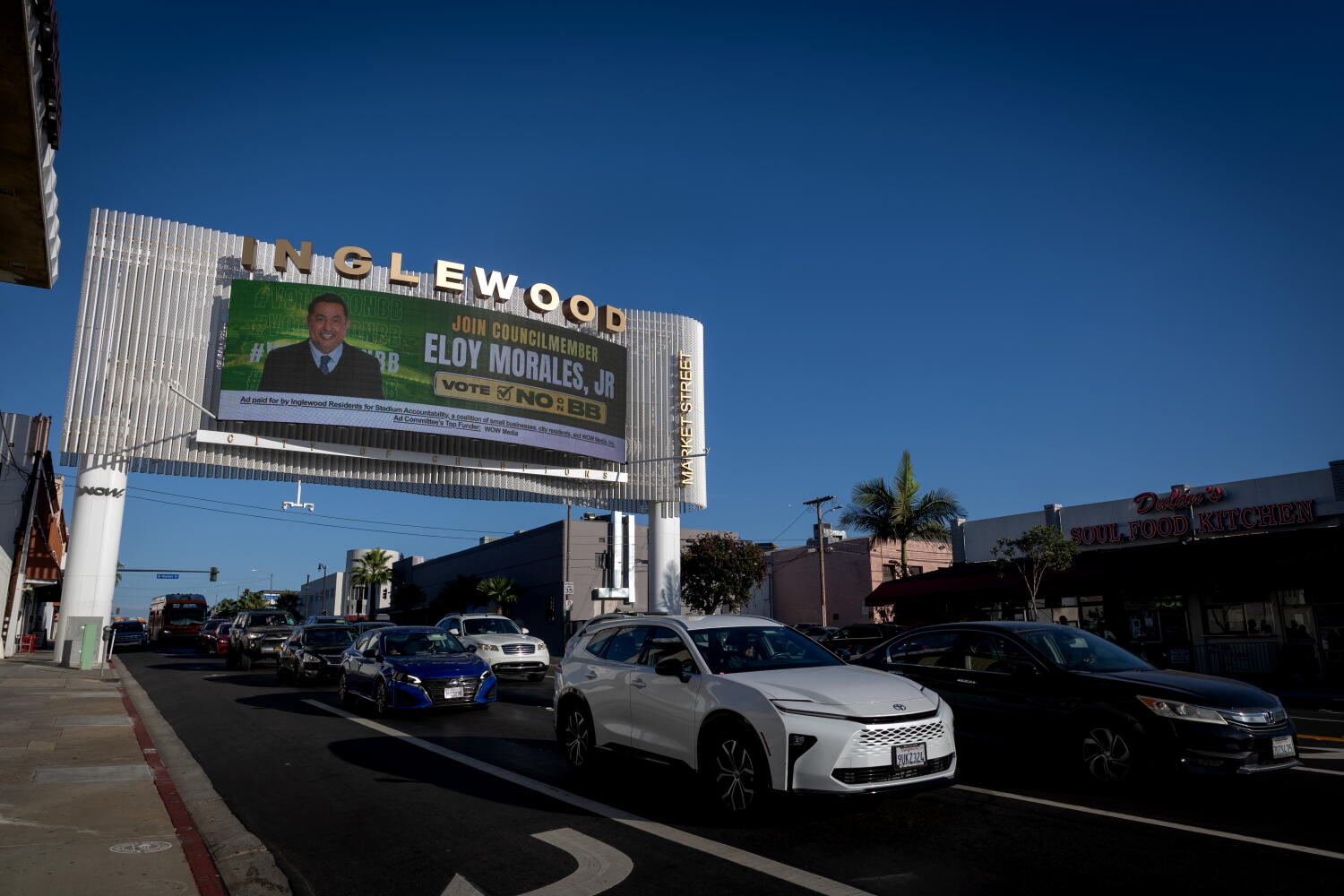
When a stadium operator sells naming rights and multi-million-dollar sponsorships, sponsor exclusivity is the product. If a global beverage giant pays top dollar to own the category inside and around a venue, seeing competing full-motion digital screens pop up across public streets and medians—like the 60-sign, 108-screen network tied to WOW Media—looks like direct dilution of that exclusivity. From the venue operator's spreadsheet, uncoordinated street-level ad inventory eats into brand value.
Flip the lens to City Hall, and the math looks completely different.
Inglewood has been staring at a $30.8 million budget deficit. Municipal budgets do not balance on good intentions or Olympic prestige; they balance on recurring revenue. City budget records show the WOW billboard deal generating up to $7.4 million a year, with city staff estimating $6 million to $8 million in lost revenue if Measure BB restricts advertising on public property. Meanwhile, city estimates for Measure AT—removing the $15 million annual cap on SoFi Stadium's 10% admissions tax and adding a 2.5% admissions tax on smaller venues under 20,000 seats, which hits venues like Intuit Dome—project $45 million to $50 million a year in new revenue.
Side-by-Side: What Each Side Actually Wants
| Stakeholder | Public Talking Point | Real Financial Objective | Primary Vulnerability |
|---|---|---|---|
| Inglewood City Hall | Protecting public revenue, accountability, and municipal authority | Plugging a $30.8M deficit and curbing a $448M reimbursement exposure | Appeals, court challenges, and reputational chill on future deals |
| SoFi / Hollywood Park | Preserving sponsor exclusivity and honoring commitments | Protecting $448M in infrastructure/service reimbursements and ad value | Ballot backlash and public resentment over stadium subsidies |
| Outdoor Ad / WOW | Defending public speech, transparency, and city revenue | Keeping a lucrative 20-year-plus street-media footprint running | Voter pushback against visual clutter or municipal ad wars |
Look at that table and the "clash" stops looking mysterious. It is a fight over who captures the cash flow generated by a world-class entertainment hub—and who absorbs the bill for roads, utilities, streetlights, and event-day policing and emergency services.
The Mechanics They Ignore: Legal Precedent, Audits, and Leverage
If you want to understand why this spilled onto the ballot instead of staying quietly in backrooms, look at three mechanics most articles gloss over.
1. Contract Voiding Is a Weapon, Not a Cure
When a court voids a decade-old development agreement, it does not magically erase history. It creates a legal vacuum.
Consider a thought experiment: Imagine a scenario where a city signs a long-term infrastructure reimbursement pact, collects years of economic activity, pays a $20 million installment, and then declares the underlying contract invalid. The city may dodge one set of contractual obligations, only to trigger years of appellate litigation, lender disputes—especially where cities signed assurances to project lenders—and uncertainty over what happens to past payments and ongoing services.
Winning a round in Superior Court is not the same as collecting cash. Appeals take time, and courts scrutinize retroactive remedies closely.
2. Ticket Tax Audits Change the Bargaining Table
Launching a $325,000 audit into how ticket taxes are assessed, priced, and remitted ahead of the 2027 Super Bowl and 2028 Olympics does two things at once. First, it signals to taxpayers that City Hall is watching every dollar. Second, it puts pressure on venue operators during active political and legal fights.
Even if an audit uncovers messy accounting around fees, bundles, or timing rather than outright fraud, the leverage shifts. Nobody likes fighting a city in court while an audit spotlight is aimed straight at ticket receipts.
3. Ballots Are High-Variance Poker
Putting Measures BB and AT on the ballot alongside a fiercely contested mayoral race—where longtime incumbent James T. Butts Jr. faced Council Member Gloria Gray and a potential runoff—turns a technical legal dispute into a referendum on trust.
Campaign spending tells the real story. Stadium- and billboard-aligned committees poured millions into the fight, and outdoor screens themselves became campaign megaphones. Yet voters rarely read 80-page development agreements or municipal bond covenants. They vote on gut instincts: Are politicians trying to raise taxes? Are billboards taking over my neighborhood? Do I trust the people running City Hall?
What People Also Ask—And Why the Premise Is Usually Flawed
"Did the city just realize the 2015 stadium deal was bad?"
That premise assumes mayors and councils wake up one morning and suddenly discover math. In reality, fiscal pressure forces re-evaluations. When a city has a projected $30.8 million deficit and faces a massive reimbursement demand, every clause in an old agreement gets read through a microscope. Legal theories that sat dormant for years suddenly look urgent when the checking account gets tight.
"Are digital billboards really threatening the Super Bowl and Olympics?"
Not physically. The stadium will still host major events. The real issue is commercial positioning and turf control. Major sports properties guard brand exclusivity fiercely because corporate partners pay eye-watering fees to avoid visual clutter from rivals. Fighting over street-level screens is a proxy battle over who controls the commercial perimeter around the venue.
"Will passing a tax measure automatically fix Inglewood's budget?"
No. Projections are not deposits. Even when a measure projects tens of millions in potential revenue, real collections depend on event calendars, ticket structures, legal challenges, and administrative enforcement. Counting uncollected tax projections as solved deficits is how cities get burned twice.
Battle Scars, Heavy Hitters, and the Catch in My Own Argument
I have watched cities and developers spend millions fighting over post-construction terms that looked crystal clear on ribbon-cutting day. Deals get drafted in moments of high momentum and low friction, when everyone wants the ribbon cut and nobody wants to argue over edge cases. Five or ten years later, when budgets tighten or market power shifts, every ambiguity becomes a multi-million-dollar lawsuit.
In municipal finance and sports infrastructure, scholars and policy analysts—from stadium-economics researchers like Roger Noll and Andrew Zimbalist to municipal law practitioners across California—have pointed out the same structural pattern for decades: public-private venue deals often privatize upside or complicate accountability while leaving cities exposed to shifting fiscal realities and litigation.
Still, I will own the downside of taking a hard-nosed, structural view of this fight. If you treat every municipal clash purely as a battle over leverage, cash flow, and contract validity, you can miss genuine governance concerns—like whether residents got enough public hearings up front, whether street furniture clutters neighborhoods, or whether voters feel shut out of big decisions. Power dynamics explain the mechanics, not every human frustration in the room.
How to Actually Read Stadium-City Battles Going Forward
If you are an investor, operator, policymaker, or voter watching cities wrestle with sports and entertainment districts, skip the press releases and do this instead:
- Follow the reimbursement ledger first. Look at who fronted infrastructure, utilities, and public-safety costs, and how those obligations are repaid. That liability drives behavior far more than speeches.
- Map the ancillary revenue streams. Ticket taxes, parking, concessions, and outdoor advertising are where the real margin pressure lives once construction dust settles.
- Stress-test the legal foundation. Any deal built on questionable procedural authority or unlitigated statutory assumptions carries hidden tail risk until tested in court.
- Watch the political calendar. Ballot measures and municipal elections change incentives overnight; a deal that makes sense in a boardroom can blow up in a precinct.
Mega-stadiums do not create harmony between cities and developers; they magnify whatever financial fault lines were already there.


