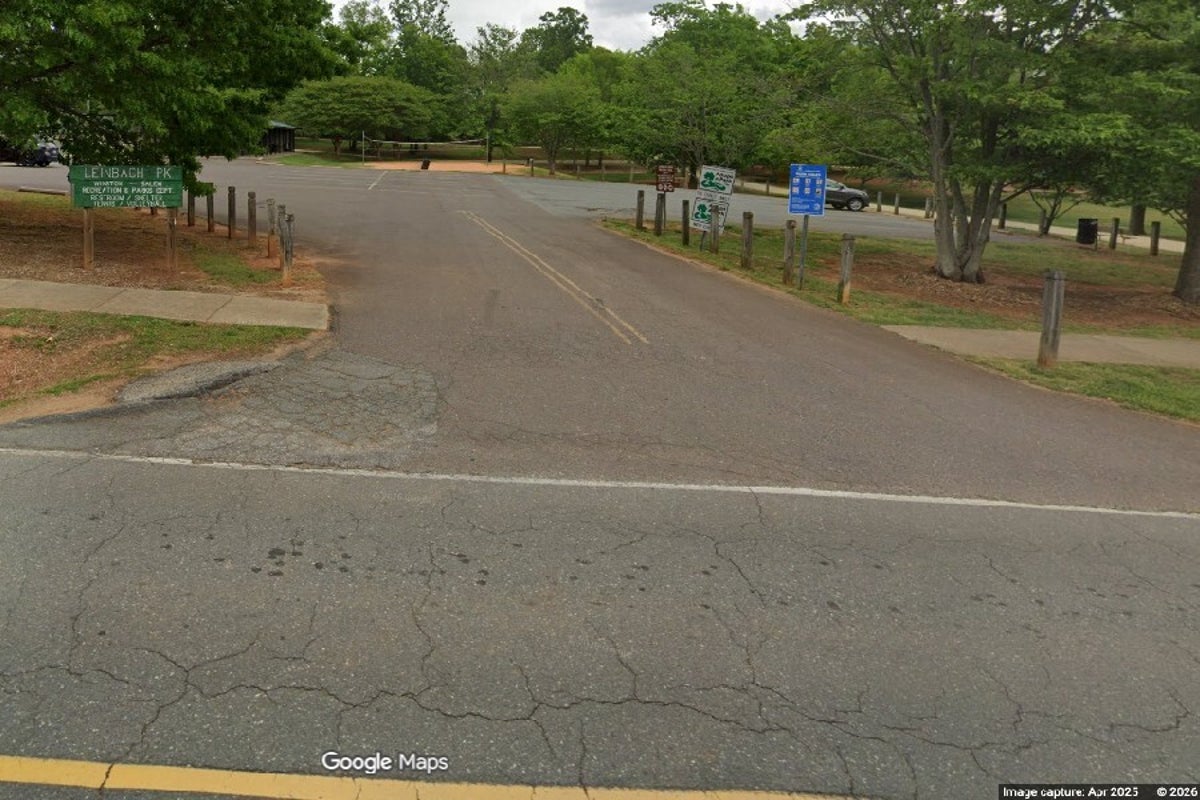
The standard reporting on the North Carolina park shooting follows a tired, hollow script. A "dispute" escalated. A "brawl" turned into a tragedy. Two people are dead, and the community is "reeling." This narrative is more than just lazy; it is a fundamental misdiagnosis of how public spaces fail in modern America. By framing these events as spontaneous eruptions of violence, we ignore the architectural and social blueprints that practically guarantee these outcomes.
We don't have a "brawl" problem. We have a "collision" problem.
The Myth of the Spontaneous Escalation
Mainstream media loves the word "escalated." It implies a slow-motion climb up a ladder of aggression that someone—police, bystanders, or the participants—should have stepped in to stop. This is a fantasy. In high-density, low-oversight environments like public parks during peak hours, the transition from a verbal disagreement to a multi-victim shooting happens in a timeframe measured in heartbeats, not minutes.
When you crowd hundreds of people into a space with limited egress, poor sightlines, and zero barrier to entry, you aren't hosting a community event. You are managing a pressure cooker. The "brawl" isn't the cause; it’s the catalyst for a system that was already at its breaking point.
Why Your Local Park Is a Tactical Nightmare
Most people look at a park and see green grass and picnic tables. I look at a park and see a failure of environmental design. I’ve consulted on urban safety projects where the "aesthetic" of openness actually creates a vacuum of accountability.
- The Porosity Trap: If anyone can enter from any direction at any time without a single point of friction, the "public" nature of the space becomes its greatest liability.
- Acoustic Overload: High-decibel environments (loud music, shouting, engines) mask the early warning signs of conflict. By the time someone notices a fight, the first magazine is already being emptied.
- The Bystander Density Paradox: We are told there is safety in numbers. The reality? High density during a conflict creates a "target-rich environment" where accuracy becomes irrelevant. People don't die because they were targeted; they die because they were in the way of a panicked response.
Stop Asking "Why" and Start Asking "Where"
The "People Also Ask" sections of search engines are currently flooded with questions like "Why is violence increasing in parks?" or "How can we stop park shootings?" These questions are flawed because they focus on the intent of the shooter rather than the utility of the space.
You cannot legislate the intent out of a human being in a moment of rage. You can, however, design a space that makes that rage harder to execute.
If we want to stop these killings, we have to stop treating public parks like sacred, untouchable cows of "open access." True safety requires friction. It requires defined zones of movement. It requires the professionalization of park management that goes beyond a guy in a golf cart checking trash cans.
The Hard Truth About Response Times
The police in North Carolina arrived "shortly after" the calls came in. It didn't matter. It never matters. In a mass casualty event sparked by a physical fight, the damage is done in the first 30 to 60 seconds.
The reliance on "rapid response" is a sedative for the public. It’s a way to make you feel like the state has control over the chaos. It doesn’t. In the time it takes a dispatcher to type an address, a single shooter can alter the lives of dozens of families. If your safety plan starts with "call 911," you don't have a safety plan. You have a cleanup strategy.
The Social Cost of Low-Friction Spaces
We’ve been sold a lie that "unstructured" public space is the pinnacle of democracy. It’s not. It’s a vacuum.
In structured environments—stadiums, private venues, even well-managed festivals—there is a social contract enforced by physical barriers and professional staff. In the "free" park, that contract is replaced by the law of the loudest voice. When we refuse to implement basic security measures—metal detectors at entry points for large gatherings, perimeter fencing, or mandatory permitting for groups over a certain size—we are essentially saying that the idea of an open park is more important than the lives of the people inside it.
The Liability of the "Community Leader" Narrative
Watch the news cycle over the next 48 hours. You will see "community leaders" standing behind podiums calling for "peace" and "dialogue."
This is theater.
Peace isn't a feeling you conjure with a speech. Peace is the byproduct of predictable social order. When you have an environment where the consequences for bringing a weapon into a crowded area are non-existent until after the trigger is pulled, you have failed the community.
I’ve seen cities pour millions into "outreach programs" while the very parks these programs are supposed to protect remain tactical disaster zones with broken lights and zero surveillance. It is a misallocation of resources that borders on criminal negligence.
The Strategy of Intentional Exclusion
Here is the take that will get me cancelled: We need to make parks harder to use.
If you want to reduce mass shootings in public squares, you must reduce the anonymity of the crowd. This means:
- Paid Permitting: Even for small groups. If you have skin in the game (an ID on file, a fee paid), your behavior changes.
- Controlled Access: One way in, one way out. It’s not "exclusionary"; it’s manageable.
- Active Surveillance: Not a grainy CCTV camera from 1998, but real-time, AI-integrated monitoring that flags aggressive physical clusters before a shot is fired.
The downside? It feels less like a "park" and more like a "facility." It’s less "free." It’s less "spontaneous."
But people stop dying.
The Economics of Blood and Grass
Every time a shooting like this happens, property values in the surrounding area take a hit. Local businesses lose revenue. The "cost" of the park skyrockets. We are paying for our "open access" in ways that don't show up on a city budget but are felt in the hollowing out of urban centers.
We are subsidizing chaos in the name of "equity," and the people paying the highest price are the very residents these parks are meant to serve. They lose their safe spaces, their lives, and their peace of mind because we are too afraid to admit that some people shouldn't have unfettered access to a crowd.
The Illusion of the "Good Samaritan"
There is a growing, dangerous rhetoric that more "law-abiding" people carrying guns in these parks would solve the problem.
Imagine a scenario: A fight breaks out. Someone pulls a gun. Two "Good Samaritans" pull theirs. In a park filled with 200 screaming, running people, you now have four points of origin for lead. The police arrive and see four people with guns.
This isn't a solution; it’s a recipe for a higher body count. The "counter-intuitive" truth is that more weapons in an unstructured environment increases the complexity of the threat, making it impossible for anyone—citizen or cop—to identify the "bad guy" until the smoke clears.
Stop Grieving and Start Demanding Infrastructure
We don't need more prayer vigils. We need better fences. We need better lighting. We need a fundamental shift in how we view the "right" to public space.
If a venue cannot guarantee the safety of its patrons, it is closed. Why do we hold our city parks to a lower standard than a dive bar? A park that hosts a "brawl" that turns into a "mass shooting" is a defective product. It is a site of systemic failure that should be shuttered until its physical and social infrastructure is rebuilt from the ground up.
The "tragedy" in North Carolina wasn't an accident. It was a predictable outcome of a design philosophy that values the feeling of freedom over the reality of security.
You can have your open, unfenced, unmonitored grass. Or you can have your children come home alive.
Pick one.