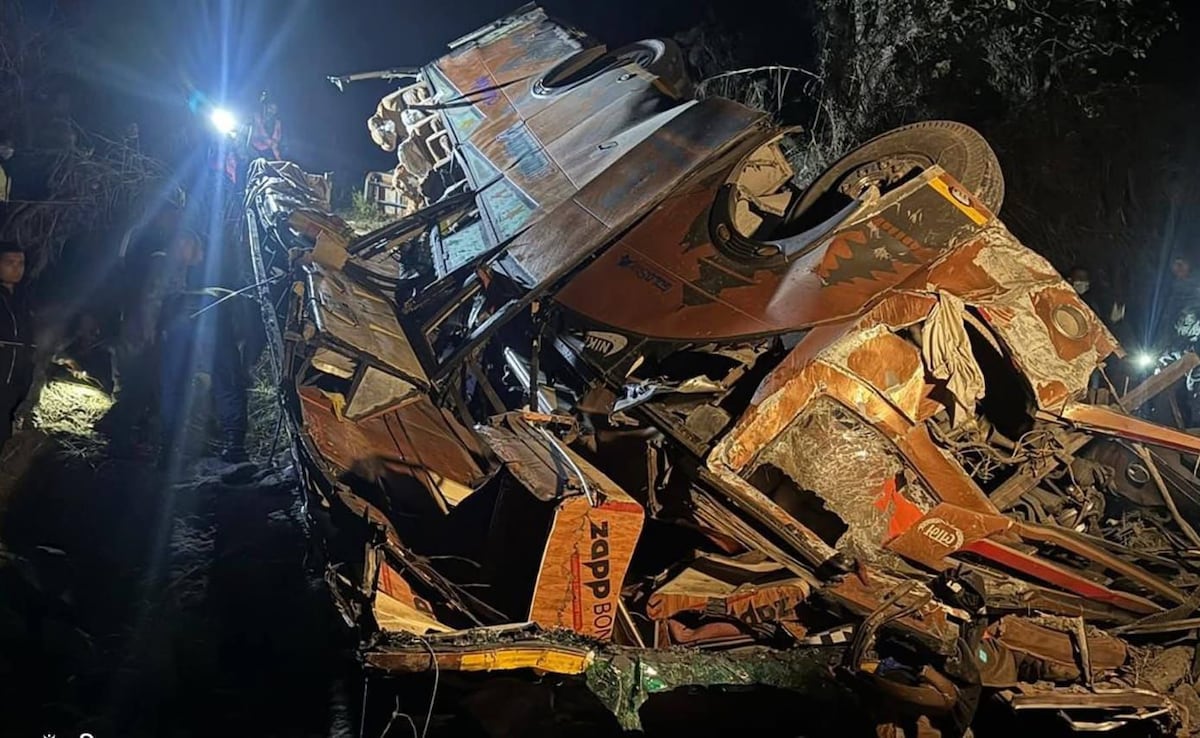
The standard headlines are already rolling out of the press like clockwork. Seven Indian pilgrims dead. A bus plunged into a ravine in Nepal’s Tanahun district. A "tragic accident."
It is a lie.
Calling this an accident is a convenient way for governments and travel operators to wash their hands of a systemic slaughter. When a vehicle carrying dozens of people leaves a winding mountain highway and tumbles into a gorge, we are taught to blame the "treacherous terrain" or "unpredictable weather." We look at the twisted metal and offer prayers.
I have spent fifteen years navigating the logistics of high-altitude transport and crisis management. I have seen the "accident reports" that gather dust in Kathmandu and Delhi. These aren't tragedies. They are the predictable results of a religious industrial complex that prioritizes spiritual merit over mechanical integrity.
The Myth of the Treacherous Road
The first thing the "lazy consensus" media will tell you is that the roads in Nepal are inherently deadly. They aren't. They are difficult, yes, but they are predictable.
Physics doesn't care about your pilgrimage. The coefficient of friction on a wet mountain road is a known variable. The centrifugal force acting on a top-heavy bus taking a hairpin turn at 40km/h is basic $F_c = \frac{mv^2}{r}$.
The road didn't kill those seven people. The failure to respect the physics of the road killed them.
We treat these mountain passes as mystical gauntlets where survival is up to fate. That mindset is the killer. When you frame a journey as a "holy pilgrimage," safety protocols are often viewed as secondary to the spiritual goal. I’ve seen operators overload buses with "just five more" devotees because turning away a seeker feels unpious.
In reality, an overloaded bus in the Himalayas is a kinetic weapon. By shifting the center of gravity higher—often with heavy luggage strapped to the roof—the stability of the vehicle is compromised to the point that a single pothole becomes a death sentence.
The Martyrdom Loophole
There is a dark, unspoken reality in the pilgrimage industry: the normalization of risk through the lens of faith.
If a tourist bus carrying European backpackers goes over a cliff, there is an international outcry and a massive investigation into the trekking company. But when it’s a bus of pilgrims, the narrative shifts. There is a sense of "it was their time" or "they died on a holy path."
This "martyrdom loophole" allows budget tour operators to run ancient fleets with bald tires and "fixed" brakes. Why invest in a modern braking system when your clientele believes their safety is in the hands of a higher power rather than a mechanic?
The industry thrives on this. Low-cost operators undercut legitimate transport companies by slashing maintenance budgets. They hire drivers who work 18-hour shifts, fueled by cheap tea and the pressure to hit the next shrine by sunrise.
The Fatigue Factor is Not a Mystery
Everyone asks: "How did the driver lose control?"
Stop asking. The answer is almost always micro-sleep.
In the rugged corridor between India and Nepal’s holy sites, sleep deprivation is the standard operating procedure. These drivers aren't just navigating roads; they are navigating a grueling schedule dictated by cheap tour packages.
Consider the "People Also Ask" obsession with road conditions. They want to know if the Prithvi Highway is paved. It doesn't matter if it's paved with gold if the person behind the wheel hasn't slept in two days. We focus on the asphalt because it’s an easy fix. We ignore the labor practices because they require us to admit that our "affordable" spiritual journeys are subsidized by the exhaustion of underpaid workers.
The Data of Neglect
Let’s look at the numbers the competitor articles won’t touch. In Nepal, road traffic accidents account for thousands of deaths annually, with a disproportionate number occurring on "religious circuits."
- The Maintenance Gap: Many of the buses used for cross-border pilgrimages are "reconditioned" vehicles that would fail an inspection in any regulated market.
- The Weight Ratio: The average pilgrim bus carries 20% more weight than its specified limit.
- The Enforcement Vacuum: Checkpoints focus on permits and bribes, not brake pad thickness or driver logbooks.
If we applied the same safety standards to these buses that we apply to commercial aviation, 90% of the fleet would be grounded tomorrow. But the outcry would be "you're stopping people from practicing their faith."
The Solution Nobody Wants to Hear
If you want to stop the dying, you have to stop the "miracle" mindset.
- Mandatory Tech, Not Thoughts: Every bus crossing these borders should be fitted with an Electronic Logging Device (ELD). If the engine has been running for more than eight hours, the driver stops. No exceptions for "holy timing."
- The Center of Gravity Audit: We need to ban roof-loading on all mountain passes. It is a simple law of physics. Reducing the roll risk is more effective than any guardrail.
- Consumer Accountability: If you book the cheapest possible "all-inclusive" pilgrimage package, you are paying for the negligence that killed those seven people. You are a silent partner in the race to the bottom.
We have to stop treating these events as "acts of God." When a bus falls into a gorge, it isn't a divine mystery. It's a mechanical and human failure.
The seven people who died in Tanahun didn't die because the mountain was cruel. They died because the industry decided their lives were worth less than the cost of a new set of tires and a rested driver.
Accepting anything less than a total overhaul of pilgrimage logistics is just waiting for the next "tragedy" to hit the wire.
Stop praying for safety and start demanding better mechanics.