The lazy consensus on aviation incidents is comforting. A pilot sneezes, an air traffic controller blinks, and two multi-ton passenger jets nearly swap paint over a runway. The media loves it. The public eats it up. Blame the human at the controls, hang a scalp, draft a new safety checklist, and pat ourselves on the back for another crisis averted.
It is a comforting narrative because it lets the underlying architecture off the hook. Recently making news in this space: The Anatomy of Volcanic Airspace Paralysis A Structural Breakdown of the Indonesian Airport Closures.
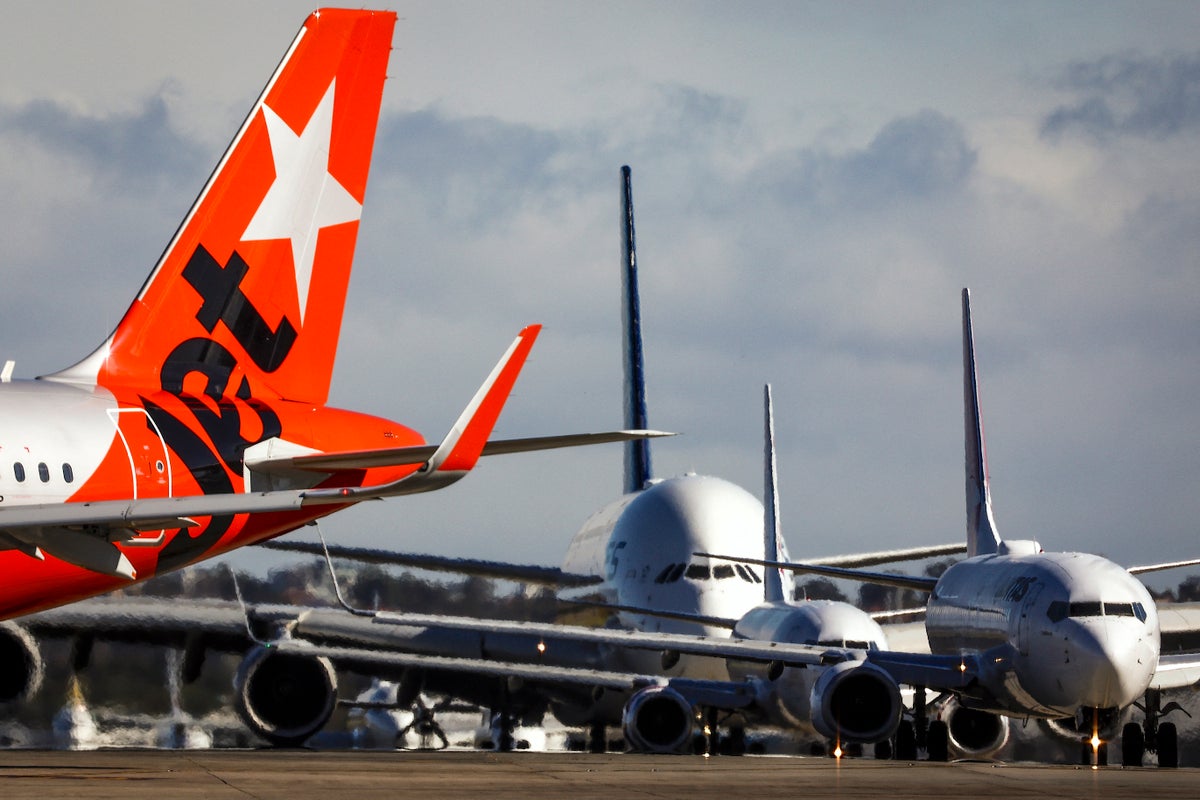
When a Jetstar Airbus and a Qatar Airways Boeing brush past the margins of safety at Sydney Airport, the knee-jerk chorus screams about pilot error and overworked tower crews. I have spent two decades analyzing the systemic vulnerabilities of global transport networks, and I am here to tell you that focusing on the individuals in the cockpit during an airport runway incident is a symptom of institutional laziness.
The near-miss in Sydney was not a failure of human willpower or situational awareness. It was a predictable output of a dangerously bloated system trying to squeeze peak-hour efficiency out of a congested, legacy infrastructure. Further information on this are explored by Condé Nast Traveler.
The Myth of the Bulletproof Aviation System
Let us clear up the core misconception right away: commercial aviation is not safe because humans are infallible. It is safe in spite of human fallibility, and only when the margins are wide enough to absorb our inevitable cognitive stumbles.
When you hear about a runway incursion or a separation loss, the public assumes a rogue element broke the rules. We look for villains. Was the Jetstar captain cleared to cross? Did the Qatar flight crew read back the instruction correctly?
These are the wrong questions. Asking whether an individual pilot messed up an instruction misses the broader reality that complex socio-technical systems fail from the edges inward.
Imagine a scenario where every single air traffic controller and pilot operates at ninety-nine percent accuracy. In a low-density environment, that error rate results in decades of uneventful operations. Drop those same actors into a choked, single-runway-dominant layout during a weather-induced flow restriction, push the cognitive load past the threshold of working memory, and that small error rate suddenly compounds into a statistical certainty.
The system in Sydney is running on duct tape and historic goodwill.
The Capacity Trap at Kingsford Smith
Sydney Airport, officially known as Kingsford Smith, operates under a unique set of political and geographical constraints that make incidents like this almost inevitable. It features a curfew, a cap on hourly movements, and a cross-runway layout that forces intersecting traffic patterns.
When you artificially cap movements while airline schedules push for maximum gate utilization, you create a bottleneck. Controllers are forced to manage departures and arrivals like air-traffic Tetris. There is no slack in the schedule.
If a flight pushes back two minutes late, the domino effect ripples across the tarmac. Controllers do not have the luxury of telling a widebody to wait ten minutes for a clean window. They rely on micro-spacing, rapid-fire radio transmissions, and visual separation on the ground.
And that is where the danger lives.
We praise air traffic controllers for their superhuman multitasking, treating them like unflappable chess masters. But cognitive science tells a different story. Working memory is finite. When you push visual acquisition, spatial orientation, and radio communication past normal limits under high-stress conditions, attention tunnels.
Blaming the controllers or the flight deck for a near-miss in this environment is like blaming the pavement for a multi-car pileup on a highway built for half its actual traffic volume.
Dismantling the Human Error Fallacy
Let us look at how the Australian Transport Safety Bureau and similar agencies traditionally investigate these events. They hunt for the immediate trigger. They pull the cockpit voice recorder, examine the transcripts, map the radar tracks, and find the exact second where communication broke down.
Found it! Pilot misunderstood a clearance. Controller used ambiguous phrasing.
Case closed, right? Wrong. That is not a root-cause analysis; that is a root-cause stop.
Finding the human who made the last mistake before a near-miss is easy. It satisfies our moral desire for accountability. But it tells you nothing about why the system allowed that mistake to happen in the first place.
If a design allows a single misheard syllable on a radio frequency to potentially jeopardize hundreds of lives, the design is broken. Period. We do not rely on drivers to never make a typo with their blinkers on a highway; we build medians, rumble strips, and clear sightlines.
Why do we treat aviation infrastructure with less systemic skepticism? Because planes rarely fall out of the sky, we assume the ground infrastructure is equally modern. It is not. Ground surveillance technology, automated warning systems for runway incursions, and runway status lights are deployed unevenly across the globe. Sydney is no exception. While upgrades happen incrementally, the traffic volume scales exponentially.
What Real Reform Looks Like
If we actually want to stop near-misses at major transit hubs, we have to stop treating safety as a training problem and start treating it as a design problem.
First, we need to abandon the obsession with maximum throughput. Airlines want every slot filled, and airport operators want maximum landing fees. That commercial pressure is the invisible hand guiding planes too close together. Until regulatory bodies have the spine to prioritize spacing over schedule integrity during peak hours, incidents will continue.
Second, we must automate ground-conflict prediction beyond what current surface management systems offer. We have autonomous cars navigating chaotic city streets using sensor fusion, yet commercial jets on the ground still rely heavily on a controller looking out a window or parsing a two-dimensional radar screen to ensure two massive aircraft do not occupy the same patch of asphalt.
Third, we need to shift our investigative culture away from individual culpability. If a pilot or controller knows that reporting a near-miss or an ambiguous instruction will trigger a bureaucratic witch hunt, they will underreport the micro-incidents that serve as early warning signs for disaster.
The Uncomfortable Truth
The Jetstar and Qatar near-miss wasn't a shocking aberration. It was a warning shot from a system operating too close to the edge of its envelope.
The next time an incident makes the headlines, ignore the breathless commentary about pilot panic and tower confusion. Look at the schedule. Look at the infrastructure. Look at the systemic refusal to slow down the machine before it breaks.
We can keep sacrificing scapegoats on the altar of operational efficiency, or we can admit that the current model is tapped out.
Fix the system. Leave the pilots alone.