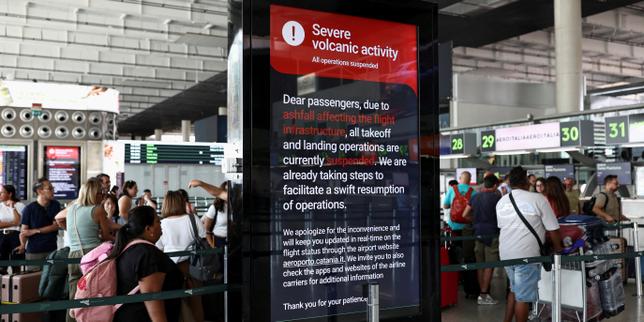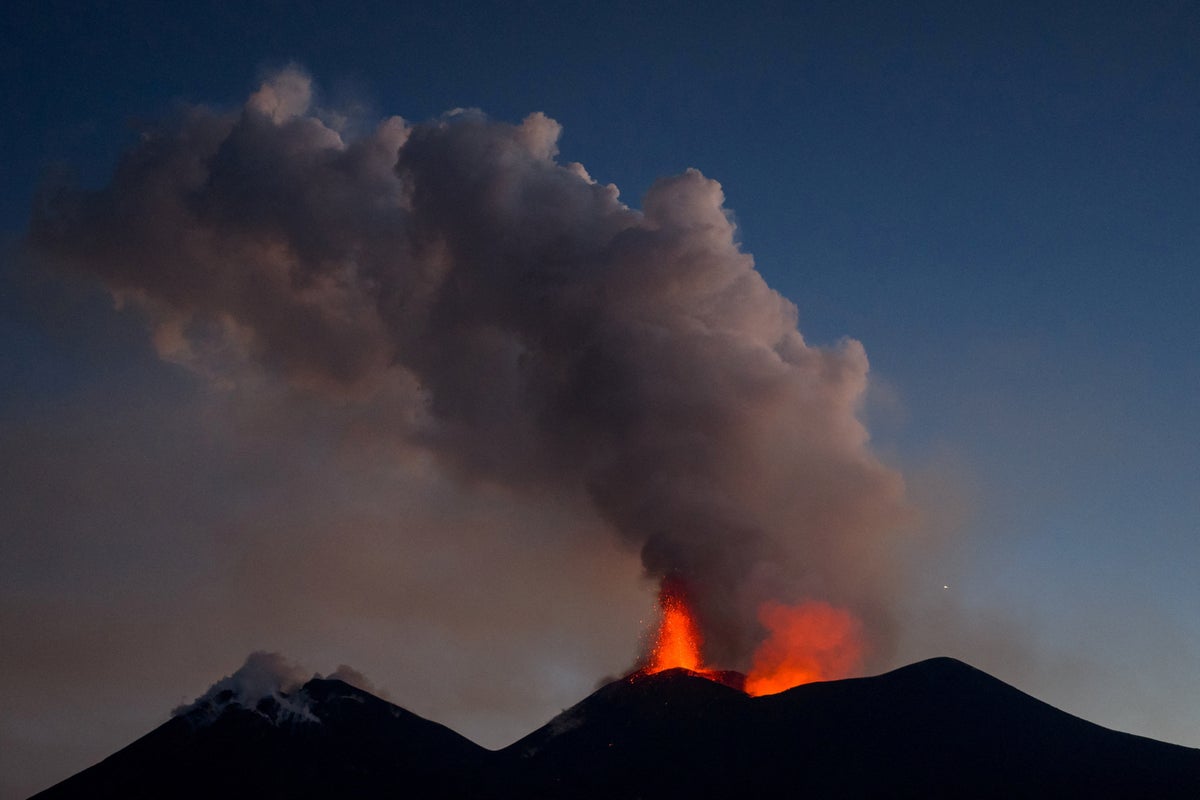
Every single August, the media falls into the exact same lazy trap. Mount Etna burps a plume of ash, Catania Airport closes its runways, and the global travel press loses its collective mind. Headlines scream about stranded tourists, canceled flights, and ruined summer dreams during peak holiday week.
It is the same tired script year after year.
Travel journalists love a crisis. Panic clicks drive revenue. But the standard narrative that a volcanic eruption represents an unmitigated disaster for tourism reveals a fundamental misunderstanding of how living near an active stratovolcano actually functions.
The lazy consensus says Etna is ruining Sicily. The reality is far more interesting. Etna is the very reason Sicily remains one of the most fertile, economically vibrant, and culturally rich regions in the Mediterranean. If you are canceling your trip because of a dusting of dark sand on a runway, you are missing the point entirely.
The Flawed Premise of Absolute Safety
Modern travelers suffer from a dangerous delusion. They expect industrial travel to operate with the predictable precision of a Swiss train schedule, even when booking vacations next to the most active volcano in Europe.
When a flight gets delayed or diverted to Palermo or Comiso, people act like their civil rights have been violated. They demand compensation, throw tantrums at check-in desks, and blame local authorities for failing to control geology.
I have watched tourists blow thousands of euros on frantic last-minute alternative bookings just to avoid spending twenty-four hours eating exceptional food in a city they never planned to visit. It is an indictment of modern itinerary obsession. We treat travel like a logistical spreadsheet rather than an exercise in adaptation.
Etna does not care about your peak holiday week. She operates on a geological timeline that completely ignores European holiday calendars. Expecting nature to pause its operations so you can catch a Ryanair flight on a Tuesday is the height of modern hubris.
Why Volcanic Ash is Not What You Think It Is
Let us clear up the physics immediately. People hear "volcanic ash" and picture Pompeii. They imagine suffocating clouds of toxic debris burying coastal towns.
In reality, Etna is predominantly a basaltic volcano. Her eruptions are famous for effusive lava flows rather than cataclysmic, explosive collapses. The material grounding planes in Catania is fine-grained, pulverized rock. It is abrasive and dangerous for jet engines, which is why aviation authorities shut down airspace. That part is non-negotiable. Jet engines and silicate glass do not mix.
However, treating that ash as a public health catastrophe for the entire island is wildly inaccurate. Locals do not wear gas masks and lock themselves indoors. They grab a broom, sweep the black dust off their balconies, dump it in the garden, and get on with their day.
Why? Because that same ash is liquid gold for the soil.
Ask any winemaker working the slopes of Etna. The mineral-rich, porous volcanic earth produces some of the most sought-after, complex Nerello Mascalese wines in the world. Vines struggle in the dark, punishing soil, driving roots deep underground to extract unique flavor profiles you cannot replicate anywhere else on earth. Without Etna's tantrums, those vineyards do not exist. The economy of eastern Sicily relies on the agricultural bounty born from the very same ash that ruins your flight schedule.
The Logistics of Living With a Giant
Why does Catania Airport close so fast? Is it incompetence?
Quite the opposite. Italian civil aviation authority ENAC and the management company SAC operate on a doctrine of extreme caution. Jet turbine blades melt when they ingest high concentrations of volcanic particulate. The threshold for safety is near zero.
When winds shift and blow the plume southeast toward the coast, Catania's single runway becomes a liability. Closing the airport is not a failure of infrastructure; it is an active risk-mitigation protocol designed to prevent catastrophe.
Critics love to point out that northern European airports handle snow better than Sicilian airports handle ash. This is a false equivalence. Snow can be plowed, chemically melted, and cleared within hours. Volcanic glass continuously falls from the upper atmosphere as long as the eruptive column remains active and the wind cooperates. You cannot plow a continuous rain of abrasive particulate off an active flight path while it is falling.
The Smart Traveler's Playbook
If you are traveling to Sicily during peak season, you bake geological contingency into your plans. You do not treat Etna as an unexpected glitch. You treat her as an unpredictable host.
Here is how you handle it:
- Fly open-jaw or use dual hubs: Sicily has two major international entry points on opposite sides of the island: Catania (CTA) and Palermo (PMO). If Etna shuts down the east, the west is wide open. Rent a car, drive across the A19, and enjoy a road trip through the interior instead of whining at a departure gate.
- Embrace the pivot: If your flight out of Catania is canceled, stop trying to escape immediately. Rent a room in Ortigia or up on the mountain flanks. Eat a granita. Visit a vineyard. Let the airlines sort out the backlog while you enjoy a bonus day in a UNESCO heritage zone.
- Ignore the real-time panic: News outlets use phrases like "paralyzed tourism" to describe a temporary forty-eight-hour ground stop. Trains run. Buses run. Ferries run. The island does not sink into the sea just because planes stay on the tarmac.
The Contradiction at the Heart of Tourism
Here is the dirty secret of volcano tourism: people flock to Sicily specifically because of Etna.
Travel brochures feature dramatic photos of glowing red lava rivers cutting through the night sky. Tour operators charge top dollar to drive visitors up to the Sapienza Refuge at two thousand meters. Travelers want the thrill of standing on the edge of a sleeping giant, right up until that giant wakes up and inconveniences their travel schedule.
You cannot market the raw, untamed power of nature as a scenic backdrop for your Instagram selfies and then throw a fit when nature behaves like nature.
The next time Etna blows her top and grounds the fleet, do not cancel your trip. Do not demand refunds for a vacation that is merely delayed. Buy a shovel, sweep the ash off your rental car, pour yourself a glass of Etna Rosso, and realize you are witnessing one of the most powerful geological engines on the planet doing what it has done for half a million years.
Stop expecting the earth to accommodate your holiday itinerary. Adapt to the earth.