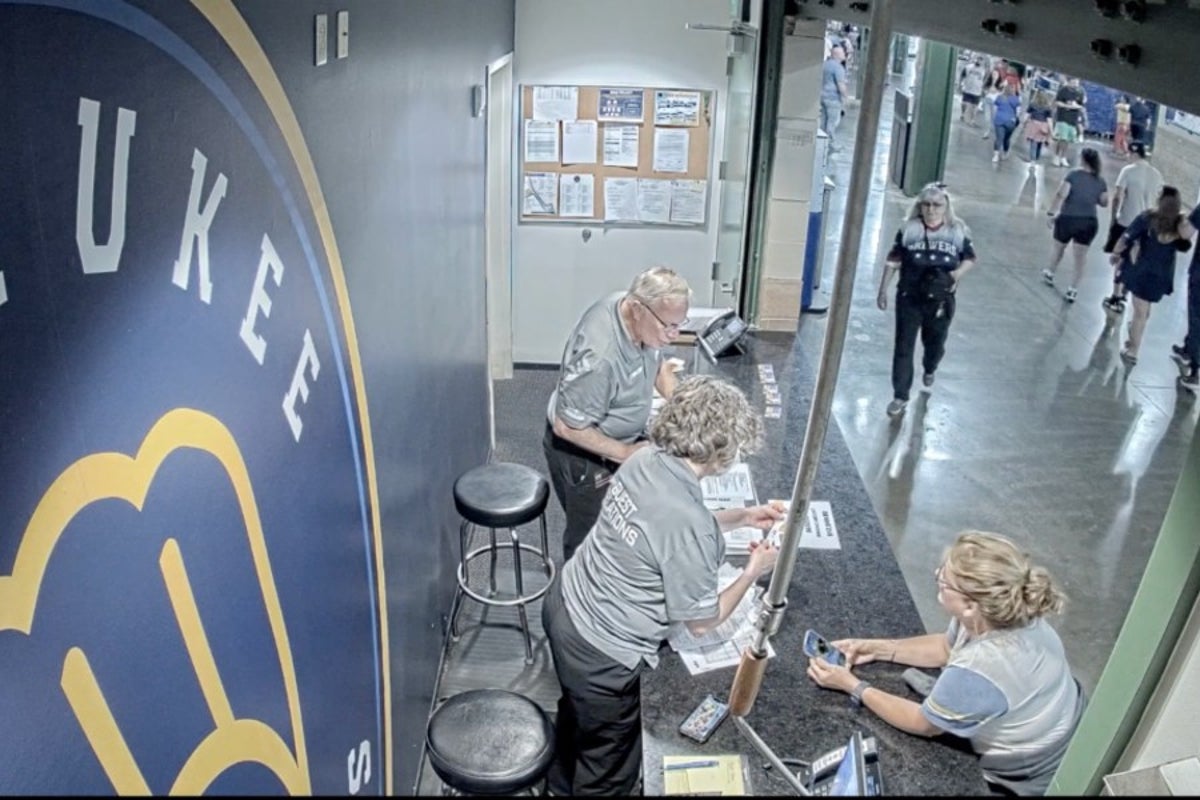
The internet loves a David versus Goliath story. A working-class family goes to a baseball game, buys a 50/50 raffle ticket, hits the jackpot, and gets denied their $13,000 payday because of a bureaucratic technicality. The media swoops in, painting the Major League Baseball franchise as a greedy corporate monster hiding behind a "six outs" claim window. Fans outrage online. Lawyers threaten lawsuits.
It is a perfect narrative. It is also entirely wrong.
The lazy consensus surrounding stadium raffle controversies ignores the operational, legal, and mathematical realities of live sports entertainment. We are conditioned to treat consumers as victims whenever a large organization enforces its terms of service. But when you strip away the emotional manipulation of the "aggrieved fan" headline, you find a masterclass in personal unaccountability.
Stadium raffles are not bank accounts. They are high-velocity, highly regulated charity operations governed by strict state gaming laws and rigid logistical timelines. The problem isn't that the rules are unfair. The problem is that fans treat legally binding sweepstakes like a casual handshake.
The Six Out Illusion and the Legal Reality of Live Gaming
Public outrage usually centers on the brevity of the claim window. Critics argue that requiring a fan to claim a prize within six outs—roughly fifteen to twenty minutes of real time—is predatory.
It isn't predatory. It is a legal necessity.
In my years analyzing sports franchise operations and stadium compliance logistics, I have reviewed the framework that governs these half-inning promotions. A 50/50 raffle is not a carnival game; it is a state-regulated lottery operating under strict charitable gaming licenses. These licenses require public transparency, immediate pool finalization, and instant reporting.
Imagine a scenario where a team allows winners to claim prizes days or weeks after the final pitch.
- The Unclaimed Pool Nightmare: Charitable raffles require a definitive payout structure to close out financial books nightly. Leaving a pool open introduces accounting liabilities that freeze charitable fund distribution.
- The Chain of Custody Risk: Live stadium drawings rely on the immediate verification of the physical ticket holder while the entire auditing team is still on-site. Once the stadium lights go down, the verification infrastructure vanishes.
- The Secondary Market Threat: Long claim windows invite fraud. If a winning ticket number is posted on the jumbotron and left unclaimed for days, it creates a window for ticket scanning manipulation, counterfeit attempts, and staff collusion.
The compressed timeline forces a resolution while the integrity of the drawing environment is still secure. The six-out rule exists to protect the pool, not to cheat the fan.
Dismantling the Fan as Victim Fallacy
Let's look at the actual mechanics of what happens when you buy a raffle ticket at a professional sports venue. You are handed a slip of paper. Printed on that paper, usually in bold text, are the explicit terms of the contract. By handing over your cash, you agree to those terms.
To claim that you "missed out" because you didn't see the number or didn't understand the timeline is an admission of negligence, not proof of corporate malice.
The Problem With "People Also Ask" Assumptions
When these stories break, the search trends reveal a fundamental misunderstanding of gaming law. People ask variations of the same flawed questions:
Why can't teams just track who bought the winning ticket?
They can't because 50/50 raffles are cash-heavy, anonymous, high-volume operations. This isn't Ticketmaster tracking a digital seat assignment. Thousands of fans buy strips of tickets from mobile vendors roaming concourses. The team doesn't know who you are until you present the winning receipt. The ticket is the currency.
💡 You might also like: Inter Miami’s Messi Miracle is Actually a Tactical Mirage
Don't teams just pocket the unclaimed money?
Absolutely not. Under state gaming regulations, unclaimed charity raffle funds do not go into the team's player payroll or the owner's pockets. They are legally mandated to go directly to the team's registered 501(c)(3) charitable foundation or revert to the state gaming commission. The team gains zero financial advantage by withholding the prize.
The Operational Nightmare of Stadium Logistics
Sports venues are micro-cities managing 40,000 distracted people simultaneously. To expect an organization to halt its operational timeline because a single fan wasn't paying attention to the jumbotron is an absurd expectation of entitlement.
| Feature | Standard Stadium 50/50 Raffle | State Lottery Drawing |
|---|---|---|
| Audience Scope | Closed loop (In-stadium attendees) | Open loop (General public) |
| Verification Window | Immediate (Measured in innings/outs) | Extended (180 to 365 days) |
| Anonymity Level | High (Cash or rapid card transactions) | High (Until claim is filed) |
| Regulatory Body | State Charitable Gaming Division | State Lottery Board |
| Revenue Destination | 50% Winner / 50% Team Charity | Split between prizes, administration, and public funds |
The operational window is tight because the venue must transition from a live event to a empty facility within an hour of the final out. The staff members verifying these tickets—compliance officers, auditors, independent witnesses—are paid hourly. Keeping a verification command center open indefinitely because a fan walked out to the parking lot early is a logistical and financial non-starter.
The Cost of Emotional Compliance
There is a dangerous trend where sports franchises bend to PR pressure and pay out fans who openly violate the rules of a contest. When teams cave to avoid bad press, they ruin the integrity of the entire system.
If a team awards a $13,000 prize to a family that missed the deadline, they set a legal precedent. The next time a fan shows up an hour late, or a day late, or with a mutilated ticket, they will point to this exception. Rules cease to be rules the moment they become negotiable based on how loud a complainant can yell on social media.
Furthermore, paying out an ineligible winner out of a separate corporate account complicates charitable gaming audits. It signals to state regulators that the team treats its gaming compliance framework as a loose set of guidelines rather than rigid laws. That is how franchises lose their licenses to run these raffles entirely, wiping out millions of dollars in annual funding for local community programs.
How to Exist in a World with Rules
If you choose to participate in a live stadium raffle, you are choosing to enter a fast-moving, legally rigid system. You do not get to opt out of the responsibilities of that system while demanding its rewards.
- Check the Jumbotron: The winning number is posted at a designated time, usually during the 7th inning stretch. If you are in the restroom or buying a hot dog, that is your operational failure, not the team's.
- Read the Paper: The rules are literally in your hand. If you cannot be bothered to look at the fine print on the receipt you just bought, do not gamble.
- Know the Exit Constraints: If you plan to beat traffic and leave in the 8th inning, you forfeit your ability to claim an in-stadium prize. It is a calculated risk you take.
Stop validating the weaponized incompetence of fans who refuse to read the terms of engagement. The MLB team isn't the villain for enforcing its boundaries. The fan is simply the loser of a game they didn't bother to learn how to play.


