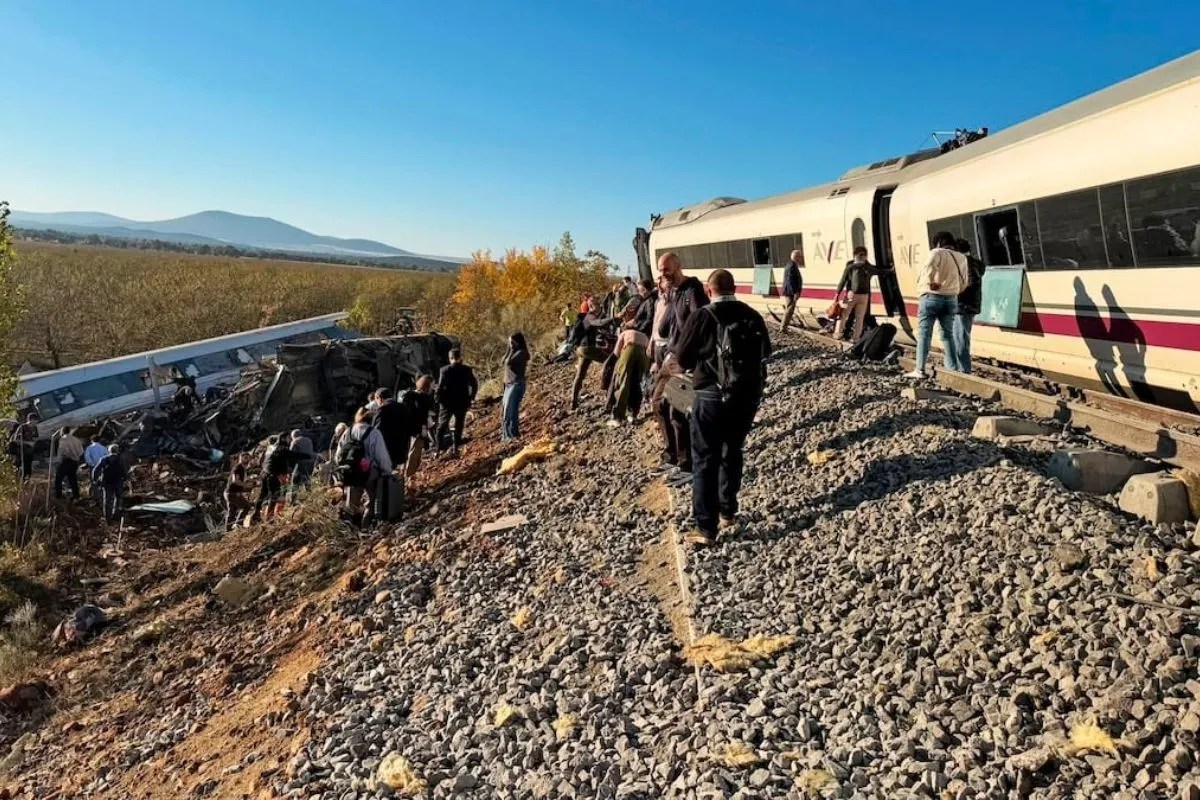
Blaming "human error" for a high-speed train slamming into a stationary train at 160 to 200 km/h is a lazy cop-out designed to protect bureaucrats and bloated infrastructure budgets.
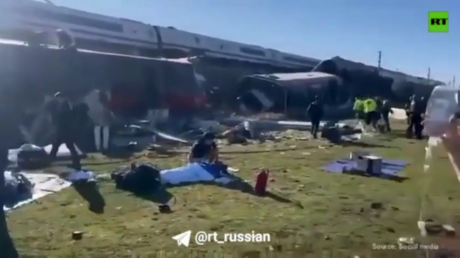
When breaking news dispatches first hit on October 28, 2026, reporting "at least 46 dead" after an AVE high-speed train collided with a stationary Iryo train near Urda in Toledo province, the coverage followed a painfully predictable script. Two trains collided in the morning. Emergency crews rushed to the scene. Politicians posted sorrowful statements. Later, the confirmed death toll climbed to 69, with around 200 injured—making it one of Europe's deadliest rail disasters this century, arriving just months after the January 2026 Adamuz crash on the same Madrid–Seville corridor killed roughly 45 to 46 people. Discover more on a connected subject: this related article.
The competitor coverage gets the surface events right, yet misses the structural rot underneath. Treating a rear-end collision on a modern high-speed line as an isolated morning tragedy—or reducing it to a single operator's mistake—ignores how complex transportation systems actually fail.
The Lazy Consensus Around "Morning Collisions" and "Human Error"
Standard breaking news treats high-speed rail crashes like freak weather. Two trains hit, carriages derail, a few fall down an embankment, and officials offer preliminary theories about manual signalling or human error after an automated system fails. More reporting by NBC News highlights comparable views on the subject.
That framing is convenient for everyone in power. If a dispatcher or controller makes a mistake during manual operation, the system itself looks intact. A single person takes the moral weight, and the underlying architecture escapes scrutiny.
Here is the real problem: when an automated rail safety system fails and a manual workaround permits a high-speed train to close on a stationary train, you do not have a "human error" problem. You have a brittle system design problem.
In safety engineering—the discipline pioneered by figures like James Reason and Charles Perrow on high-hazard technologies—operators work inside a web of incentives, interface constraints, degraded modes, and procedural bottlenecks. When automated protection drops out and controllers have to improvise across multiple operators (such as infrastructure manager ADIF alongside train operators Renfe and Iryo), the margin for error shrinks to zero. Calling that "human error" after the fact is like blaming gravity when a bridge without expansion joints cracks in winter.
What People Actually Get Wrong About High-Speed Rail Safety
Ask casual observers why Spain's high-speed network—long celebrated as one of the largest and most prestigious in the world, second only to China in network length—suffered two catastrophic crashes on the Madrid–Seville corridor in 2026, and you will hear two myths:
- "High-speed rail is inherently dangerous at 200+ km/h." Speed increases kinetic energy, which makes collisions more violent when they happen. Yet speed is rarely the root cause of a rear-end collision with a stopped train. A train moving at 160–200 km/h hitting a stationary train points to a breakdown in block separation, speed supervision, or emergency stop authority—not speed alone.
- "If a country builds shiny new tracks and trains, safety takes care of itself." Ribbon-cutting ceremonies reward new kilometers of track and flashy rolling stock. Ongoing maintenance, signalling upgrades, fallback protocols, and cross-operator coordination are unglamorous. Worse, when investigations and European Union prosecutors examine potential misuse or misallocation of funds meant for signalling upgrades, the gap between paper safety and real-world readiness becomes fatal.
The Mechanics of How a "Safe" Corridor Fails Twice in One Year
A high-speed rail corridor relies on layered defenses—often described in safety literature as Swiss cheese layers. Under normal operation, automatic train protection and signalling systems like LZB monitor train position, enforce speed profiles, and prevent a following train from entering an occupied block or approaching a stationary obstacle at dangerous speed.
The danger spikes during degraded modes.
When an automated system faults or drops into manual/fallback handling, control shifts toward human coordination, radio/verbal instructions, and screen monitoring. Consider a thought experiment: Imagine a scenario where an automated signalling block degrades on a busy trunk line, forcing traffic controllers to authorize movement manually while a lead train remains stopped ahead. If the control room display shows the stationary train, yet no decisive stop command reaches the following high-speed driver before normal operation is resumed, the safety net has already torn.
In the Urda collision near Toledo, reports and government sources pointed to human error in manual signalling operation following an automated system failure, alongside questions over why the control center authorized normal operation while a train was stationary ahead. Even more damning politically and institutionally: this was the second major disaster on the line in 2026 after Adamuz, triggering intense scrutiny, EU prosecutorial probes into signalling upgrade funds, and the resignation of Transport Minister Óscar Puente in early November.
Two major crashes in less than a year on the same flagship corridor is not bad luck. It is a flashing red warning light that organizational complacency caught up with physical infrastructure.
Battle Scars, Trade-Offs, and What "People Also Ask" Gets Wrong
I have spent years watching organizations—in transport, industrial operations, and enterprise infrastructure—burn millions on complex automation while starving the fallback procedures and cross-team drills that keep people alive when automation glitches. Executives love buying "smart" systems; they hate funding boring stress tests for when the smart system goes blind.
A fair critique of my own stance deserves to be stated plainly: over-indexing on systemic flaws can let negligent individuals off the hook. If a controller or operator blatantly violates clear safety rules, accountability matters. Ignoring individual responsibility creates moral hazard just as surely as blaming a single worker for a broken system does. The goal is not zero individual accountability; it is fixing the system and enforcing discipline without using scapegoats as a shield.
Let's strip away the polite phrasing around the questions people actually type after a disaster like this:
"Why did two trains crash in Spain if high-speed rail is supposed to be safe?"
Because "safe" in rail is a statistical rate earned through continuous maintenance and disciplined fallback operations, not a permanent medal awarded when a line opens. Once a network expands rapidly and adds multi-operator traffic without matching upgrades in fallback resilience and oversight, past safety records stop predicting future safety.
"Was the crash caused by driver error or technical failure?"
Asking "driver error or technical failure" is a false binary. Catastrophic rail accidents almost always sit at the intersection of technical degradation (an automated system failing or dropping out) and human/organizational breakdown (faulty manual signalling, missed intervention at control, or flawed protocols). Focusing on one half of the equation guarantees you will miss the next trap.
"What should rail authorities actually do after a crash like Urda?"
Stop issuing press releases promising "full investigations" while leaving degraded-mode procedures untouched. Concrete action requires:
- Treat degraded modes as high-alert emergencies, not routine workarounds. Any transition from automated protection to manual signalling or visual/screen monitoring should trigger strict speed caps, mandatory two-person verification, and immediate hold orders until block clearance is proven.
- Audit signalling funds to the hardware and software level. Follow every euro earmarked for track, block detection, and signalling upgrades from budget line item to live field deployment—and open those audit trails to independent technical inspectors.
- Run unannounced failure simulations across control centers and operators. Test how controllers and drivers react when automated supervision drops out during peak morning traffic, not just on sunny textbook drills.
- Publish plain-language safety metrics on system faults, not just crash counts. Near-misses, signalling dropouts, and manual overrides are the early smoke before the fire.
Quick Reality Check: Headlines vs. Hard Engineering
| Dimension | Typical Breaking News Framing | Hard Rail Safety Reality |
|---|---|---|
| Primary Cause | Morning collision; preliminary "human error" | Automated system failure colliding with fragile manual fallback and control gaps |
| Historical Context | Treated as a standalone shock | Second fatal crash in 2026 on the Madrid–Seville line after Adamuz, shattering decades of clean high-speed history |
| Institutional Impact | Sympathy messages and emergency response | EU probes into signalling upgrade funds and high-level political fallout |
| Real Fix | Blame the person at the controls | Harden fallback rules, audit upgrade spending, and eliminate single-point control blind spots |
Until rail leaders stop hiding behind "human error" whenever their automated safety nets fail, the next tragedy won't be a shock—it will just be another scheduled morning headline.