The acoustic guitar case was battered, covered in faded stickers from places like Austin, Athens, and Nashville. Marcus sat on a low stone ledge near the Smithsonian Castle, tuning his E-string against the low, rhythmic hum of a diesel generator. He had come to the National Mall for the same reason buskers and wanderers have come to Washington D.C. for two centuries: to find an audience among the ghosts of Lincoln and the living tide of tourists.
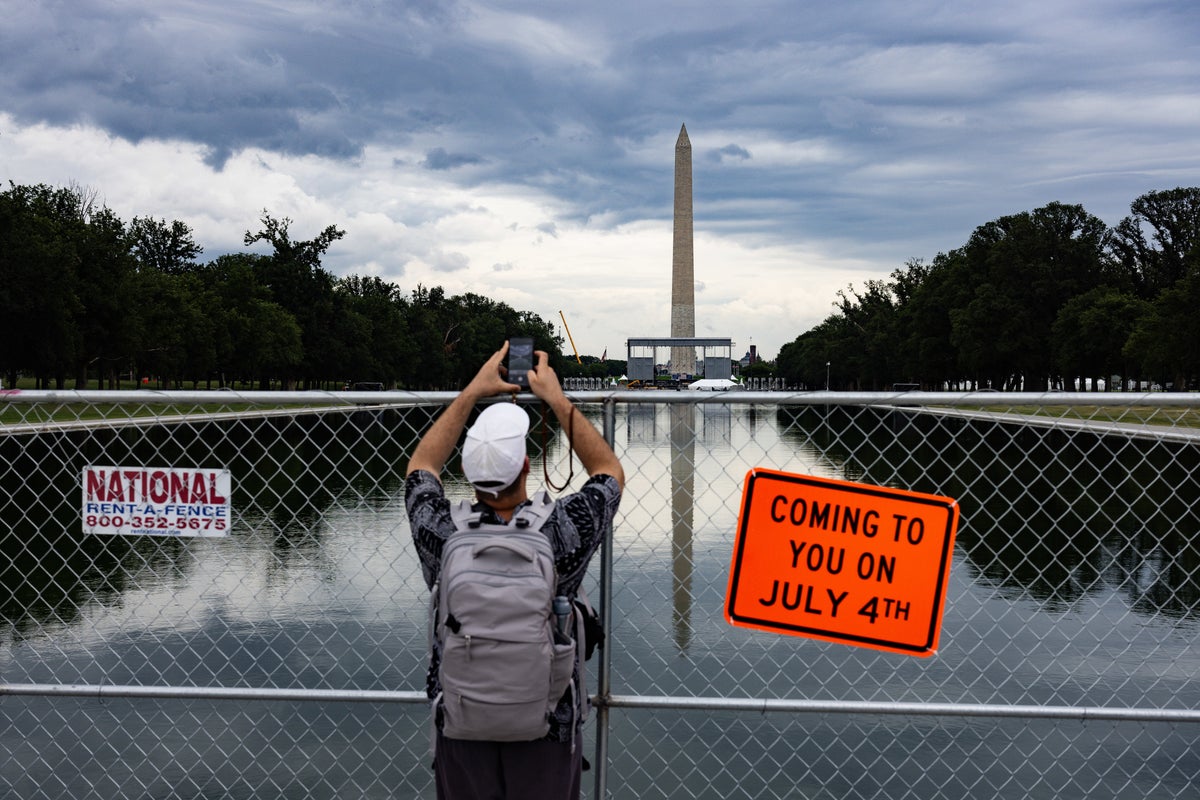
But this summer, the tide was hitting a wall. Specifically, a dark green, eight-foot-tall steel security fence. Don't miss our previous coverage on this related article.
Marcus looked down the gravel pathway. Where there used to be a sprawling, unbroken view of the Washington Monument cutting into the sky, there was now a labyrinth of chain-link barriers, concrete Jersey barriers, and orange construction barrels. A family of four from Ohio stood ten feet away, clutching a map, looking bewilderedly at a "Sidewalk Closed" sign that offered no detour. The father sighed, shoulders dropping, and turned his family around.
Washington is barricading itself for its own birthday party. If you want more about the background of this, The New York Times provides an in-depth breakdown.
As the United States approaches its 250th anniversary, the capital is undergoing a massive, disruptive facelift. A flurry of monument upgrades, security overhauls, and infrastructure projects has effectively transformed the core of the federal city into a high-security maze. What was supposed to be a grand celebration of a quarter-millennium of American democracy feels, to the person on the ground, remarkably like a lockdown.
The friction between open celebration and ironclad security is not new, but the sheer scale of the current disruption is unprecedented. The National Park Service and various federal agencies are racing against the clock to reinforce, polish, and protect the nation's most sacred symbols before the global spotlight lands squarely on Pennsylvania Avenue. The result is a paradox: the closer we get to celebrating American freedom, the more restricted the capital of that freedom becomes.
Consider the geometry of the National Mall. It was designed by Pierre Charles L'Enfant and later refined by the McMillan Commission to be a grand, open-air forum—a physical manifestation of a transparent republic. It belongs to the public. Yet today, navigating from the Lincoln Memorial to the Capitol building requires the tactical patience of a commuter in a gridlocked metropolis.
The security apparatus is not just a temporary inconvenience; it is reshaping the psychological relationship between the citizen and the state. When you force a veteran who flew halfway across the country to view the World War II Memorial to walk an extra half-mile around a chain-link perimeter, the message is subtly but deeply altered. The monument ceases to be a communal space of reflection and becomes a guarded asset.
Federal officials argue, with valid institutional anxiety, that the stakes have never been higher. A milestone as massive as America 250 draws not just millions of well-meaning tourists, but also presents an attractive target for asymmetrical threats, large-scale protests, and logistical nightmares. The memory of recent civil unrest and the shifting landscape of global security mean that a soft, open-border approach to the National Mall is viewed by law enforcement as a luxury the city can no longer afford.
To protect the symbols of democracy, they believe, they must first encase them in steel.
But the real problem lies elsewhere. It is the creeping permanence of temporary things.
Walk through Washington long enough, and you realize that "temporary" security measures have a habit of putting down roots. The jersey barriers erected after the 1993 World Trade Center bombing stayed for years. The post-9/11 security checkpoints became architectural fixtures. There is a quiet, collective dread among local residents and urban planners that the fences erected for the 250th anniversary celebrations will find a way to justify their existence long after the fireworks have faded and the dignitaries have gone home.
Marcus struck a minor chord, the sound swallowed by the hiss of air brakes from a nearby police cruiser. He watched an elderly woman try to navigate her walker over a makeshift plywood ramp bridging a torn-up section of Constitution Avenue. She stopped, wiped sweat from her forehead, and looked up at the Capitol dome, obscured by a web of scaffolding and crane arms.
The city is preparing a spectacular show for the cameras. The broadcast angles will be pristine. The drone shots will capture the grandeur of the monuments, clean and restored, gleaming under the television lights. The speeches will speak of an unbroken line of liberty stretching back to 1776.
But down on the gravel, beneath the camera tilt, the people for whom the story was written are squinting through the gaps in the wire, trying to catch a glimpse of the history they own.