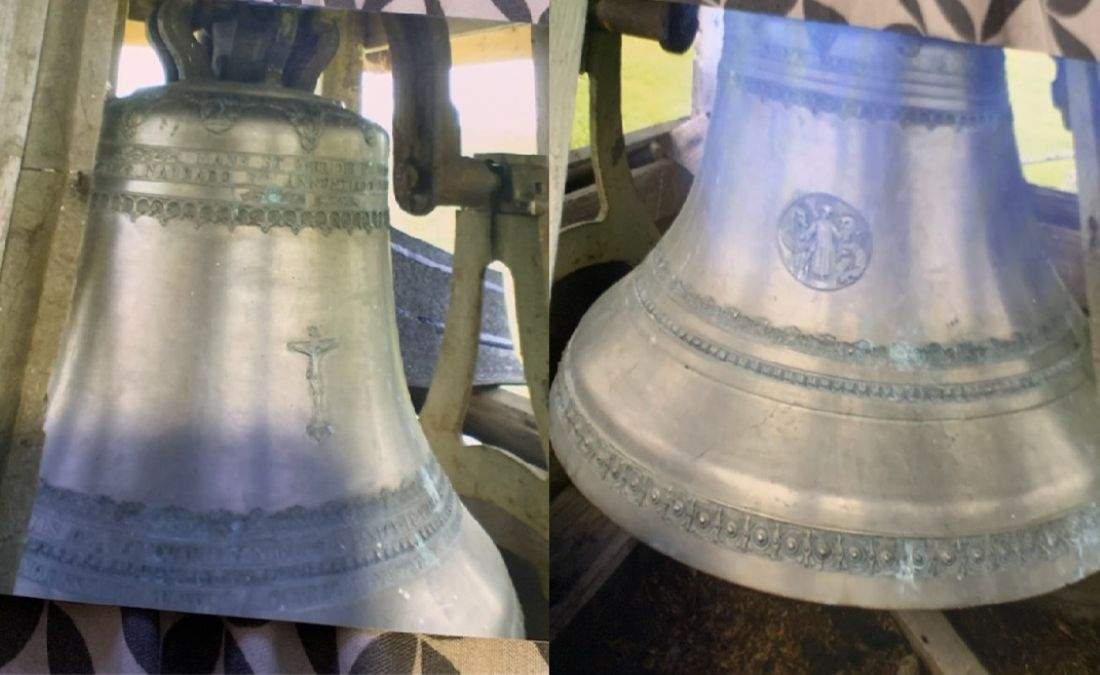
Small-town police reports read like a predictable script: a heavy historic artifact goes missing, locals express outrage, and authorities ask the public to keep an eye out for suspicious scrap metal dealers.
When news broke that thieves made off with a 300-pound bronze church bell in Manitoba’s Interlake region, the narrative immediately settled into familiar grooves. It was framed as a daring heist targeting sacred rural heritage or an opportunistic scrap metal snatch-and-grab.
Both narratives miss the point.
Stealing a 300-pound historic church bell isn't high-level criminal logistics. It's a masterclass in risk-reward stupidity.
The mainstream press focuses on the emotional weight and the physical weight. They report on the logistics of moving 300 pounds of metal out of a rural parish without getting caught. But anyone who understands metal markets, historical asset liquidation, and scrap yard compliance knows that theft of this kind represents the single worst return on effort in the property crime market.
Let's break down the economics of what just happened, why the perpetrators will likely net pocket change for a felony, and what rural communities actually get wrong about protecting heavy historic assets.
The Scrap Metal Fallacy
The standard assumption is that thieves steal copper, brass, and bronze to sell it for quick cash at scrap yards. That premise is true for wiring or plumbing stripped from vacant construction sites. It breaks down completely when applied to a recognizable 300-pound historical artifact.
Bronze is primarily copper alloyed with tin. At prevailing scrap prices, clean copper might fetch $3.50 to $4.00 per pound, while cast bronze scrap commands significantly less—often under $2.50 per pound depending on purity and regional buyer rates.
If a thief successfully melts down or chops up a 300-pound bell, they are looking at a gross payout of $600 to $800.
Now factor in the labor, danger, and equipment:
- Transport and Extraction: Moving 300 dead-weight pounds requires multiple people, a heavy vehicle, winch hardware, or ramps.
- Processing: Cast bronze does not cut easily. Breaking a thick historic bell into non-recognizable chunks requires industrial plasma cutters, heavy machinery, or hours with an angle grinder consuming dozens of cutoff wheels.
- Risk of Detection: Scrap yards operate under strict regulatory reporting requirements. Any yard accepting hundreds of pounds of freshly cut antique bronze faces immediate loss of license and criminal charges.
Imagine a business venture where your upfront labor is grueling, your equipment cost is high, your legal exposure is a multi-year felony sentence, and your maximum gross revenue caps out at $700 split among two or three people.
It isn't a clever criminal operation. It is financial illiteracy in action.
Why Scrap Metal Laws Succeeded in Failing
Governments across North America updated scrap metal regulations over the past decade to stop exactly this kind of theft. Dealers now require government identification, record vehicle license plates, pay via traceable checks rather than cash, and hold items for mandatory waiting periods.
Yet theft of public and church metal persists. Why?
Because regulatory frameworks assume rational actors. Policy makers believe that making it harder to sell stolen metal will deter thieves. What they fail to account for is the massive gap between perceived value and real market liquidity.
Outlaws stealing historic artifacts rarely calculate market rates prior to the theft. They see metal, remember hearing that "copper is high," and assume weight equals wealth. They incur massive criminal risk for an asset they cannot convert into cash without taking a 90% haircut on the street or getting caught at the scale.
The hard truth about scrap regulation is that it acts as a filter for professional buyers, not a deterrent for desperate amateur thieves. The theft happens anyway; the destruction of history occurs; the payday never materializes.
The Historic Resale Dead End
Could the bell be intended for the antique or black market art trade?
That theory sounds convincing in cinema, but in reality, historic church bells possess zero black-market liquidity.
Unlike unrecorded private art, historic bells feature distinct casting signatures, foundry marks, pitch profiles, and local provenance. The market for legitimate church bell buyers—collectors, foundries, historical societies—is tiny and tight-knit.
Anyone trying to sell a 300-pound bell online through secondary marketplaces instantly flags attention. Shipping costs alone destroy margins for private sales. The moment an antique listing hits eBay or Facebook Marketplace, regional law enforcement and local preservation networks flag it.
By taking an intact historical object and stripping away its context, thieves instantly destroy 95% of its potential market value while keeping 100% of the legal liability.
The Preservation Mistake Towns Keep Making
Rural communities often rely on weight as their primary security strategy.
"It weighs 300 pounds; nobody can just walk off with it."
This false sense of security has cost rural heritage sites dozens of irreplaceable artifacts. Heavy objects feel safe because everyday people cannot move them without machinery. But theft operations do not use everyday methods. Simple mechanical advantage—a $50 come-along winch, a pair of furniture dollies, and a pickup truck bed—makes moving 300 pounds a two-minute job for two people.
Relying on mass as a deterrent is a fundamental security error.
Real protection for open-air or low-security historic assets requires three things:
- Mechanical Anchorages: Welding bell mounts, using shear-off security bolts, or pouring concrete-encased pins.
- GPS and Micro-Tagging: Embedding hidden asset trackers or chemical micro-dots into the casting metal that register under UV light at scrap yards.
- Smart Visual Deterrence: High-visibility trail cameras linked to immediate cellular alerts, rather than post-facto police reports.
If an asset sits outside an active security perimeter, its physical weight is irrelevant. If it can be lifted, it will be taken by someone who overestimates what a scrap yard will pay for it.
Stop Treating Ignorance as Sophistication
Every time a story like the Manitoba bell theft breaks, media coverage frames the suspects as bold, organized criminals executing a heist.
Stop giving them credit.
This isn't Ocean's Eleven. It's two people in a truck taking on massive legal exposure for less than a weekend's wage at minimum rate, only to find out nobody wants to buy what they took.
The tragedy isn't just the loss of local history. The tragedy is that priceless cultural heritage is regularly destroyed for scrap payouts that barely cover the cost of the gas it took to steal it. Until communities realize that weight is not security, and until we address the staggering financial ignorance driving scrap metal crime, rural historic sites will keep losing their history to thieves who don't even know what it's worth.