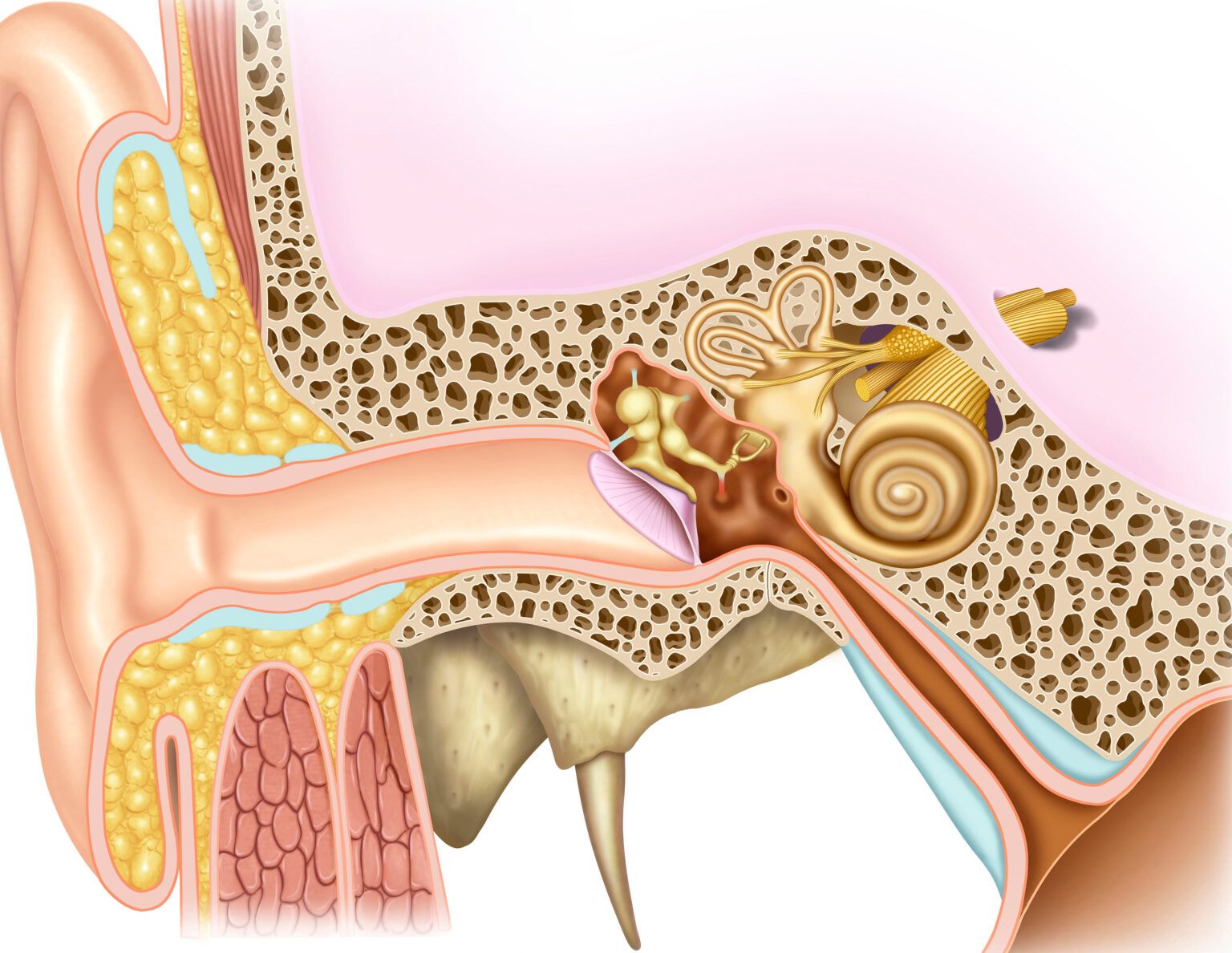
On August 6, 1945, a twenty-nine-year-old marine engineer named Tsutomu Yamaguchi stood roughly three kilometers from ground zero in Hiroshima. A blinding flash of thermal radiation seared his upper body, ruptured his eardrums, and knocked him unconscious into a potato patch. Three days later, after crawling through an apocalyptic landscape and boarding a functioning train back to his hometown, he sat in an office in Nagasaki. His supervisor was listening skeptically to an account of a city obliterated by a single mysterious weapon when a plutonium core detonated over the Urakami Valley, hurling Yamaguchi across another room.
He became the only human being officially recognized by the Japanese government as a double survivor of both atomic blasts. Yet focusing solely on the sheer mathematical improbability of his itinerary misses the broader historical machinery that made such an event possible. Probability dictates that rare overlaps will occur when thousands of workers are displaced across a crumbling imperial infrastructure. Understanding Yamaguchi requires examining how wartime logistics, corporate relocation policies, and the terrifying efficiency of the Manhattan Project intersected during the final weeks of World War II.
The Corporate Logistics of Total War
Mitsubishi Heavy Industries operated on strict industrial timetables even as the Japanese empire collapsed inward. Yamaguchi had been dispatched to Hiroshima on a three-month engineering assignment to design a massive oil tanker. By early August, that assignment was finished. His presence in Hiroshima on the morning of the sixth was not an accident of tourism; it was a mandatory function of wartime corporate deployment.
The imperial mobilization had concentrated heavy manufacturing and engineering personnel into specific industrial zones. These urban centers were targeted precisely because they housed the administrative and technical nodes of the military-industrial complex. When the Enola Gay released Little Boy, it targeted the Aioi Bridge because of its distinct T-shape, but the shockwave instantly engulfed the Mitsubishi yards where Yamaguchi had spent the summer.
Logistics also dictated his escape. While the central districts of Hiroshima were reduced to carbonized rubble, the rail infrastructure on the periphery retained a crude, fractured functionality. Trains continued to accept desperate passengers fleeing the firestorm. Yamaguchi's return to Nagasaki was facilitated by a transportation network that, despite being crippled, remained operational enough to funnel refugees and surviving technicians back into the interior of the country.
The Anatomy of Dual Exposure
Surviving one atomic detonation is an exercise in extreme physiological luck. Surviving two requires defying radiobiological odds that researchers are still quantifying decades later. The immediate trauma Yamaguchi sustained in Hiroshima included severe flash burns, temporary blindness, and permanent hearing loss from ruptured eardrums. His body was already in an acute state of systemic shock when he arrived in Nagasaki on August 8, swathed in gauze and running a fever.
When Fat Man exploded over Nagasaki on August 9, Yamaguchi was shielded by structural walls inside the Mitsubishi plant, which mitigated the direct thermal flash compared to his open-air exposure in Hiroshima. Even so, the secondary dose of ionizing radiation compounded the cellular damage already inflicted upon his bone marrow and tissue.
Historiographical records indicate that Yamaguchi was not entirely alone in his double exposure. Historical estimates suggest that roughly 165 people experienced both blasts, having evacuated or traveled from Hiroshima to Nagasaki during that fatal three-day window. Many of these individuals perished quietly in the ensuing months, their deaths masked by the general chaos, lack of medical infrastructure, and the deliberate censorship imposed by the Allied occupation forces regarding radiation pathology. Yamaguchi's unique distinction as the sole officially recognized nijū hibakusha (double-bombed person) stems as much from his longevity and eventual public advocacy as it does from the precision of government record-keeping decades later.
The Long Shadow of Bureaucratic Recognition
For decades, Yamaguchi chose silence. Like many survivors of the Pacific theater, he returned to work, navigating the austere realities of post-war reconstruction under American occupation. He translated documents for the occupying forces, taught school, and eventually resumed his career at Mitsubishi designing ships. The Japanese government did not establish the hibakusha health handbook system until 1957, and even then, administrative oversights meant Yamaguchi's documentation initially recorded only his exposure in Nagasaki.
The omission was not malicious; it was a symptom of an overwhelmed bureaucracy attempting to categorize an unprecedented humanitarian catastrophe. Survivors faced social stigma, employment discrimination, and generalized fear regarding radiation-induced hereditary illnesses. It was only late in his life, as global anxieties regarding nuclear proliferation resurfaced, that Yamaguchi altered his stance. He wrote memoirs, published poetry, and traveled to the United Nations in 2006 to demand the total abolition of atomic arsenals.
When the Japanese government officially amended his status in March 2009 to recognize both events explicitly, Yamaguchi viewed the certification not as a personal triumph, but as a historical instrument. He understood that living witnesses would soon vanish, leaving behind only statistics and political rhetoric. His physical deterioration—marked by chronic skin inflammation, cataracts, and ultimately the stomach cancer that claimed his life in January 2010 at age ninety-three—stood as tangible evidence of the long-term biological cost of the nuclear age.
The story of Tsutomu Yamaguchi is frequently framed as a bizarre historical coincidence, a freak accident of geography and timing. That framing sanitizes the reality. His survival exposes the systemic brutality of total war, where administrative directives sent men into the crosshairs of experimental annihilation twice in ninety-six hours, leaving a solitary voice to bear witness to the threshold of human endurance.
Survivor's story
This archival interview features Tsutomu Yamaguchi recounting his experiences surviving both atomic blasts and discussing his advocacy for a nuclear-free world.
http://googleusercontent.com/youtube_content/1