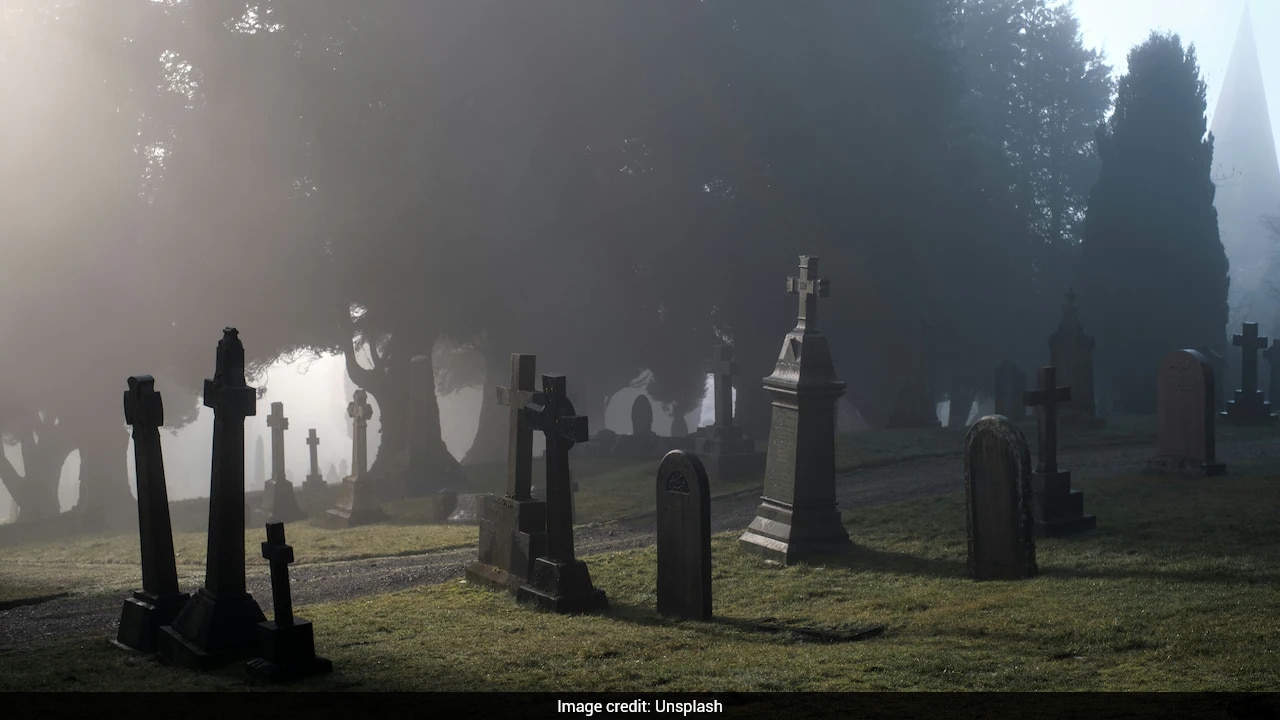
The sentencing of 48-year-old Nikolai Shcherbakov to fourteen years in a maximum-security penal colony by the Yaroslavl Regional Court marks a structural escalation in how domestic security apparatuses classify open-source information gathering. Charged with high treason under Article 275 of the Russian Criminal Code, the defendant's alleged offense was not the procurement of classified blueprints or movement logs from restricted military installations, but the systematic documentation of military graves at a public memorial cemetery. This prosecution exposes a fundamental shift in information control theory: when casualty metrics transition from state-managed administrative data to volatile public signals, the perimeter of state secrecy expands to encompass public space itself.
To evaluate this case beyond surface-level legal reporting, one must dissect the operational mechanics of open-source intelligence and state denial frameworks. Modern state security relies on maintaining control over the narrative of military expenditure and personnel attrition. When official channels restrict data transparency, verification migrates to decentralized observers who use physical reconnaissance. Cemeteries function as high-fidelity ledger systems. By cross-referencing burial dates, unit insignia on wreaths, headstone serial markers, and regional distribution patterns, external actors can construct empirical models of force depletion that bypass official censorship.
The legal architecture deployed in the Yaroslavl case reveals three distinct operational pillars designed to neutralize this decentralized verification model.
The first pillar is the reconfiguration of public infrastructure as a restricted security zone. Memorial sites dedicated to recent military campaigns occupy a dual status in contemporary sociology. Formally, they are public spaces open to grieving families and civilian visitors. Functionally, within the logic of wartime security governance, they operate as nodes of sensitive operational data. By prosecuting documentation activities as high treason rather than ordinary administrative offenses or vandalism, the state establishes a legal deterrent that redefines observation as espionage.
The second pillar involves the criminalization of transmission vectors. According to investigative summaries provided by the regional court and independent monitors, the core element elevating Shcherbakov's actions to state treason was the digital transmission of visual records to foreign intelligence entities. The legal threshold is crossed the moment localized observation connects with an external communications network. This creates a zero-tolerance boundary around any digital aggregation of casualty data, ensuring that raw operational inputs cannot be exported to analysts outside state jurisdiction.
The third pillar is the acceleration of judicial processing velocity. The Yaroslavl Regional Court reviewed and disposed of a complex treason indictment in approximately one month. In high-stakes national security litigation, compressed trial timelines serve a dual purpose. They reduce the window for public mobilization or legal defense maneuvering while maximizing the psychological impact of the verdict across the domestic population. Speed functions as a deterrent mechanism, signalling that the state maintains total systemic readiness to suppress information leaks at every layer of society.
This judicial precedent has triggered immediate behavioral adaptations across other urban centers. Following comparable detentions of individuals photographing military graves in Tomsk and Yekaterinburg, municipal authorities have begun installing physical warning placards in elite cemeteries, explicitly prohibiting photography near specific burial plots. This physical hardening of memorial sites represents a defensive feedback loop. When digital surveillance and retroactive prosecutions prove insufficient to stem information leakage, authorities resort to environmental design and spatial exclusion to prevent data collection at the point of origin.
For strategic analysts tracking information flows in closed-system environments, the Yarsolavl ruling demonstrates that data denial is no longer confined to digital firewalls or media blackouts. It encompasses physical topography. The cost function for independent verification has risen exponentially, transforming a routine act of urban recording into a high-consequence security infraction. Observers attempting to map structural losses in restricted information economies must now account for kinetic countermeasures applied directly to the physical archives of human cost.