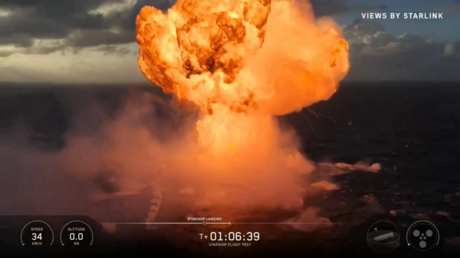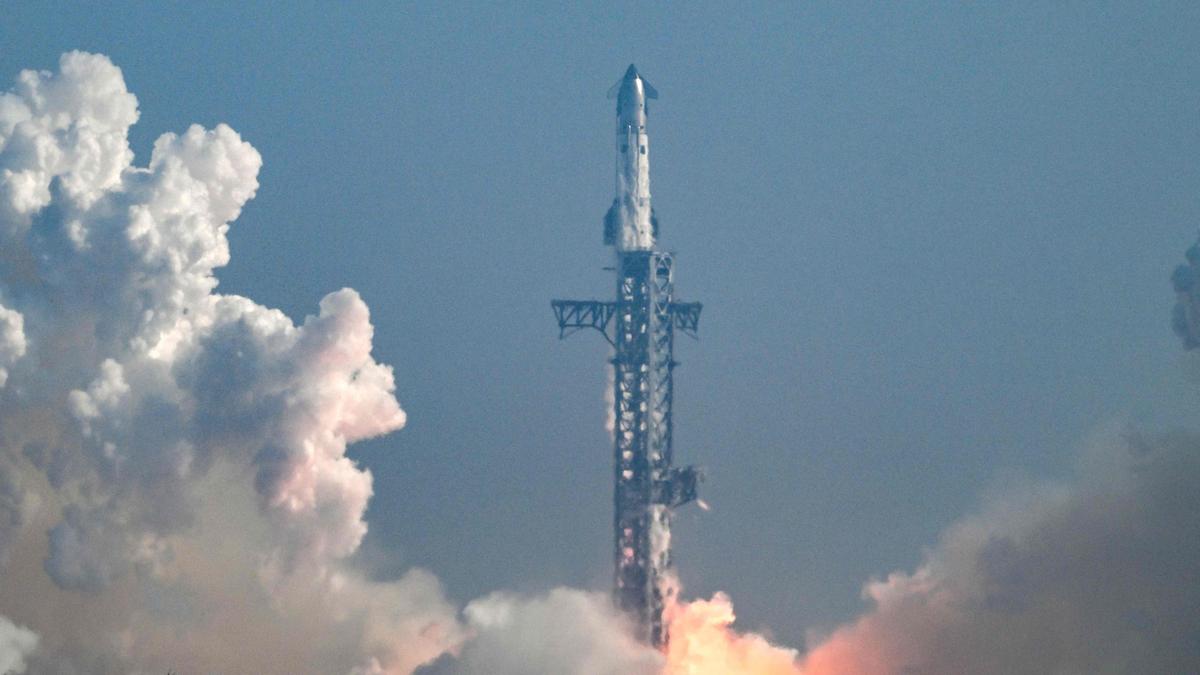
The aerospace press is swooning again. Right on cue, another gargantuan steel tower clears the pad in South Texas, and the media treat it like the second coming of the Apollo program. They gush over the sheer scale. They breathlessly count the raptor engines. They repeat the company line about "humanity becoming multi-planetary" as if it were a legally binding corporate milestone rather than a brilliant marketing narrative.
They are looking at the wrong metrics.
The prevailing consensus dictates that bigger is inherently better in the launch business. The industry treats mass to orbit as the ultimate scorecard. If you can lift 150 metric tons in a single go, you win.
That is a fundamental misunderstanding of space logistics.
The obsession with massive, fully reusable heavy-lifters ignores the harsh economic realities of asset utilization, orbital mechanics, and market demand. We are cheering for an ocean liner in a world that actually needs an agile fleet of delivery vans. Having spent two decades analyzing aerospace supply chains and watching venture capital dissolve in the thin air of upper-atmosphere hype, I can tell you that the celebration is premature.
The Mass-to-Orbit Fallacy
The core argument for mega-rockets rests on a simple economic premise: economies of scale. The theory goes that by driving the cost per kilogram down to double digits, you open up space to everyone.
It sounds convincing on a PowerPoint slide. It falls apart in a boardroom.
In the real world, launch cost is rarely the primary bottleneck for space hardware deployment. The real killer is payload capitalization.
Let's look at the actual math of satellite constellation deployment. Imagine a scenario where a company wants to launch a next-generation communications network.
- The Mega-Rocket Approach: You pack 100 satellites into one massive fairing. You get a fantastic bulk rate on the launch. But to fill that rocket, you had to manufacture, test, and store all 100 satellites simultaneously. You tied up hundreds of millions of dollars in inventory capital for months, if not years. If the launch fails, you lose an entire generation of your constellation in one afternoon. If the launch succeeds, you dump 100 assets into a single orbital plane, requiring immense amounts of onboard propellant to drift them into their final operational slots over the span of half a year.
- The Distributed Launch Approach: You use smaller, dedicated vehicles. You launch ten satellites at a time, directly into their target planes. You iterate on the hardware design between launches based on real-time telemetry from the first batch. Your capital burns cleanly. Your time-to-revenue drops drastically.
By focusing entirely on the cost per kilogram of the lift, the industry ignores the holding cost of capital and the staggering operational friction of deployment. A cheap ticket is useless if the train only goes to one station every six months.
The Reusability Mirage and the Maintenance Debt
We have been conditioned to believe that reusability solves everything. "You wouldn't throw away a Boeing 747 after a single flight across the Atlantic," the advocates say.
True. But a Boeing 747 doesn't expose its airframe to cryogenic cycling, acoustic environments exceeding 140 decibels, and the shearing plasma of atmospheric reentry at Mach 25.
The aerospace industry routinely conflates rapid reusability with refurbishable reusability.
[Launch] -> [Reentry Stress] -> [Inspection Debt] -> [Component Fatigue] -> [Refurbishment Cost]
When a vehicle experiences the thermal extremes of hypersonic deceleration, the metallurgy changes. Micro-fissures form. Thermal protection tiles degrade. The idea that you can simply hose down a massive booster, pump in some liquid methane, and fly it again three hours later is a myth that ignores basic materials science.
The space shuttle was supposed to be cheap because it was reusable. It ended up costing $1.5 billion per flight because the inspection and refurbishment infrastructure required an army of technicians and months of meticulous labor. While modern automation and stainless-steel construction mitigate some of this, they do not eliminate the physics of thermal fatigue.
The infrastructure required to support these giant vehicles is itself a massive economic liability. The launch pads require specialized deluge systems, massive mechanical integration towers, and sprawling tank farms. When one of these vehicles suffers an anomaly on or near the pad, it doesn't just destroy a rocket; it obliterates hundreds of millions of dollars of fixed ground infrastructure, grinding operations to a halt for months.
Where is the Demand?
The biggest blind spot in the mega-rocket narrative is the demand side of the equation.
Who is going to fill these massive cargo bays?
Currently, the primary customer for the largest rocket in development is the very company building it. They are launching their own internet satellites to justify the flight cadence. Outside of mega-constellations and highly subsidized government science projects like NASA’s Artemis program, the commercial market for massive payloads is shockingly small.
Commercial geostationary communication satellites are getting smaller and more efficient, not larger. Software-defined radios and advanced solar arrays mean a 500-kilogram satellite can now do the job that used to require a five-ton behemoth. The industry is moving toward decentralization, resilience, and distribution.
Building a rocket capable of carrying 150 tons to orbit when the market is moving toward 500-kilogram payloads is like buying a semi-truck to deliver Uber Eats. It is a spectacular mismatch of capability and commercial utility.
The In-Orbit Refueling Bottleneck
To achieve its most ambitious goals—like landing on the Moon or sending missions to Mars—a mega-rocket requires a technology that has never been executed at scale: automated, high-volume cryogenic fluid transfer in microgravity.
Because these massive vehicles burn through the vast majority of their propellant just escaping Earth's gravity well, they arrive in low Earth orbit essentially empty. To go anywhere else, they must be refueled.
This requires launching a succession of tanker rockets—some estimates suggest anywhere from 8 to 16 consecutive flights—just to fill the tanks of a single deep-space vehicle.
Think about the operational risk built into that architecture:
- Booster Reliability: You need a near-flawless launch cadence. A single failure in the tanker chain resets the clock.
- Boil-off Rates: Cryogenic propellants like liquid oxygen and liquid methane do not like to stay liquid in space. They boil off. Every day your tanker chain is delayed, your fuel evaporates into the vacuum.
- Docking Dynamics: You are sloshing hundreds of tons of volatile fluid between two massive, independent structures traveling at 17,500 miles per hour. The control loops required to manage that kinetic mass shifting are an absolute nightmare.
The industry treats this as a trivial engineering hurdle to be solved down the road. In reality, it is a single point of failure that could render the entire architecture economically unviable.
Pivot the Question
Instead of asking, "How do we build a bigger rocket to carry heavier things?" we should be asking, "How do we build smarter things so we don't need giant rockets?"
The future of space commercialization does not belong to the companies building the biggest hammers. It belongs to the companies mastering orbital manufacturing, advanced robotics, and distributed architectures.
If you can print structural elements in space using raw materials, you don't need a massive fairing. If you can assemble complex structures in orbit using autonomous tethers and swarms of small components, you don't need a heavy-lifter.
The current adoration of mega-rockets is a form of technological nostalgia. It is an attempt to solve 21st-century economic problems using mid-20th-century structural philosophies, wrapped in modern software.
Stop watching the smoke and fire at the launchpad. Look at the ledger. Look at the capital efficiency. Look at the physics of material degradation. The giant rocket isn't the opening of a new era; it is the final, over-engineered gasp of an old one.
Stop building bigger boxes. Start building smarter cargo.