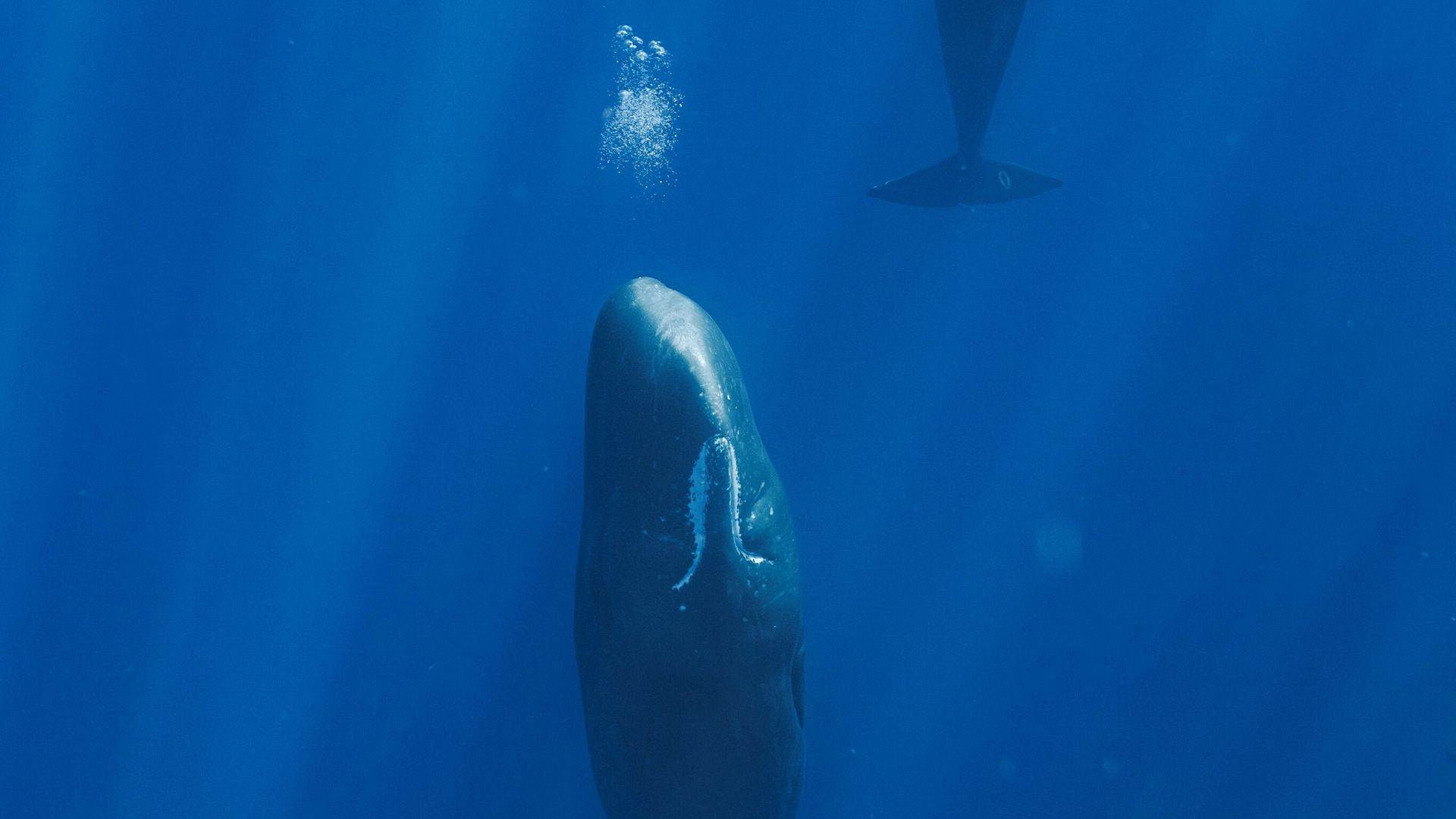
Imagine floating completely upright in pitch-black ocean water, totally motionless, slowly venting air bubbles into the dark. That isn't sci-fi horror. It's how sperm whales catch a nap.
For a long time, marine biologists struggled to figure out how these giant ocean predators sleep. How does an air-breathing creature that weighs forty tons nap in the open ocean without drowning or sinking into the deep? Recent field observations and acoustic tracking have given us a clear look at this bizarre behavior. Sperm whales sleep standing up, floating vertically just below the surface, and they release carefully timed bubbles while they do it.
It looks eerie. But from a physics and survival standpoint, it's brilliant.
The Odd World of Vertical Drift Sleeping
If you drift across the ocean near the Azores or off the coast of Chile, you might stumble upon a pod of sperm whales standing perfectly upright in the water column. They look like massive submerged tree trunks. They don't move their flukes. They don't react immediately to passing boats. They just hang there.
Scientists call this vertical drift sleeping.
Unlike humans, whales can't sleep for eight hours straight. They're voluntary breathers, meaning every breath requires a conscious action. For decades, researchers assumed cetaceans only engaged in unihemispheric sleep, resting one half of their brain at a time while keeping the other half awake to handle swimming and breathing.
Sperm whales break the rule.
When sperm whales fall into these vertical naps, both eyes close. They enter a state of deep sleep that lasts between 10 and 15 minutes per session. During these short bursts, they're completely oblivious to their surroundings. In fact, back in 2008, a research vessel studying whale acoustics accidentally bumped right into a pod of sleeping sperm whales because the animals were so out of it. They only woke up when the boat made physical contact.
Why Sperm Whales Release Bubbles While Napping
So where do the bubbles fit into this?
When marine scientists monitored sleeping pods using underwater video equipment and suction-cup acoustic tags, they noticed something weird. Whales hanging vertically in the water column periodically released small streams or rings of bubbles from their blowholes.
It turns out this isn't an accident. It's all about buoyancy control.
Sperm whales have a massive head that holds the spermaceti organ, a giant cavity filled with liquid wax and oil. This organ acts as a natural ballast system. When a whale dives into cold depths, blood flow to the head decreases, cooling the wax and making it denser so the whale can sink effortlessly. When it returns toward the surface, warm blood warms the wax, making it less dense so the whale can float up.
When a whale decides to nap just 10 to 20 meters below the surface, maintaining a stable position without paddling requires microscopic adjustments. Air trapped in the lungs expands as pressure drops slightly if the whale drifts upward. By releasing small bursts of bubbles, the sleeping whale bleeds off excess buoyancy.
The bubbles keep them suspended in neutral buoyancy. Too little air, and they sink into the crushing deep. Too much air, and they float to the surface where choppy waves and weather disrupt their rest.
What Human Divers Can Learn From Ocean Giants
Free divers and scuba enthusiasts actually share a lot in common with these ocean mammals when it comes to managing air.
If you've ever tried scuba diving, you know that keeping your depth precise requires constant trim adjustments. You add a tiny squirt of air to your buoyancy compensator when you drift down, and dump a little out when you rise.
Sperm whales do the exact same thing using their lungs and blowhole, except they do it on autopilot while sound asleep.
Here are a few takeaway lessons from how these massive mammals handle deep water physics:
- Neutral buoyancy takes practice. Staying stationary in liquid without finning requires fine-tuned lung control rather than aggressive physical effort.
- Controlled exhalation saves energy. Venting tiny amounts of air gradually prevents dramatic depth swings.
- Short resting windows maximize survival. High-efficiency mammals trade long sleep cycles for short, total-rest bursts to balance breathing needs with recovery.
How Scientists Track Underwater Naps
Studying forty-ton creatures that spend most of their lives underwater isn't easy. You can't just throw a sleep tracker on a sperm whale and call it a day.
Researchers rely on lightweight sensors called DTAGs (digital acoustic recording tags). These devices stick to the whale's skin via suction cups and log depth, pitch, roll, and sound data for hours before popping off to be retrieved by boats.
When the pitch data shows a sudden 90-degree tilt and zero acoustic activity for 15 minutes, scientists know the whale is down for a nap. Combined with high-definition drone footage and sub-surface video cameras, these tags revealed the full scope of vertical sleeping and bubble regulation.
Understanding these sleep habits does more than satisfy scientific curiosity. Commercial shipping lanes overlap heavily with sperm whale habitats. Knowing that these animals spend large chunks of time floating motionless near the water surface gives marine conservation groups hard data to push for updated shipping lane speed limits, protecting resting pods from ship strikes.
If you want to keep up with marine science developments, check out current research published by organizations like the Sea Mammal Research Unit or track real-time cetacean field updates through ocean conservancy projects. Observing how wildlife solves complex physical problems underwater gives us a whole new respect for the open ocean.