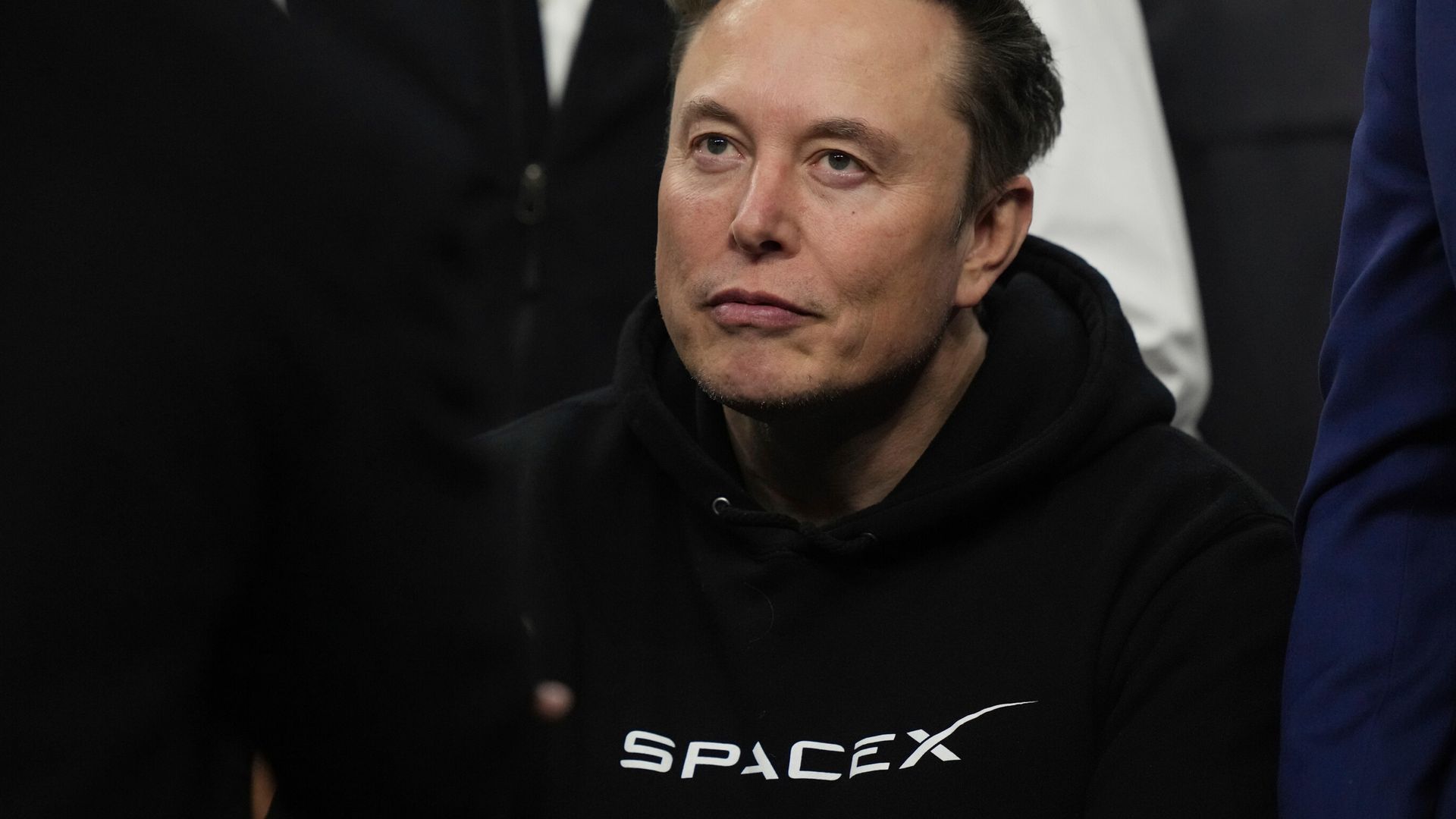
The impending initial public offering of SpaceX, slated for mid-June under the ticker SPCX, is widely framed as a celebratory coronation for Elon Musk, poised to cement him as the world's first paper trillionaire. Underneath the breathtaking $1.75 trillion to $2 trillion valuation target and the historic $75 billion capital raise lies a far more volatile financial narrative. This market debut is not merely an expansion of a successful rocket enterprise. It is a high-stakes, defensive capitalization strategy engineered to absorb staggering losses from Musk's artificial intelligence ambitions and a heavily indebted corporate empire.
To understand the mechanics of the SpaceX offering is to understand the shifting nature of Musk's wealth. The consensus view treats his ascent past the twelve-digit mark as a linear victory lap for commercial aerospace. The raw numbers in the company's S-1 regulatory filing reveal an entity operating under immense structural strain.
SpaceX generated an impressive $18.7 billion in revenue for the full year of 2025, representing a 33% year-over-year increase. It pulled in $6.6 billion in adjusted EBITDA. Yet, on a GAAP basis, the company posted a net loss of $4.94 billion for 2025. The bleeding accelerated drastically in the first quarter of 2026, with SpaceX logging a massive $4.28 billion net loss in just three months. The company's accumulated deficit now sits at $41.3 billion.
The primary driver of this cash burn is not the Starship development program or the deployment of Starlink satellites. The financial drag stems directly from the February 2026 merger between SpaceX and xAI, Musk’s artificial intelligence venture.
The Undersea Cable of Private Tech Wealth
By absorbing xAI, the Colossus data center operations, and the Grok platform into the aerospace balance sheet, SpaceX transformed from a capital-intensive hardware manufacturer into an insatiable sinkhole for graphics processing units. The AI operations alone burned through more than $6 billion in 2025 and consumed another $2.5 billion in the first quarter of 2026.
SpaceX Financial Performance Overview (USD)
+------------------------+-------------------+-------------------+
| Metric                 | Full Year 2025    | Q1 2026 Only      |
+------------------------+-------------------+-------------------+
| Total Revenue          | $18.7 Billion     | Not Disclosed     |
| GAAP Net Loss          | -$4.94 Billion    | -$4.28 Billion    |
| xAI/AI Operating Loss  | -$6.00 Billion    | -$2.50 Billion    |
+------------------------+-------------------+-------------------+
This merger created a unique valuation challenge. Wall Street is being asked to value the combined company at up to 93 times trailing sales. Only three American companies currently trade above the $2 trillion threshold: Apple, Microsoft, and Nvidia. Each of those entities boasts pristine balance sheets and tens of billions of dollars in recurring, high-margin net income. SpaceX is attempting to join this exclusive club while carrying billions in quarterly losses.
The public offering is structured as an all-primary share sale, meaning all $75 billion raised will flow directly onto the corporate balance sheet rather than into the pockets of early insiders. This mechanism indicates that the company desperately needs the cash. Without this massive influx of public capital, the combined weight of orbital infrastructure deployment and cutting-edge machine learning development would threaten to choke the company’s liquidity.
The Asymmetry of the Paper Trillionaire
The media obsession with Musk's personal net worth, currently hovering near $970 billion, obscures the illiquid reality of his holdings. His estimated $538 billion pre-IPO stake in SpaceX makes up more than half of his entire wealth portfolio. Tesla, long the bedrock of his financial public image, accounts for a comparatively modest $167 billion.
"Much of this wealth exists purely on paper, tied up in private equity valuations and volatile stock options rather than liquid bank accounts."
For years, Musk has operated as a cash-poor billionaire, frequently borrowing billions against his public equities to fund secondary acquisitions or maintain personal liquidity. The purchase of Twitter, now X, saddled his broader network with high-yield debt service obligations that continue to demand capital.
By taking SpaceX public at a near-$2 trillion valuation, Musk achieves two critical objectives simultaneously:
- He creates a highly liquid, premium asset class against which he can borrow with significantly lower risk margins.
- He insulates his personal balance sheet from the brutal capital expenditures required to keep xAI competitive against rivals like OpenAI and Anthropic.
The retail investor enthusiasm surrounding the June 12 listing is expected to drive a massive opening-day surge. Institutional underwriters, led by Goldman Sachs, have prepared a 15% greenshoe option to capture excess demand. But seasoned market participants recognize that the retail price paid on the secondary market rarely aligns with initial prospectus estimates. If the public markets sour on AI infrastructure valuations over the next year, the downward pressure on a company trading at 93 times sales will be unforgiving.
Starlink as the Solitary Life Raft
The fundamental bull case for the IPO relies entirely on Starlink, the only business unit within the corporate umbrella that demonstrates true operational profitability. In 2025, the satellite internet division brought in $11.4 billion in revenue and generated $4.4 billion in operating income, supporting over 10 million subscribers globally.
The problem is that Starlink’s cash generation is entirely spoken for. The capital required to maintain, replace, and upgrade thousands of low-Earth orbit satellites every five years is a recurring burden. When that cash flow is diverted to subsidize data centers and experimental deep-space hardware, the margin for operational error drops to zero.
The public market has rarely encountered an investment vehicle of this complexity. Investors buying into SPCX are not just purchasing a dominant rocket launch monopoly that commands global aerospace. They are underwriting a sprawling, interconnected web of artificial intelligence infrastructure, satellite telecommunications, and interplanetary ambition, all bound to the personal financial destiny of a single individual. The debut will undoubtedly create the world’s first trillion-dollar fortune, but the foundation supporting that monument is far more fragile than it appears.


