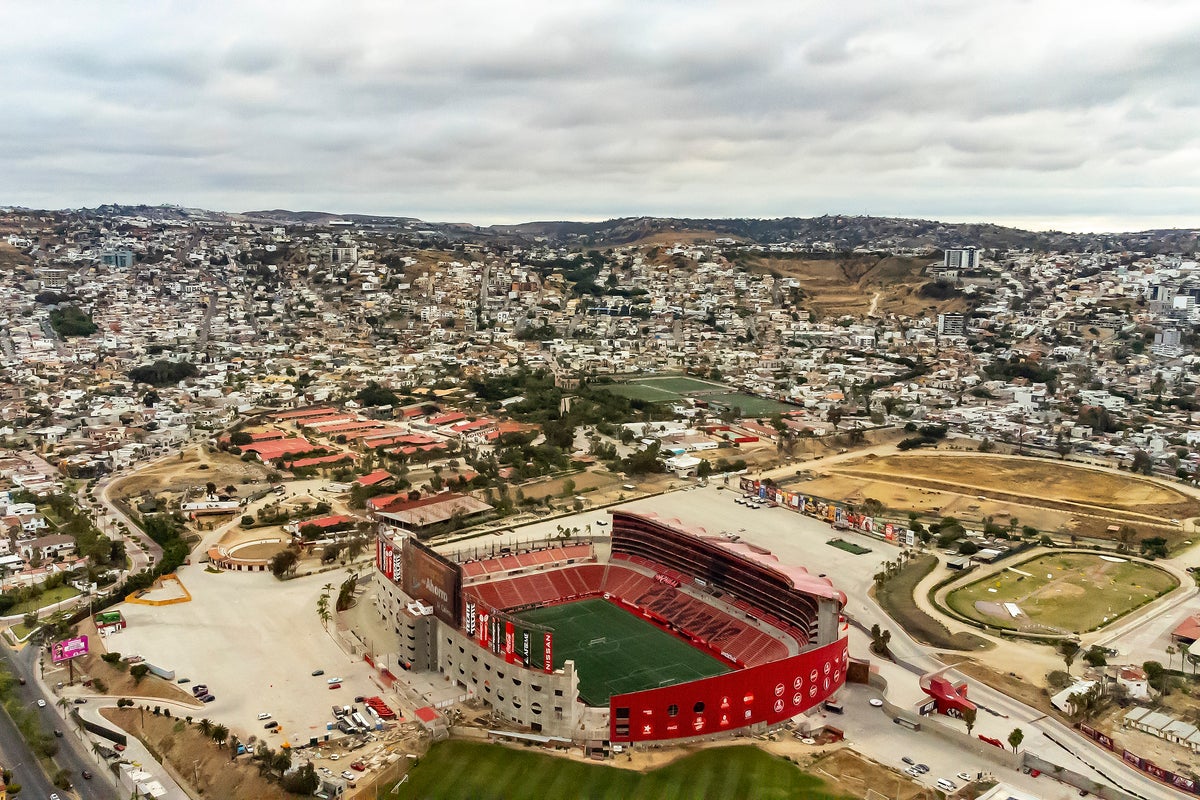
A dead body discovered just yards from an international soccer team's training headquarters is the kind of security nightmare that structural sports organizations spend millions trying to prevent. When that body turns up outside Iran’s World Cup training base in Mexico, a localized police incident instantly transforms into an international geopolitical headache. Local authorities are currently treating the discovery as an isolated criminal matter, but the optics are disastrous. For Iran, a federation already navigating unprecedented political scrutiny, and Mexico, a nation fighting to prove its infrastructure can safely host global tournaments, the dead-end parking lot where the body was found represents a massive vulnerability in the global sports apparatus.
This is not just about a breakdown in local perimeter policing. It is about the systemic failure of international soccer bodies to assess the hyper-local realities of the regions they select for high-profile training camps.
The Illusion of the Secure Perimeter
International sports federations operate under a dangerous delusion. They believe that because a resort or a sporting complex has a high wall and a private security guard at the gate, the team inside is insulated from the surrounding environment.
The reality on the ground in Mexico tells a completely different story.
When a national team sets up a base camp, they do not just occupy the pitch. They rely on municipal roads, public parking infrastructure, and local utility grids. In this case, the discovery of a deceased individual right on the edge of the Iranian team's designated zone exposes the gap between private security contracts and municipal reality. Private guards monitor the cameras looking inward. Meanwhile, the local police force, often underfunded and overstretched, handles the public asphalt right outside the fence.
That gap is where the threat lives.
Consider how these camps are structured. A typical World Cup training base requires accommodations for at least fifty people, including players, coaching staff, medical professionals, and federation officials. They need absolute privacy to train, which usually means selecting secluded venues. However, seclusion in high-risk regions frequently correlates with a lack of consistent municipal surveillance. The very isolation Iran sought to protect its tactical secrets is what allowed a grim crime scene to develop right on their doorstep without anyone noticing until it was too late.
Why Iran Represents a Unique Security Flashpoint
To understand why this discovery sent shockwaves through international diplomatic channels, one must look beyond the immediate criminal investigation. Iran is not a typical soccer federation. Every move the national team makes is heavily politicized, scrutinized by dissident groups abroad, and monitored by state officials back home.
+-----------------------------------------------------------------+
|               TYPICAL BASE CAMP SECURITY LAYERS                |
|                                                                 |
|   [ Public Road ] -> [ Municipal Police / Vulnerable Zone ]     |
|                             |                                   |
|   =================== PERIMETER FENCE ========================= |
|                             |                                   |
|   [ Private Security ] -> [ Team Hotel & Training Pitch ]       |
+-----------------------------------------------------------------+
The team travels with its own internal security detail, which is designed to handle political protests, aggressive media, and potential espionage. They are not trained, nor are they legally authorized, to police Mexican public property. When a body appears outside their gate, it forces an immediate re-evaluation of their entire defensive posture.
- Intelligence blind spots: Did the local advance team fail to map the surrounding criminal landscape?
- Response protocols: How long did the body sit there before discovery, and what does that say about the frequency of local patrols?
- Media fallout: How does the federation control the narrative when a sports story becomes a homicide investigation?
For the players, the psychological impact is immediate. Elite performance requires a state of hyper-focus. It is impossible to maintain that focus when the morning news reveals that a murder investigation is active just beyond the locker room wall. The pitch ceases to be a sanctuary. It becomes a fishbowl surrounded by flashing police lights and yellow tape.
Mexico's Host Status Under the Microscope
This incident could not have come at a worse time for Mexican soccer officials. The country is consistently trying to project an image of stability and elite readiness to the global sporting community. Every single security lapse is amplified a thousand times by international media.
The narrative that Mexico is too dangerous to host major tournaments is a persistent one, and incidents like this feed that fire directly. It does not matter if the homicide was completely unrelated to the Iranian team. In the court of public opinion, the distinction between a localized cartel dispute and a targeted threat to an international sports team gets blurred instantly.
The organizational failure here lies in the coordination between FIFA, the local organizing committee, and federal Mexican law enforcement. When a high-risk nation like Iran selects a training base, the security assessment cannot stop at the hotel lobby. It must encompass a multi-kilometer buffer zone.
Local municipalities often promise the world to secure these training camps, hoping for tourism dollars and positive press. They guarantee 24-hour patrols and dedicated police escorts. But as veterans of the sports journalism beat know well, those promises often evaporate when local resources are stretched thin by everyday domestic crime. The regular police shift changes, the patrol cars break down, or officers are reassigned to a higher-priority incident three towns over. The sports team is left with a false sense of security based on a contract that local authorities lack the manpower to fulfill.
The Broken Model of Team Base Selection
The process of picking a World Cup training base is fundamentally flawed. Federations prioritize luxury, pitch quality, and climate matches over rigorous, independent security audits. They rely on glossy brochures and political assurances.
A federation official looks at a pristine hybrid-grass field and a five-star spa. They do not look at the crime statistics of the neighborhood two miles away, nor do they analyze the response times of the local precinct. If they did, Iran would never have been cleared to utilize this specific facility without a permanent federal military presence guarding the outer roads.
Federation Selection Priority:
[Luxury / Pitch Quality] > [Climate Match] > [Isolation] > [Independent Security Audit]
This broken model assumes that the wealth and prestige of international soccer can create a temporary bubble of safety anywhere in the world. It is a arrogant assumption that has been disproven repeatedly, from the 2010 attack on the Togo national team bus in Angola to this grim discovery in Mexico. The bubble is porous. It pops the moment it encounters the stark reality of local violence.
Moving Beyond the Standard Crisis Management Playbook
Right now, the public relations machines are working overtime. The local Mexican government is issuing statements calling the incident an isolated event. The Iranian federation is likely remaining quiet, trying to shield its players from the distraction. FIFA will issue a boilerplate statement about participant safety being their top priority.
That playbook is old, tired, and useless.
What is required is a radical overhaul of how security perimeters are defined for international sporting events. If an organization cannot guarantee the absolute integrity of the immediate surroundings of a venue, that venue must be stripped of its hosting status. No exceptions.
To fix this, international sports governing bodies must establish an independent, non-political security task force that holds veto power over training camp selections. This body must operate outside the influence of local organizing committees who are desperate to save face. If the task force finds that a local police department cannot secure the outer parking lots or the access roads, the team must be moved immediately to a military-grade installation or a highly secured metropolitan hub where resources are guaranteed.
The discovery outside Iran's base is a final warning shot. The next time a body is found near an international training camp, it might not be an unrelated local victim. It could be a player, a coach, or a traveling fan. The organizations running global soccer have all the money in the world; it is time they spent it on the unglamorous, hard-nosed security work required to keep reality from violently intruding on the game.