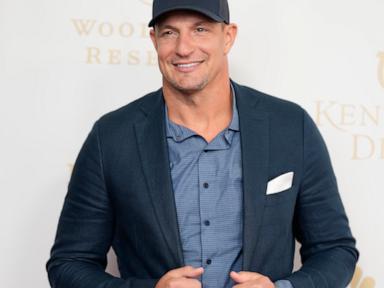
The sports marketing machine loves a predictable script. A major racing event needs a jolt of pop-culture relevance, so the executives open their Rolodexes, find a retired athlete known for partying, and cut a massive check. The recent announcement naming four-time Super Bowl champion Rob Gronkowski as the Grand Marshal of the Indianapolis 500 Snake Pit is being heralded by mainstream sports media as a masterstroke of synergy. They tell you it is the perfect pairing of an iconic race-day party and an iconic party animal.
They are wrong. It is lazy, uninspired marketing that exposes a deeper rot in how motorsport attempts to capture younger demographics.
For decades, the Snake Pit inside Turn 3 at the Indianapolis Motor Speedway has been a distinct subculture. It evolved from a gritty, chaotic, counter-culture gathering in the 1960s and 1970s into a massive, modern electronic dance music festival. It possesses its own rhythm, its own history, and its own audience. Dropping a forty-something former NFL tight end into the middle of a generation-defined EDM festival is not organic engagement. It is corporate nostalgia masquerading as current relevance.
The Lazy Consensus of Celebrity Placements
The prevailing narrative in sports business columns is that "Gronk" brings an automatic guarantee of energy and media impressions. The logic goes: the Snake Pit is a party, Gronkowski likes to party, therefore the audience will connect with him.
This line of thinking ignores how modern fan communities actually function. The 21st-century sports fan possesses a highly sensitive detector for corporate forced fun. When an event organizers rely on a mainstream celebrity who has no organic connection to open-wheel racing or the electronic music scene, they are not building a bridge to new fans. They are shouting at them through a megaphone.
I have spent years analyzing audience metrics and event ROI for major sports properties. I have watched organizations blow hundreds of thousands of dollars on celebrity appearance fees, only to see a brief spike in social media impressions that yields exactly zero long-term ticket sales or sustained viewership. The data consistently shows that temporary celebrity injections do not convert casual observers into lifetime enthusiasts. They create a temporary circus that leaves town the moment the celebrity hops back on their private jet.
The Grand Marshal role at the Snake Pit should not be treated as a generic hosting gig for whoever happens to be available from the NFL alumni association. It should be an amplification of the culture already present inside the racetrack.
Dismantling the Myth of the Universal Party Guy
Let us look at the mechanics of the Snake Pit audience. The infield festival thrives on a specific subculture dictated by bass drops, electronic music producers, and a demographic that skews heavily toward Gen Z and younger Millennials. These fans do not view sports through the same lens as traditional network television executives.
To a 21-year-old EDM fanatic standing in the morning mud at IMS, Rob Gronkowski is not a contemporary cultural icon. He is a legacy sports figure from their parents' era. He represents the traditional sports establishment—the exact entity that the electronic music scene historically positioned itself against.
Imagine a scenario where a classical music festival hired a famous skateboarder to act as their master of ceremonies simply because "both activities require high focus." The disconnect would be obvious. Yet, because the Snake Pit and Gronkowski both share the vague, generic label of "wild," the mainstream media assumes the fit is seamless.
True cultural relevance cannot be borrowed. It must be built. By inserting a legacy NFL star into a specialized music venue, the organizers miss an opportunity to elevate an actual leader within the electronic music community—someone who commands genuine respect from the tens of thousands of people actually standing in front of the stage.
The Economic Downside of Star-Chasing
The contrarian reality that racing executives refuse to admit publicly is that these high-profile bookings carry a massive hidden cost. It is not just the upfront appearance fee. It is the reallocation of resources away from the actual fan experience.
When a significant portion of an activation budget is swallowed by a single celebrity entity, other critical areas suffer.
- Production value of the secondary stages gets scaled back.
- Local artist bookings are minimized or squeezed on pay.
- On-site infrastructure and fan amenities receive less investment.
The trade-off is clear: you get a three-minute viral video of a celebrity spiking a football on stage in exchange for a diminished experience for the fans who paid hard-earned money to stand in the infield for eight hours.
The defense of this strategy usually relies on the phrase "earned media." Proponents argue that the national headlines generated by Gronkowski's name cover the cost of his booking. But earned media is a vanity metric if it does not drive core business goals. Does a sports fan in Boston tune into the Indy 500 just because they saw a clip of Gronkowski wearing a racing helmet on Instagram? The historical broadcast ratings say no. Fans tune in for the racing, the drama, and the inherent prestige of the event—not for peripheral celebrity cameos.
Redefining the Fan Engagement Strategy
If the goal is to truly future-proof motorsport events and build sustained loyalty among younger demographics, the entire philosophy surrounding celebrity partnerships needs to change. The current model is transactional; the future model must be integrated.
Instead of hunting for the biggest household name to paste onto a promotional poster, organizers should look for micro-influencers and creators who possess deep, authentic trust within specific niches. A digital creator with 500,000 highly engaged, hyper-focused followers in the automotive or music production space will generate more actual conversion than a mainstream athlete with five million passive followers who do not care about racing.
Furthermore, the focus should shift from the stage back to the spectator. The Snake Pit became famous because of the wild, unscripted stories of the everyday people who attended it. It was a playground for the fans. Turning it into a top-down entertainment product where fans are expected to watch a wealthy celebrity enjoy themselves completely misunderstands the democratic spirit of the infield.
Stop trying to manufacture viral moments through PR agencies. The most memorable parts of the Indianapolis 500 have always been the ones that occurred organically in the stands, in the garage area, and on the asphalt.
The Real Power of the Indianapolis 500
The ultimate irony of this celebrity obsession is that the Indianapolis 500 does not need the help. The race itself is an American institution with an inherent gravity that requires no artificial flavor. The spectacle of thirty-three cars screaming into Turn 1 at 230 miles per hour is more thrilling than any celebrity stage routine could ever hope to be.
When you rely heavily on outside star power to validate your event, you inadvertently signal that the core product—the racing—is not enough to hold the public's attention. It is a defensive, insecure posture that devalues the sport.
The Snake Pit does not need a corporate-approved party ambassador to teach it how to have a good time. It already knows how. The fans in the infield do not need a grand marshal to signal when it is time to turn up the volume. They have been doing it perfectly fine on their own for decades.
Relying on legacy mainstream athletes to inject life into specialized youth subcultures is an outdated playbook from a dying era of sports marketing. It is time to throw the playbook out, fire the celebrity handlers, and trust the power of the event itself.