The air in Shanghai smells faintly of roasted sweet potatoes and wet asphalt, a heavy dampness that clings to the wool of your coat. Down on Nanjing Road, neon bleeds through the twilight haze, casting long, bruised reflections across the hoods of idling sedans. For years, the soundtrack of this city was a steady, rhythmic concussive thrum—thousands of internal combustion engines clearing their throats at every red light, exhaling a hot, sulfurous breath that coated the windows of high-rise apartments in a fine, grey film.
You stopped noticing the taste of it after a while. That is how habit works. It becomes the weather.
Then the silence arrived. It didn't announce itself with a trumpet blast. It slid in on rubber tires, soundless and deliberate, carrying the faint, high-pitched whine of electric armatures spinning in the dark.
Right now, halfway across the globe, oil terminals in the Persian Gulf are blinking under the harsh, white glare of security lights, tankers riding low and heavy in the water, their captains checking the horizon with a cold, knotting sensation in their stomachs. Conflict has a way of concentrating the mind. When shipping lanes narrow and the cost of a barrel of Brent crude begins its jagged, unpredictable climb toward the stratosphere, the abstract calculus of energy policy suddenly lands on the kitchen table of an ordinary family trying to fill the tank of a commuter sedan.
We have lived for a century on the liquid pulse of ancient sunlight, pumped from black fractures in the earth. We built our entire civilization on the premise that combustion was the only way to move a ton of steel from one street corner to the next. But the ground beneath our feet is shifting. And the forces driving that shift are not purely benevolent or visionary; they are forged in the crude crucible of geopolitical panic and corporate desperation.
Consider what happens inside a showroom in Beijing when the price wars begin.
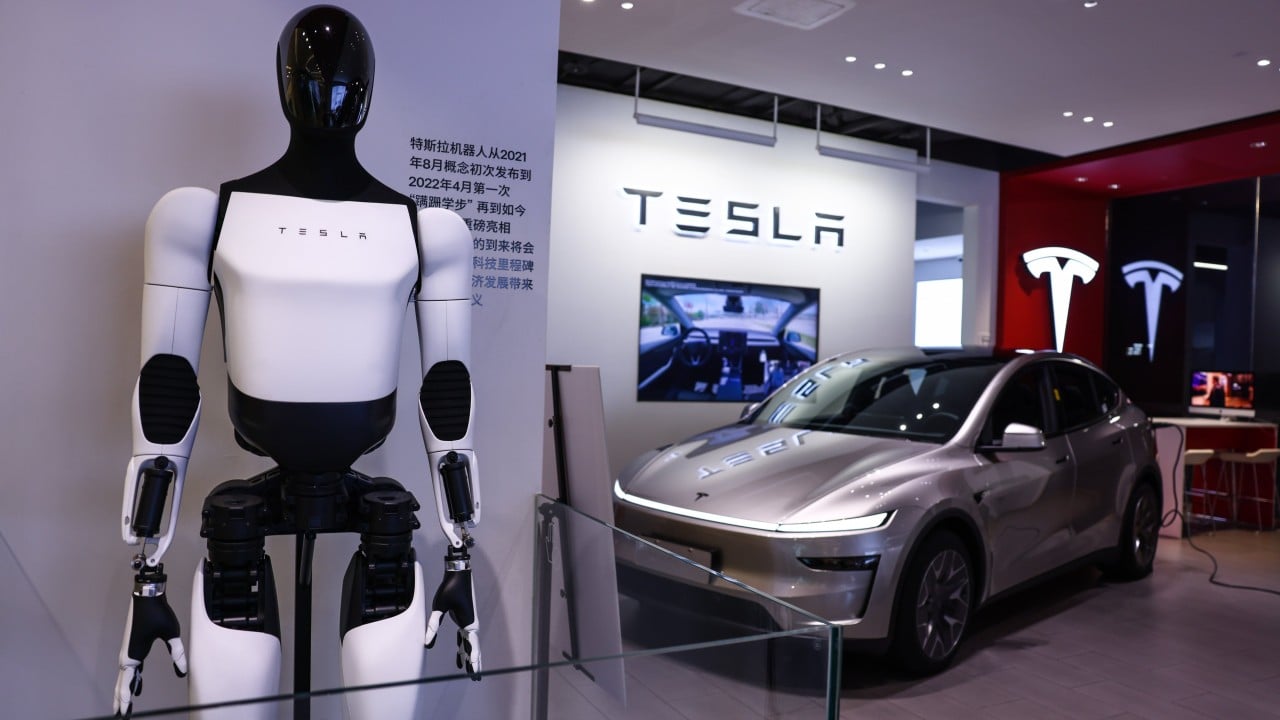
The showroom floor is polished to a mirror shine, reflecting the aggressive, angular lines of vehicles that look like they were carved from blocks of obsidian. A salesman named Chen stands near the glass, watching the rain streak the pavement outside. His targets are steep, dictated by corporate headquarters thousands of miles away where executives stare at bloated inventory sheets and quarterly losses that look like phone numbers.
Tesla has lowered its prices again. Not by a modest margin, but by enough to send a shockwave through domestic competitors like BYD and NIO. It is a predatory dance of margins and market share, a corporate game of chicken played with billion-dollar assembly lines. For Chen, it means longer hours, lower commissions, and customers who walk in carrying the weight of economic uncertainty, pinching pennies while they kick the tires of the future.
"Look at this screen," Chen says, tapping the massive central display of a Model Y with a manicured index finger. "It is not a car anymore. It is a smartphone with wheels. Why would a twenty-five-year-old engineer buy an engine with two thousand moving parts that require oil changes, spark plugs, and constant prayers to the transmission gods, when they can buy a battery pack that updates its own software while it sits in the driveway?"
He is right, of course. But the transition is never as clean as the marketing brochures suggest.
Behind the sleek glass facades of these dealerships lies an industrial ecosystem that is currently transforming at a breakneck, almost violent pace. Battery gigafactories stretch across the flat plains of Jiangsu province like sprawling concrete fortresses, consuming raw lithium, cobalt, and nickel mined from the red earth of Western Australia and the salt flats of South America. The supply chain is a fragile, interconnected web of geopolitical dependencies. When a stray missile arcs across the sky in the Middle East, sending Brent crude surging past ninety dollars a barrel, the boardrooms in Detroit, Wolfsburg, and Tokyo experience a collective, sharp intake of breath.
The war in Iran is thousands of miles away from the average commuter, yet it acts as an invisible hand, shoving hesitant consumers across an imaginary line.
Every time oil prices spike, internet searches for electric vehicles spike in tandem. It is a predictable, almost algorithmic behavioral loop. People do not buy electric cars purely out of a sudden, deep-seated passion for polar bears or zero-emission particulate targets. They buy them because filling a gas tank has become an insult to their monthly budget. They buy them because the math of combustion no longer works.
Economics is the great accelerator. Ethics provides the banner, but fear and frugality provide the engine.
Yet, to understand this moment, we have to look past the spreadsheets and the showroom floors. We have to look at the grid.
In a small apartment in Chengdu, a retiree named Mrs. Wang sits by her window, listening to the hum of her small electric scooter charging in the hallway. Her granddaughter is studying civil engineering at the local university, sketching out high-voltage transmission topologies that can handle the massive influx of renewable power pouring down from the Tibetan plateau.
"When I was young," Mrs. Wang tells me, her hands folded neatly over her apron, "the sky was yellow for three months out of the year. We burned coal in iron stoves in the kitchen. My mother had a cloth she tied over our mouths when we walked to school. Now? The air is clear. My granddaughter tells me the cars make no smoke. But I wonder where the electricity comes from. Does the fire just move somewhere else?"
She has hit upon the central paradox of our current technological pivot.
An electric vehicle is only as clean as the power plant that feeds it. If that power plant is burning sub-bituminous coal to generate the kilowatts flowing into a lithium-ion battery pack, you have simply outsourced the smokestack from the tailpipe to the horizon. We are trading localized toxicity for centralized generation, shifting the burden of pollution out of the city centers where voters can see it, and tucking it away in industrial provinces where they cannot.
The geopolitical dimension adds another layer of profound friction. For decades, the global superpower status of nations was underwritten by the flow of oil tankers through the Strait of Hormuz. Control the crude, control the world. That was the unwritten rule of the twentieth century.
Now, as the world pivots toward electrification, the currency of power is changing hands. The new black gold is lithium, processed graphite, rare earth elements, and semiconductor silicon. The nations that dominate the refining of these materials hold the leverage of the twenty-first century. When supply chains fracture due to regional conflicts or trade skirmishes, the vulnerability simply changes its shape. We are not escaping dependency; we are migrating to a new one.
And yet, standing in the middle of a modern charging station at midnight, watching a row of sleek vehicles tethered like thoroughbreds to thick orange cables, you can feel the momentum.
There is no engine roar. There is only the low, ambient hum of cooling fans and the faint blue glow of digital displays illuminating the faces of drivers scrolling through their phones while they wait. A taxi driver leans against his fender, smoking a cigarette, watching the percentage meter tick upward from forty to forty-five percent.
"How do you like it compared to your old gas cab?" I ask him.
He exhales a thin stream of grey smoke into the damp night air, shrugs, and taps the dashboard. "It saves me fifty yuan a shift," he says simply. "And I don't smell like gasoline when I go home to my wife. That is enough reason for me."
That is the unvarnished reality of the great automotive migration. It does not arrive as a grand, philosophical awakening about the fate of the biosphere. It arrives in the ledger of a working man who notices he has a few extra bills in his pocket at the end of the week, and in the sudden, sharp realization of a corporate executive who sees his traditional market share evaporating like morning mist.
The price wars in China, the geopolitical tremors in the Middle East, the frantic scramble for battery minerals in the global south—they are all tributaries feeding the same massive, unstoppable river. The internal combustion engine had a magnificent run of roughly one hundred and forty years. It built our modern world, paved our continents, and poisoned our skies.
Now, it is slowly, grudgingly stepping aside.
The air in Shanghai is still damp. The neon still bleeds through the rain. But if you stand very still on the pavement as a silent, shadow-dark sedan glides past without waking the street, you can hear the faint, high whistle of a door closing on an entire epoch of human history.


