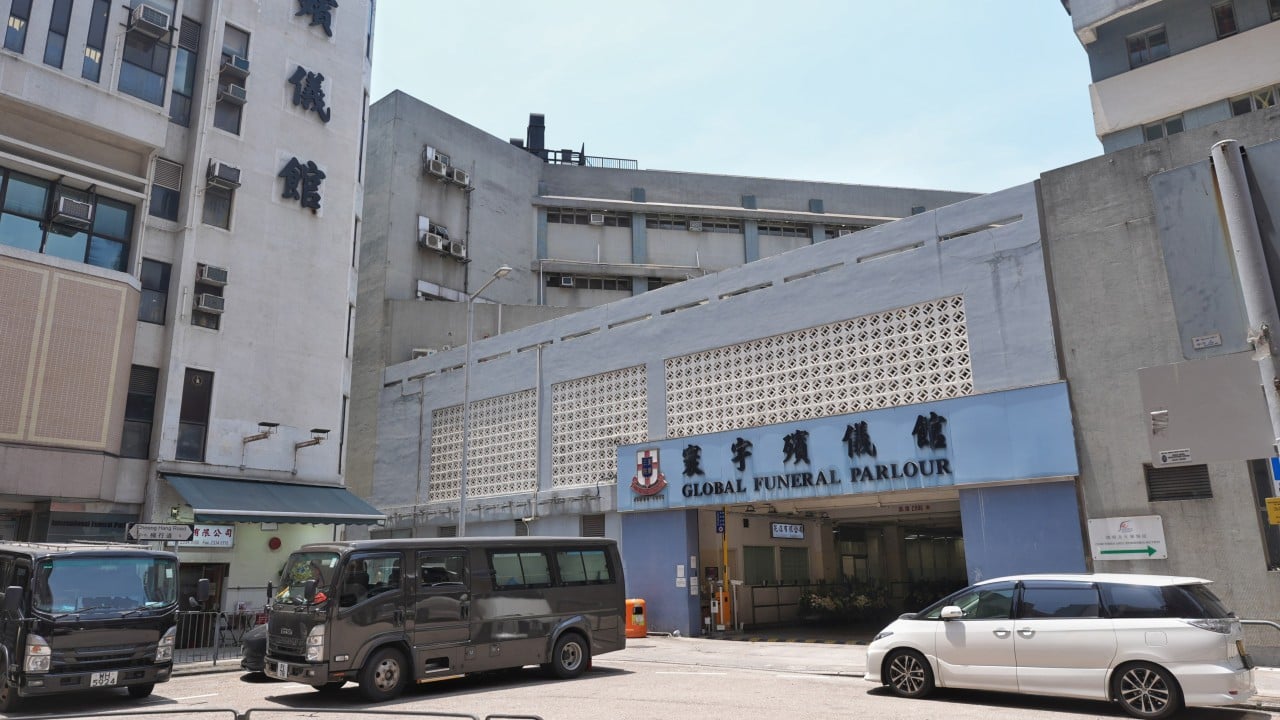
The courtyard of the funeral parlour smelled of damp stone and old grief. It was a heavy morning, the kind where the air sits flat against your skin, refusing to circulate, trapping the weight of a thousand unspoken goodbyes.
Master Chen stood at the edge of the brick brazier, a stack of crisp, yellowed paper currency clutched in his weathered hands. He looked down at the concrete furnace, cold and silent. Behind him, the heavy oak doors of the chapel remained shut, but the low murmur of mourning drifted through the cracks. Families inside were waiting. They were waiting to send their mothers, their fathers, their quiet, steadfast grandfathers across the threshold with the only currency the afterlife would accept: smoke and ash.
Except, there would be no fire today.
Since the weekend power outage crippled the district’s electrical grid, the automated filtration systems inside the parlour had died. Without those humming industrial scrubbers to pull away the toxic particulate and soothe the neighborhood air, the tradition had to pause. Paper houses, paper cars, paper gold bars—all meticulously folded by hands trembling with loss—sat stacked on wooden tables, waiting for a spark that regulations and safety protocols suddenly forbade.
Darkness. Then silence.
We forget how fragile our most ancient rituals are. We wrap our grief in timeless customs, imagining them as permanent as the mountains, forgetting that they rely entirely on the fragile choreography of modern infrastructure. A single snapped high-voltage cable miles away, a transformer blowing in the dead of night, and suddenly the bridge between the living and the dead is blocked by an invisible wall of liability and soot.
Let me be clear about what happened. This is not a story about a broken fuse. It is a story about what happens when the digital and mechanical scaffolding of our lives suddenly gives way, leaving us holding paper money that nobody will let us burn.
Consider what happens when a family stands before a silent furnace.
Imagine Mrs. Liang. She is seventy-four, her knuckles swollen with arthritis, her eyes fixed on a miniature paper television set she spent three days assembling for her late husband. To an outsider, it is a quaint craft project. To her, it is a vital dispatch. Her husband loved the evening news. He watched it every night of their fifty-year marriage until his heart finally quit. Burning that paper television was her way of ensuring he wouldn't miss his programs in the great beyond.
When the funeral director gently placed a hand on her shoulder and explained that the limited burning restrictions were in effect—that the municipal power failure meant zero emissions control, meaning zero fire—she didn't cry. That is the thing about grief; it often saves its worst tremors for quiet, unexpected moments. She simply nodded, her fingers tracing the glossy paper antenna of the miniature television, and asked a devastatingly simple question.
"How will he know what is happening in the world?"
There was no good answer. The director muttered something about temporary generator rerouting, about waiting for the grid technicians to clear the sector by Tuesday evening, about safety codes designed to protect the living lungs of the city. But Mrs. Liang wasn't thinking about the grid. She was thinking about the dark.
This tension between municipal regulation and ancestral obligation defines modern urban life. We live in smart cities built on dumb fragility. We centralize everything—our power, our water, our waste disposal, and yes, our rituals. When the power fails, our lights go out, our refrigerators warm, and our dead wait in limbo.
The limitation on paper offerings since the weekend outage is a symptom of a larger disease. We have engineered our cities to be efficient, sleek, and sterile. We have zoned away the smoke, hidden away the cemeteries, and sanitized the messy, earth-shattering business of dying. We want our transitions quiet. We want our grief contained within climate-controlled viewing rooms with ambient lighting and recessed speakers.
But grief is inherently untidy. It smells of burning joss paper, cheap chrysanthemums, and wet earth.
When the power grid collapsed following the weekend storm, the modern illusion cracked. The parlour's high-tech smoke-abatement systems—the very machines that allow thousands of families to honor their dead in densely populated high-rise cities without choking their neighbors—drew their last breath. The city council, paralyzed by the sudden blind spot in air-quality monitoring, issued an immediate, blanket restriction on all open combustion within commercial facilities.
No power. No scrubbers. No fire.
The economic and psychological toll of this blackout rippled outward. Down the street, a paper effigy vendor named Uncle Wong sat on a plastic stool outside his shuttered storefront, staring at inventory that was suddenly gathering dust. Wong has been crafting these paper goods for forty years. He knows the grain of the bamboo frames by touch. He knows that the paper must be thin enough to catch instantly, turning into a whirlwind of white ash that climbs straight up toward the clouds, but strong enough to survive the humid monsoon air.
"People think it's just paper," Wong told me, shaking his head, his hands stained with permanent indigo dye from the printing presses. "They look at a paper Mercedes-Benz and they laugh. But they don't understand the grammar of it. You are writing a letter with fire. If the fire doesn't happen, the letter stays unread."
Think about that phrase: an unread letter.
Every culture has its equivalent. We bury locks of hair. We pour libations of wine onto the soil. We light candles in drafty cathedrals. We do these things not because we genuinely believe a dead person is cruising around a celestial highway in a paper sedan, but because the act of destruction—of willfully turning something beautiful and precious into nothing at all—mirrors the catastrophic loss happening inside our own chests.
The fire is the punctuation mark at the end of a life. Without it, the sentence trails off into an awkward, suffocating silence.
By Monday afternoon, the funeral parlour courtyard had become a gallery of suspended emotion. Families arrived for scheduled cremations and memorial rites, only to be met by apologetic staff standing beside barricaded braziers. Some families chose to postpone their rituals, rescheduling for late Tuesday or Wednesday when the municipal engineers promised full grid restoration. Others chose a harder path. They took their paper bundles back home, stuffing the paper houses and gold bars into the boots of their sedans, driving them out to hillside municipal boundaries where scattered, unofficial fires could still be lit away from the watchful eyes of neighborhood inspectors.
It is an act of quiet rebellion.
You cannot easily legislate away a tradition that has survived dynasties, revolutions, and world wars. When the state turns off the power, people find another spark. They use butane lighters in secluded alleyways. They burn small scraps in ceramic flowerpots on apartment balconies, risking fines to ensure their ancestors are not left shivering in the dark.
The outage exposed a profound disconnect between the technocrats who manage our urban centers and the human beings who inhabit them. To an electrical engineer, a downed transmission line is a calculus problem involving load balancing, transformer capacity, and repair crews. To a grieving daughter, that same downed line is a barrier keeping her mother from finding peace.
We need systems that account for the soul as much as the kilowatt.
As the sun began to set on the second day of the blackout, casting long, bruised shadows across the courtyard, a low hum echoed through the walls. The lights flickered once. Twice. Then, the industrial ventilation fans atop the roof whined to life, drawing a deep breath of stale city air through the massive steel ducts.
Inside, the red indicator lights on the control panels shifted from angry crimson to steady, patient green.
The restriction was lifted. The municipal grid was back online.
Master Chen walked slowly back to the brick brazier, carrying a fresh bundle of paper currency. He didn't rush. He knelt on the concrete, struck a wooden match against the side of the box, and held the flame to the edge of the paper.
The yellow sheet curled, turned orange, and bloomed into a bright, sudden heat. The smoke caught the updraft, swirling gracefully into the iron mouth of the overhead flue, sucked upward into the evening sky.
Somewhere in the quiet rooms inside, a family finally let out their breath. The fire was burning. The message was on its way.