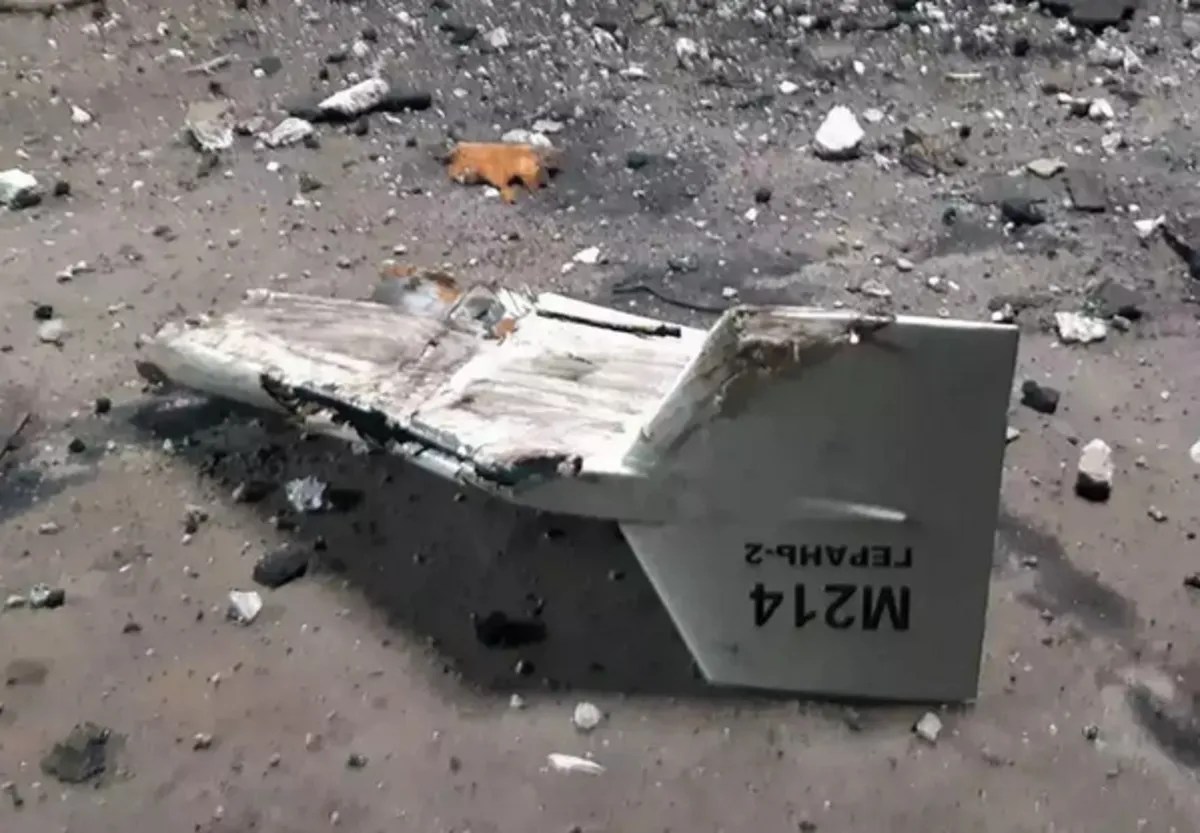
The modern soldier does not always look like a soldier. Sometimes, he looks like a tired man in his late twenties sitting in front of three glowing monitors in a concrete basement, blinking away the salt of twelve straight hours on watch. He listens. Not to the sound of artillery, which is distant and familiar, like thunder over a far hill, but to the high-pitched whine of radio frequencies translated into static.
This is the frontline of the invisible war.
When the news wire reported that Russian air defense forces intercepted and downed 339 Ukrainian drones in a single 24-hour cycle, the numbers felt abstract. To the casual reader scrolling through a news feed in a quiet cafe, "339" is just a digit. It is a statistic in a war that has become a ledger of unimaginable tallies. But to understand the true weight of that number, you have to understand what it takes to stop a swarm. You have to understand the sheer, frantic mathematics of the sky.
Imagine a summer night in the border regions. The air smells of damp earth and diesel fuel. It is quiet, save for the crickets. Then comes the buzzing.
It starts as a faint murmur, like a nest of angry wasps disturbed in an attic. These are not the sleek, multimillion-dollar predator drones of the early 2000s. Many are crude things, built in converted warehouses from carbon fiber, plywood, and lithium batteries ordered online. They carry small, packed charges of plastic explosives. Their mission is simple: find oil depots, command posts, or ammunition dumps, and dive.
Stopping them is not a matter of cinematic dogfights. It is a grueling, systematic grinding of technology against technology.
The Anatomy of the Swarm
To appreciate how 339 entities are wiped from the air in a single day, one must discard the old vocabulary of warfare. This is an ecosystem of denial. The defenses operate in layers, like a steel net woven tight enough to catch water.
The first layer is silent. It does not use gunpowder. Electronic warfare units scan the horizon, casting invisible walls of electromagnetic interference into the upper atmosphere. When a drone hits one of these walls, the connection between the pilot hundreds of kilometers away and the machine snaps. The GPS signal goes dead. The drone becomes blind, a mechanical bird with a broken inner ear, drifting aimlessly until its battery dies and it tumbles into a sunflower field.
But electronic warfare is a double-edged sword. The spectrum is crowded. Jam the enemy too hard, and you jam your own communications. It requires a delicate, almost surgical touch.
Then comes the kinetic response. For the drones that slip through the electronic fog, the short-range missile systems take over. These are the Pantsir and Tor systems, tracked vehicles that look like angry insects themselves, bristling with radar dishes and launch tubes. They operate on a razor’s edge. A drone flying low, hugging the contours of the river valleys and tree lines, appears on a radar screen for only a few seconds before it hits its target.
The operators have moments to decide. Identify. Lock. Fire.
A flash of white light, a boom that shakes the loose plaster from nearby farmhouse ceilings, and another point of light disappears from the monitor.
The Hidden Math of Attrition
The public reads about the victory of defense—339 drones stopped. The implication is one of total security. Yet, beneath the triumph lies a cold, calculating reality that worries planners on both sides of the conflict.
It is the math of asymmetric costs.
A standard commercial drone, modified for a strike mission, might cost a few thousand dollars. The missile used to shoot it down can cost ten times that amount, sometimes more. When hundreds of drones are launched week after week, the defense is forced to spend its most precious currency: readiness. You can manufacture more bullets in a day than you can sophisticated radar-guided interceptors.
This is the true strategy behind the mass deployments. It is not always about hitting the target. Sometimes, the goal is simply to make the defender look up, fire, and empty their quiver.
The psychological toll on the ground is its own heavy burden. In cities like Belgorod and Kursk, or deep within the Russian interior where these drones occasionally penetrate, life has taken on a fragmented rhythm. People look at the sky differently now. A distant lawnmower is no longer just a neighbor tending to his grass; for a split second, the heart rate spikes, the ears strain, and the mind asks if it is time to move to the corridor.
The air defenses are a shield, yes, but a shield is heavy to hold. It tires the arm.
The Solitary Watch
Back in the basement, the operator rubs his eyes. The monitors show a temporary blankness. The radar sweeps its green line around and around the circle, finding nothing but clouds and flocking birds.
He knows this peace is an illusion.
Somewhere across the line, in a dark garage or the back of a covered truck, someone is soldering a wire onto a new circuit board. Someone is loading three dozen small craft onto launchers, preparing the next wave. The technology changes so fast that tactics written down three months ago are already obsolete historical documents. It is a constant, exhausting adaptation.
The human mind is not built for this level of sustained vigilance. The eye tricks itself. A speck of dust on the glass becomes a threat. The hum of the cooling fans sounds like an incoming engine.
We talk about automated warfare as if the machines are doing the fighting. They aren't. They are just the instruments. The burden remains where it has always been: on the nerves of the people trapped in the gears of the conflict.
The sky above Voronezh is clear for the moment. The sun is beginning to peek over the eastern horizon, painting the clouds in streaks of cold pink and orange. It looks peaceful. It looks like the kind of morning where nothing could ever fall from the air.
Then, the static on the radio shifts pitch. A new frequency begins to chatter. The operator sets down his cold coffee, grips the control stick, and goes back to work. Unseen, the net tightens again.