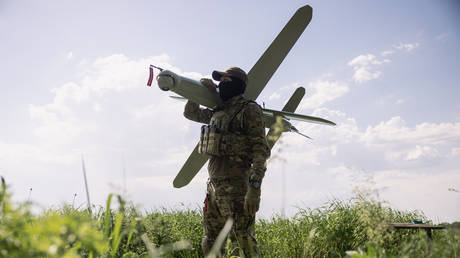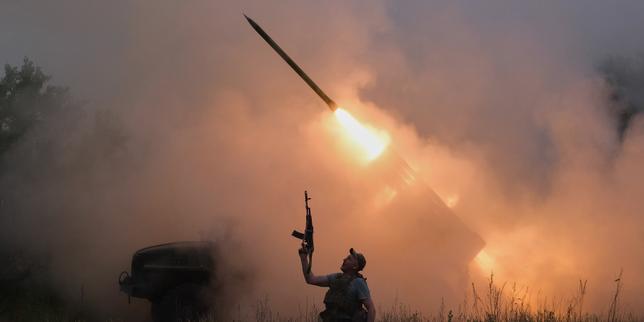
The sirens in eastern Ukraine do not sound like a warning anymore. They sound like a baseline. A low, vibrating hum that settles into the marrow of your bones until you forget what silence used to feel like. For those living under the flight paths of the small, buzzing machines that now dominate the airspace, life is no longer measured in months or seasons. It is measured in seconds. The time it takes to look up. The time it takes to dive.
On a Tuesday that began like any other, the sky carried a familiar, lethal weight. Three people in the eastern region went to bed, or sat at their kitchen tables, or walked down a sidewalk, and never returned. They became numbers in a morning brief. But before they were numbers, they were individuals with unfinished conversations, half-drunk cups of tea, and families who now stare at the sudden, violent emptiness left behind.
Meanwhile, over a thousand kilometers to the north, the historic spires of Saint-Pétersbourg woke up to a different kind of chaos. Eighty-six. That is the number the Russian defense ministry claimed to have plucked from the air—a swarm of intercepted drones sent from the south, aiming for the critical infrastructure that keeps the gears of the city turning.
Two realities, separated by borders and battle lines, yet entirely bound by the same invisible wire. The nature of conflict has shifted. It is no longer just about muddy boots on a distant front line. It is about an industrialized, automated sky that reaches into the civilian sanctuary, turning the everyday act of breathing into a gamble.
The Weight of Three
To understand the eastern front, you have to look past the military maps and the sweeping arrows of troop movements. You have to look at the dust.
When a drone strikes a residential area, the sound is unique. It is a sharp, metallic screech followed by a dull, heavy thud that shakes the earth from the bottom up. In the immediate aftermath, the air turns gray. Finely powdered concrete settles onto the leaves of nearby trees like an unnatural frost.
Let us consider a hypothetical resident—we can call her Olena—standing on a street corner just after the shockwave passes. She does not run. She does not scream. The human capacity to absorb horror is terrifyingly vast. Instead, she simply dusts the white powder off her coat. Her neighbor's house, a structure that stood through decades of winters, is now a pile of exposed rebar and shattered brick.
Three lives ended in that sector. The official reports will list their ages, perhaps their genders, and the coordinates of the impact. What they omit is the sheer, agonizing randomness of it. One victim was reportedly just stepping out to clear debris from a previous strike. The second was inside a kitchen. The third was simply in the wrong square meter of the planet at the wrong tick of the clock.
This is the psychological tax of modern warfare. It strips away the illusion of agency. When artillery is firing, you can sometimes calculate the trajectory, listen for the outgoing boom, and find a basement. But these small, battery-powered hunters glide silently until they are directly overhead. They turn the sky itself into an adversary.
The Northern Swarm
Now, shift your gaze to the Gulf of Finland. Saint-Pétersbourg is a city built on grand illusions, a place of imperial palaces and deep cultural pride. For most of the conflict, it remained a distant spectator, insulated by vast geography and thick layers of air defense.
Until the sky filled with eighty-six targets.
Imagine the sheer logistical panic of tracking nearly a hundred incoming objects simultaneously. The air defense systems—monsters of steel and radar—fire their missiles into the clouds, leaving white, corkscrewing trails across the morning blue. Each interception is a victory on paper. The state media reports them with pride: eighty-six neutralized, disaster averted.
But look closer at the mechanics of defense. When an interception happens, the drone does not simply vanish into thin air. It shatters. Tons of burning metal, unspent fuel, and volatile lithium batteries rain down over logistics hubs, highways, and residential suburbs. The danger does not disappear; it merely changes shape.
The strategy behind sending a flock this large is clear to anyone who understands saturation tactics. It is an economic equation disguised as a military operation. A drone can cost a few thousand dollars to assemble out of commercial components, plywood, and a basic guidance chip. The missile used to shoot it down can cost hundreds of thousands, if not millions.
It is a war of attrition played out in the clouds. By forcing the defense systems to fire eighty-six times in a single morning, the attacker drains the deep pockets of the defender, forcing hard choices about what gets protected next. The oil terminal? The power grid? Or the suburbs?
The Anatomy of the New Airspace
There was a time when air superiority meant massive factories churning out heavy bombers, pilot training academies that took years to graduate a class, and highly specialized fuel supplies. That era is dead.
The democratization of flight has weaponized the ordinary. The technology humming through the air over eastern Europe right now is a direct descendant of the gadget you might buy a teenager for Christmas. They are small. They are loud. They are terrifyingly precise.
Consider how a modern strike unit operates. A couple of operators sit in a trench or the back of a civilian van, miles away from the target. They wear virtual reality goggles, seeing exactly what the camera on the nose of the craft sees. To them, the world is a digital display, a video game with real-world consequences. They navigate through tree lines, under power lines, and directly through the windows of buildings.
This detachment alters the very nature of combat. The person pulling the trigger does not smell the smoke. They do not hear the screams. They watch a screen flicker to static when the connection cuts out upon impact, then they reach into a wooden crate, pull out another battery, and log back in.
For the people on the ground, the experience is the exact inverse. It is raw, primal vulnerability. You can build a bunker to hide from a mortar shell. You can dig a trench to hide from a tank. But how do you hide from a machine that can hover outside your door, waiting for you to walk out?
The Echo in the Concrete
The true cost of these strikes is not measured only in the immediate body count or the wreckage of intercepted hulls. It is found in the slow, grinding erosion of normalcy.
In the east, the survivors gather what is left of their belongings in plastic bags. They do not talk about the grand strategies discussed in distant capitals. They talk about plywood. They talk about whether the local hardware store has enough plastic sheeting to cover the windows before the rain starts. They look at the sky with a squint that has become permanent, an involuntary twitch shared by millions of people who have learned that safety is a relic of the past.
In the north, the residents of the imperial city look out their windows at the smoke trails fading into the gray clouds. The war, once a distant abstraction confined to television screens and official statements, has knocked on the door. The realization is settling in that distance is no longer a shield. In a world of automated flight, everywhere is the front line.
The rubble in the east is still warm. The crews in the north are still sweeping up the jagged fragments of aluminum and carbon fiber from the tarmac. The sirens have stopped for now, leaving behind a silence that feels less like peace and more like a breath held in anticipation.
A lone crow lands on a shattered concrete lintel in an eastern village, its sharp caw mimicking the mechanical click of a rotor. A block away, a door slams shut, and three people instinctively duck their heads, waiting for the sky to fall again.