A low, rhythmic buzzing cut through the early morning fog over a commercial railyard in Ohio. To an untrained ear, it sounded like a distant lawnmower. To Sarah Jennings, a night-shift security supervisor tracking a multi-million-dollar cargo shipment, it sounded like a liability.
Jennings looked up into the grey soup of the sky. Nothing. She looked down at her security console. A blinking red icon indicated an unidentified aerial anomaly. A drone. Recently making headlines in this space: The Watchers in the Sky And the Smallest Shield We Built.
It was flying too low to be a hobbyist, too steady to be a kid playing with a Christmas gift. It hovered directly over the railyard’s most vulnerable logistics bottleneck. Jennings had a radio, a flashlight, and a protocol binder that told her to call local law enforcement. By the time police arrived twenty minutes later, the drone was gone, its payload or its surveillance data already delivered to an unknown recipient.
This is the reality of the modern sky. It is no longer just empty space; it is an active infrastructure layer. Every day, thousands of uncoordinated, autonomous rotors spin just a few hundred feet above our schools, airports, energy grids, and shipping lanes. Most are benign. Some are not. Additional details regarding the matter are explored by MIT Technology Review.
For years, the defense industry approached this problem with a heavy hand. They built massive, isolated military hardware designed to shoot things out of the air or jam radio frequencies across entire zip codes. It was an approach built for a desert battlefield, completely detached from the delicate ecosystem of a civilian city.
Then came the realization that no single company can build a high enough wall to protect the sky.
The Illusion of the Perfect Shield
To understand why our current approach to airspace security is failing, consider a hypothetical kitchen. If you want to keep bugs out, you do not build a localized laser defense system next to the toaster. You fix the screen door. You check the foundations. You realize the house is a complex system of entry points.
Airspace security works the same way. A drone defense system cannot just be a radar dish slapped onto a roof. It needs to talk to acoustic sensors that hear the specific pitch of carbon-fiber blades. It needs to sync with radio-frequency scanners that decode controller signals. It needs to coordinate with optical cameras that can tell a bird from a battery pack in a blinding rainstorm.
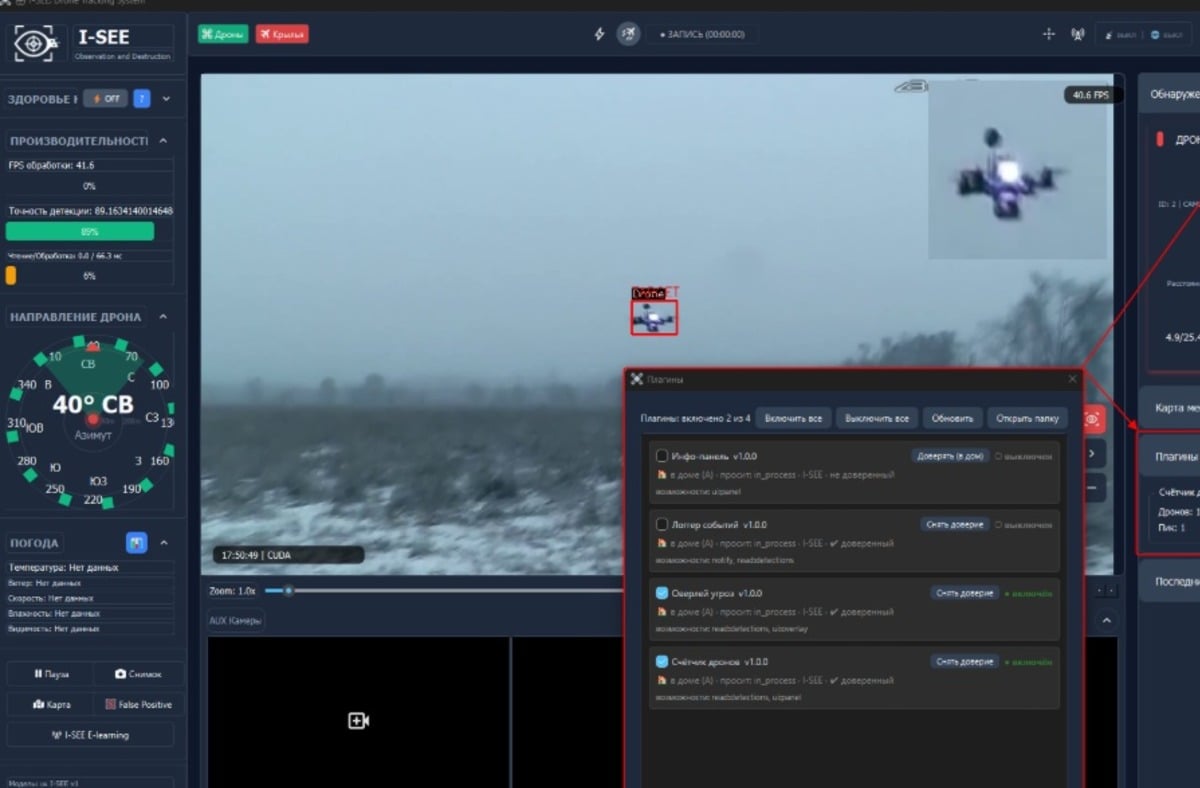
When defense tech firm I-SEE launched its core counter-unmanned aerial system platform, it was hailed as a massive step forward. The platform did exactly what it promised: it aggregated data from a proprietary network of sensors, giving security teams a unified picture of their low-altitude airspace.
But a closed loop is still a cage.
Security teams quickly discovered a frustrating truth. If an engineer invented a brilliant new microphone that could detect a stealth drone by its wind-shear signature, that microphone could not talk to the I-SEE platform. The software was locked. The code was proprietary. If you wanted to use the new tech, you had to buy an entirely new, separate monitor, adding another screen to an already overwhelmed security desk.
It was an engineering standoff. While developers created increasingly clever ways to detect and mitigate aerial threats, the central platforms holding the keys to the airspace remained stubbornly siloed.
Tearing Down the Walled Garden
That wall just crumbled. In a move that caught much of the defense and tech world off guard, I-SEE announced it is opening its counter-drone architecture to third-party developers. They are releasing an open application programming interface—an API—allowing any software engineer, hardware builder, or garage innovator to plug their own tools directly into the central platform.
Think of it as the moment the smartphone went from a rigid piece of factory hardware to an open ecosystem. When the App Store opened, Apple did not try to invent ridesharing, photo filters, or mobile banking themselves. They gave the keys to the global developer community and said, "Show us what you can do."
Low-altitude airspace security just had its App Store moment.
By opening the platform, the company is admitting a fundamental truth that many tech giants spend millions trying to deny: the threat is evolving faster than any single corporate R&D budget can keep up with. A small startup in Tallinn might write an algorithm that identifies drone flight anomalies ten times faster than a massive defense contractor in Virginia. Under the old rules, that startup would spend five years trying to get a meeting with a procurement officer. Under the new rules, they can write a plugin, test it, and deploy it to existing security networks by next month.
The stakes of this shift are invisible to the average person walking down Main Street, but they are staggering.
Consider a crowded outdoor stadium during a championship game. A security team using an open platform can now integrate facial recognition cameras, radio scanners, and localized weather sensors into one map. If a wind gust from the east alters a drone’s expected flight path, the system adjusts its threat assessment in real time, pulling data from a third-party meteorological app integrated into the main feed.
The Cost of Complexity
This openness is not without friction. It is terrifying for traditional security professionals who are used to absolute control.
When you open a system to outside developers, you invite the world into your clean room. How do you verify that a third-party sensor plugin does not contain a backdoor for a foreign adversary? How do you ensure that a software patch designed to optimize radar data does not accidentally crash the entire tracking grid during a critical alert?
The company is betting that the benefits of collective intelligence outweigh the risks of decentralized development. They are gambling that a community of thousands of eagle-eyed developers can spot vulnerabilities and build patches faster than a closed room of corporate engineers.
It is a necessary gamble. The sky is getting denser every hour. Commercial delivery drones are moving from experimental testing phases into active logistical routes. Emergency services are deploying autonomous medical kits.
We are rapidly approaching a world where the distinction between a "good" drone and a "bad" drone comes down to a few lines of code and a digital handshake. We cannot manage that level of complexity with isolated, deaf-and-mute hardware.
The View from the Ground
Back in Ohio, the morning sun finally burned through the fog at the railyard. Sarah Jennings finished her shift, her coffee cup cold on the desk.
She did not know about open APIs, decentralized defense architecture, or software ecosystems. She did know that the sky above her tracks felt wider and more vulnerable than it had when she started this job five years ago.
The security industry spent a decade trying to solve the drone problem by building bigger binoculars. They are finally realizing that the answer is not to look harder through a single pair of eyes, but to connect every pair of eyes on the ground into a single, unbreakable network.
The drones are coming, and they are coming by the millions. The only question left is whether the software watching them will be smart enough to tell us who they belong to before they land.