At 3:00 a.m. on a Tuesday in late October, the artillery around Oleshky stopped.
Silence, when you have spent nearly five years listening to the rhythmic thud of outgoing mortars and the high, mosquito whine of reconnaissance drones, does not feel like peace. It feels like holding your breath underwater. You wait for the pressure in your chest to burst. You listen to the floorboards creak and wonder if the floorboards are the only things left alive in the house. Meanwhile, you can explore similar developments here: The Ghost Ship of Bab al-Mandab and the Fragile Thread Holding Your Morning Coffee Together.
Before February 2022, roughly 24,000 people lived in Oleshky, a quiet riverside town on the left bank of the Dnipro River in southern Ukraine's Kherson region. They tended sandy orchards, fished the estuary, and crossed the river into Kherson city for groceries or doctor's appointments. Then came the invasion. Seven months later, Russian forces retreated across the water, turning the Dnipro into a jagged, violent scar. Oleshky was trapped in the middle—occupied by Russian troops behind it, facing Ukrainian fire control across the floodplains in front of it.
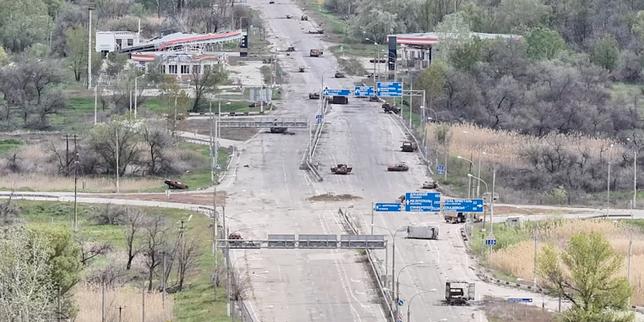
In June 2023, the Kakhovka Dam blew apart, and dirty brown water swallowed 90 percent of the town's territory. By March 2025, Ukrainian strikes severed the last major bridge near the town, leaving a single, mine-riddled road as the only artery to the outside world. For months in 2026, almost no food entered the city. People boiled rainwater, rationed antibiotics from 2021, and hunted wild birds in the reeds just to keep their stomachs from eating themselves. To explore the bigger picture, we recommend the excellent analysis by Associated Press.
And then, on October 27, 2026, a six-day truce brokered through the unlikely mediation of U.S. First Lady Melania Trump—following appeals from Pope Leo XIV—went into effect.
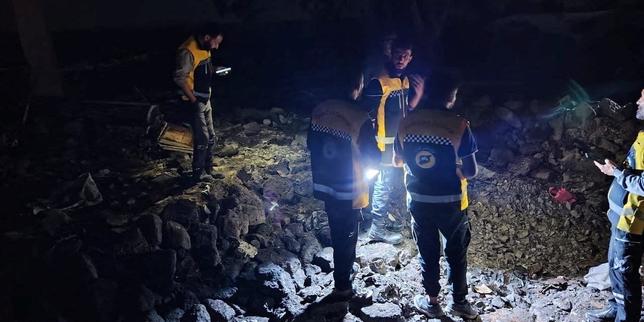
On paper, the facts read like a clean diplomatic press release. A localized "regime of silence". Demining teams clearing shattered asphalt. Nearly 800 civilians evacuated. Zero reported ceasefire violations.
Press releases, however, do not smell like wet plaster, unwashed wool, and diesel exhaust. They do not capture the agonizing arithmetic of a human being standing in a doorway with two plastic bags, forced to choose between a home that has become a prison and an uncertain exile across a war-torn continent.
The Anatomy of a Trap
To understand why six days of quiet in one ruined town mattered—and why those same six days left Ukrainian military commanders deeply uneasy—you have to imagine a hypothetical resident. Let us call her Olena, a retired schoolteacher living three streets back from the flooded riverbanks.
For over a year, Olena's world shrank to the radius of her cellar and the neighboring courtyard. Without a Russian passport, the local hospital refused to treat her. Without electricity or centralized water, every winter became a slow negotiation with hypothermia. When a local merchant tried bringing bread and pension cash down the last open road from Skadovsk, he was shot dead and robbed. After that, nobody came.
Think of Oleshky during this blockade like a diver whose air hose has been kinked beneath a fallen girder. There is still oxygen in the tank, maybe enough for a few more hours, but every breath tastes stale, and the water is freezing. You cannot swim up because the surface is covered in ice. You cannot stay down because the tank is nearly empty.
When word filtered through the shattered streets in late October that civilian officials from both Ukraine and Russia would actually enter the town under a White House-brokered agreement, Olena faced the question every trapped civilian dreads.
Is this real, or is it a trap?
Under the terms announced from Washington, residents who chose to leave would be given coordinated transport to their preferred destination—either deeper into Russian-controlled territory or back to free Ukraine. For the first time since 2022, Ukraine's human rights commissioner, Dmytro Lubinets, stepped onto occupied soil in an official capacity to oversee the mission.
Still, trust does not grow easily in soil poisoned by four and a half years of war. Some neighbors whispered that signing up for evacuation to Ukraine was a death sentence if the truce collapsed before the buses rolled out. Others could not bear to leave behind elderly parents too frail to survive a multi-day journey, or a half-blind family dog that had slept beside them through every shelling.
The Long Way Home
When the evacuation finally moved, it did not look like a cinematic sprint across a bridge. Geography and war rarely allow for straight lines.
Because the front line along the Dnipro remained laced with mines and hair-trigger artillery, the nearly 800 people who chose to leave Oleshky could not simply take a boat across the river to Kherson. Instead, those who opted for Ukrainian-controlled territory had to go the long way around—a surreal, exhausting arc through the belly of the country invading them.
They were loaded onto transport, driven out through Russian-held corridors, flown on four aircraft into Gomel, Belarus, and finally transferred onto buses that crossed the northern Ukrainian border in the Chernihiv region on October 31.
Picture that journey through Olena's eyes.
After years of subterranean gloom, you are suddenly lifted above the clouds in a pressurized cabin, flying north over territory that belongs to your enemy's closest ally. You clutch a worn handbag containing a birth certificate, a few faded photographs, and perhaps a pair of hand-knitted socks—the exact kind of humble, fiercely human gift one evacuated Oleshky family later sent to Pope Leo XIV in gratitude. You do not speak loudly. You watch the faces of the officials at every checkpoint, waiting for a signature to be questioned, a stamp to be rejected, a door to lock from the outside.
And then, at the northern border near Chernihiv, the doors open.
Volunteers from groups like Caritas Ukraine and Iskra Dobra are waiting with steaming bowls of hot food—the first proper meal funded and delivered with international backing that many have tasted in months. In one documented case, an elderly mother evacuated from Oleshky was rushed to a Kyiv hospital and reunited with her daughter for the very first time since 2022. A caged domestic dog was carefully lifted from the back of a transport van by volunteers, blinking in the pale autumn light.
For those few hundred families, the truce was nothing short of resurrection. Nobody violated the ceasefire. Not a single shot disrupted the corridor.
The Shadow Behind the Mercy
Yet if you zoom out from the tears at the border in Chernihiv, the picture darkens quickly. War has a cruel habit of turning every act of mercy into a tactical chess move, and Oleshky sits on a piece of real estate no general ignores.
Even while the guns fell silent over Oleshky on October 27, Russian ballistic missiles slammed into Kyiv that very morning, striking near the Southern Bridge and damaging metro infrastructure. Peace in one square mile of southern mud did not stop the sky from burning three hundred miles to the north.
More troubling still was what happened in Oleshky the moment the six-day clock ran out on November 1.
Oleksandr Prokudin, head of the Kherson Oblast Military Administration, delivered a blunt assessment days later. According to Prokudin, Ukrainian defenders had spent nearly a year grinding down Russian positions in and around Oleshky, methodically clearing fortified nests along the river's edge. During the six-day humanitarian pause, while demining crews cleared roads and cameras from right-leaning U.S. network Newsmax filmed the aid operation, Russian troops allegedly moved back into positions they had lost.
"It took us about a year to eliminate what they have now restored during the ceasefire," Prokudin warned. "They have restored almost everything."
Whether those movements constituted a formal breach of the written terms—Commissioner Lubinets maintained that no ceasefire violations were recorded during the window itself, noting that spotted Russian equipment had been cleared for demining—matters very little to a Ukrainian soldier sitting in a trench across the Dnipro. To that soldier, a humanitarian corridor looked uncomfortably like a free logistics pass for the enemy to dig in, reinforce, and prepare fresh waves of strikes across the water.
Here lies the agonizing moral trap that diplomats in Washington, Kyiv, and Moscow are now wrestling with as November wears on.
When a city is starving, do you refuse a ceasefire because the occupier might gain a tactical advantage? Or do you sign the paper, pull 800 souls out of the rubble, and accept that the soldiers left behind will pay a steeper price next month?
What Happens When Mercy Becomes a Model
I will not pretend there is an easy answer to that equation. Anyone who tells you the choice is obvious has never had to choose between saving their own mother from starvation and handing an enemy sniper a dry roof over his head.
History is full of these poisoned chalices. From the fragile local truces of the Bosnian War in the 1990s to the besieged corridors of Syria a decade ago, localized ceasefires have always operated on a razor's edge. They save real lives in the immediate present while frequently freezing—or subtly tilting—the battlefield for the future.
In mid-November, following trilateral discussions in Abu Dhabi, President Volodymyr Zelensky proposed replicating the Oleshky blueprint across ten more Russian-occupied settlements in the Kherson and Zaporizhzhia regions. Commissioner Lubinets confirmed that negotiations for another mission were already underway, even as First Lady Melania Trump expressed hope for a broader pause by Christmas.
At the exact same time, Zelensky rejected a separate Russian proposal for a "humanitarian mission" in the embattled eastern city of Kostyantynivka, calling it a transparent ploy to trick Ukrainian troops into withdrawing so Russian forces could walk in unopposed.
Look at those two decisions side by side, and you see the razor-thin wire Kyiv is walking. In Oleshky, where Russia already held the town and civilians were dying in slow motion, a truce was a lifeline worth the military gamble. In Kostyantynivka, where the battle still raged block by block, the exact same word—"humanitarian"—was a Trojan horse.
Meanwhile, back in Oleshky, the brief magic of the silence is already gone. Not everyone who wanted to leave made it onto the transport before November 1. Some missed the registration; some were too sick to move; some hesitated until the window slammed shut.
Winter is settling over the Dnipro floodplains now. The fog rolls off the black water at dusk, soaking through cracked concrete and saturating empty window frames. Somewhere three streets back from the river, a cellar door clicks shut against the cold, a candle is lit beside a jar of preserved pears, and someone listens once again to the familiar, hollow thud of shells crossing the dark.