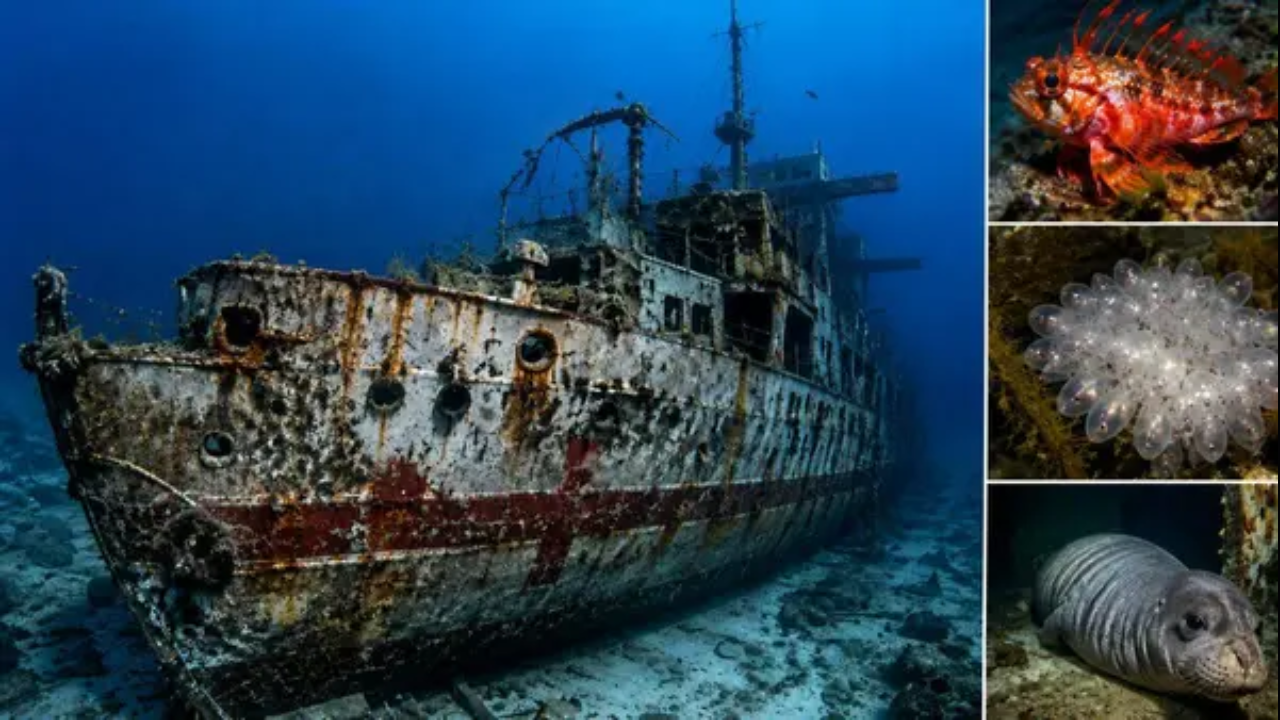
Every coastal tourism board loves a good ship sinking. You pull a decommissioned naval vessel, drill a few holes in the hull, pack the compartments with high explosives, invite the local dignitaries to sip lukewarm champagne on a barge, and push a plunger. Ten minutes later, a multi-million-dollar warship slips beneath the waves in a cloud of cinematic silt, and everyone starts patting themselves on the back for creating an instant marine paradise.
The playbook has been run a thousand times since the US Navy started the modern artificial reef program with the Liberty ships back in the 1970s. South Australia did it with the ex-HMAS Hobart in 2002, sending the guided missile destroyer down to the sandy floor off Yankalilla Bay, only to watch it become a diver magnet eighteen years later. The narrative is always identical. Trash becomes treasure. War becomes life. Nature heals through the polite courtesy of federal steel scrap.
It is a fantastic public relations stunt. It is also an ecological con job disguised as conservation.
If you talk to recreational dive operators or municipal planners, they will point to the barnacle-encrusted gun turrets of the Hobart or the USS Oriskany off Florida and tell you that artificial reefs increase total fish biomass. They will show you underwater photos of colorful sponges and cruising kingfish, treating the presence of marine life as definitive proof of success.
They are confusing presence with productivity.
Marine ecology is not a housing shortage where you simply pour concrete foundations and watch the homeless fauna move into subsidized apartments. When you drop a massive steel monolith onto a barren, sandy seafloor, you are not building a nursery. You are building a fish aggregating device on an industrial scale. You are running a neon billboard that draws fish away from natural, fragmented reef habitats miles away, funneling them into a single, predictable location where they are easily picked off by spearfishers, commercial charters, and apex predators.
Total biomass does not magically increase because you added a floating or sinking hunk of metal. It concentrates. It gathers scattered organisms from a wide radius and packages them neatly into a tourist-friendly square mile.
The economic argument usually arrives next, delivered with the righteous fury of a regional mayor who needs to justify a multi-million-dollar cleanup budget. Dive tourism brings in cash. Hotels fill up. Regulator rentals spike. Communities built on dying fishing industries find a second wind selling t-shirts and air fills to weekend warriors who want to swim through mess decks and sonar rooms.
Fine. Let us talk about the economics, too. Because the upfront cost of preparing a warship for an environmental death row is staggering.
Before a single inch of grey steel touches the saltwater, defense agencies and environmental protection bodies must spend years stripping the vessel of everything that makes it toxic. Polychlorinated biphenyls in the electrical cabling, heavy metals in the anti-fouling hull paints, asbestos lagging wrapped around miles of steam pipes, residual petroleum hydrocarbons sloshing around in hidden sumps—it all has to go. This is not a weekend project with a pressure washer and a scraper. It is a grueling, multi-million-dollar remediation process that requires hazmat suits, specialized disposal facilities, and endless legal sign-offs.
And despite the best efforts of marine engineers, they always miss something. You cannot completely scrub a forty-year-old warship built during the Cold War. Residual toxins leach out into the surrounding water column for years, slowly poisoning the very ecosystem the project was supposedly designed to nurture.
Compare that eye-watering expenditure of time, money, and labor to what happens when you leave nature alone, or better yet, fund the restoration of existing, degraded natural habitats. Restoring a damaged coral reef or replanting sea grass meadows does not give politicians a dramatic photo-op with a sinking ship in the background. It does not provide an easy hook for a travel magazine feature. It is slow, muddy, unglamorous work that happens away from the cameras.
Yet natural habitats actually function as self-sustaining nurseries. They capture carbon, stabilize coastlines, and support the entire larval cycle of local species. A rusted destroyer lying on its side in fifty meters of water cannot reproduce a seagrass meadow. It cannot adapt to ocean acidification. It is just a very expensive paperweight that slowly dissolves into iron oxide while divers pay fifty dollars a head to look at rusticles.
The obsession with scuttling steel stems from a fundamental human arrogance. We prefer monuments. We want tangible proof of our intervention. A sunken warship is a physical monument to human engineering repurposed by nature, satisfying our romantic desire for poetic transformation. A restored patch of sand looks like nothing at all to an untrained eye.
The eighteen-year victory lap over the HMAS Hobart ignores the baseline reality of what that site used to be and what it could have become with targeted environmental investment. It became a popular dive site, yes. It generated local revenue, absolutely. But calling it a triumph of marine conservation is like setting fire to an old couch in your living room and claiming you have successfully created an indoor campfire for the whole family to enjoy.
Stop treating the ocean as a convenient disposal site for obsolete military hardware just because you can wrap it in green cellophane and call it eco-tourism. If we genuinely cared about marine life, we would stop funding dramatic underwater salvage spectacles and start investing in the boring, unsexy work of protecting the reefs we already have before we turn the rest of the continental shelf into a rusted scrapyard.