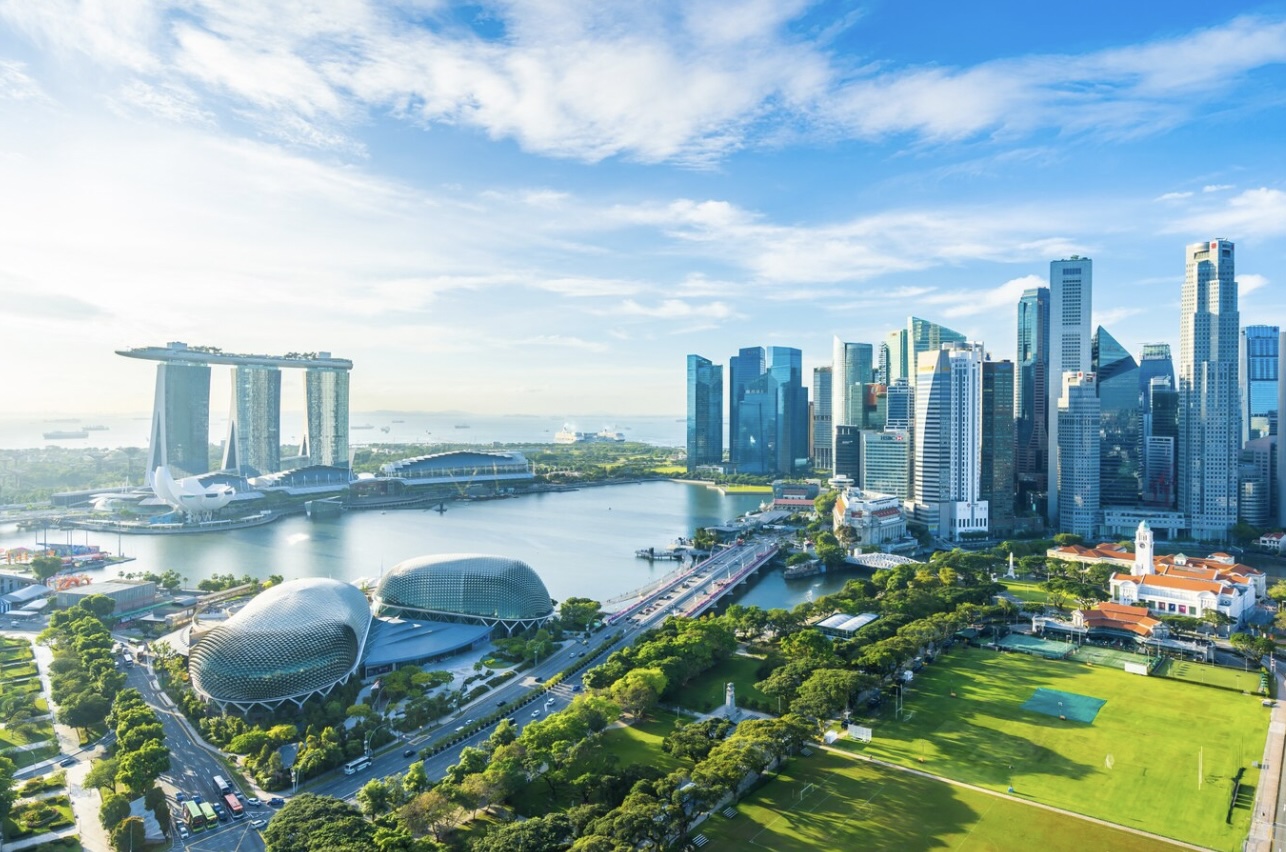
Every six months, the same breathless headline makes the rounds on financial blogs and property portals. Journalists point at empty glass towers in Orchard Road, Marina Bay, or Sentosa Cove, tally up the unsold units, and declare the death of Singapore’s ultra-prime real estate market. They call them ghost towers. They call them white elephants. They call them the luxury apartments nobody wants.
They are completely wrong.
Those journalists are measuring an institutional wealth-preservation vault using the scorecard of a suburban rental apartment. When you look at a S$30 million penthouse in District 9 and ask why nobody is living in it, or why the developer hasn't slashed the price to clear inventory, you are asking the wrong question entirely.
The real story isn't that nobody wants these properties. The real story is that Singapore’s policy architecture—specifically the Additional Buyer’s Stamp Duty (ABSD) and the Qualifying Certificate (QC) regime—has deliberately engineered a high-friction moat around prime residential land. And the developers holding onto those "unsold" units aren't losing sleep. They are playing a multi-decade balance-sheet game that retail commentators fail to comprehend.
The Lazy Consensus of the "Empty Tower" Narrative
The mainstream argument goes like this: Singapore hiked the ABSD for foreign buyers to a punitive 60 percent in April 2023. Overnight, the traditional pipeline of ultra-high-net-worth individuals from mainland China, Indonesia, and Europe dried up. Developers were left holding massive, sprawling units—3,000 to 5,000 square feet—that local Singaporean families either cannot afford or do not want because they prefer efficient, compact layouts. Therefore, the market is broken, developers are trapped, and fire sales are imminent.
That narrative sounds logical if you treat real estate like perishable produce. It falls apart the second you look at how Singapore’s largest listed developers and family offices actually structure capital.
I have sat across the table from development directors in Raffles Place while the press was predicting their imminent liquidation. Not once were they panicking over slow absorption rates in the Core Central Region (CCR). Why? Because in Singapore, land is the ultimate non-renewable monopoly. Once a freehold or 99-year leasehold plot in Nassim, Orchard, or Marina Bay is built out, you cannot manufacture another one next door.
If a developer slashes prices by 30 percent just to clear stock before a self-imposed deadline, they destroy their own comparable valuation metrics for the next decade. Worse, they signal distress to their syndicated lenders. Holding inventory at peak valuation—even with low transaction volume—protects the net asset value (NAV) on their balance sheet.
The Math Behind the 60 Percent Foreign Buyer Tax
To understand why these apartments sit quiet, you have to strip away the emotion and look at the friction costs.
When the Monetary Authority of Singapore (MAS) and the Ministry of National Development pushed foreign ABSD to 60 percent, they weren't trying to crash property prices. They were executing a surgical decoupling. They wanted to separate local housing affordability—the political lifeblood of the city-state—from global capital inflows.
Look at what happens to the transaction math on a S$20 million luxury condo for a non-resident foreigner today:
- Purchase Price: S$20,000,000
- Buyer’s Stamp Duty (BSD): ~S$1,144,600
- Additional Buyer’s Stamp Duty (ABSD at 60%): S$12,000,000
- Total Cash Outlay on Day One: S$33,144,600
Before the paint even dries, the buyer is underwater by over S$13 million in non-recoverable taxes. For the property just to break even on total cash deployed, the underlying asset has to appreciate by more than 65 percent.
Commentators look at that number and say, "See? Nobody will buy it."
They miss the nuance. A speculative flipper won't buy it. A yield-chasing landlord won't buy it. Even a typical centi-millionaire looking for a holiday pied-à-terre will pause. Who does buy it? Someone who isn't calculating internal rate of return (IRR) over a five-year horizon. They are calculating sovereign risk, rule of law, currency stability, and generational wealth transfer. When you are moving capital out of a jurisdiction with unstable property rights or erratic currency controls, paying a 60 percent entry toll into the Swiss bank of Asia isn't a bad trade. It is an insurance premium.
And for those who want the asset without the tax? They simply become Singapore Permanent Residents (where ABSD drops to 5 percent on a first home) or citizens (0 percent), or they buy through specific corporate and trust structures that qualify for remissions—though the government closed the infamous Section 23 trust loophole back in 2022 by imposing a 65 percent ABSD on residential property transferred into a living trust, refundable only if strict beneficial ownership conditions are met.
Why Developers Aren't Dumping Inventory
If foreign buyers are paying a 60 percent toll, why haven't developers dropped base prices to meet local buyers halfway?
Two words: replacement cost.
In Singapore, the Government Land Sales (GLS) programme sets the floor for the entire market. Developers bid for state land via sealed tender. Even when luxury sales slow down, land bids in prime districts remain stubbornly high because construction costs, labor levies, and financing expenses have structurally repriced upward since 2020.
Imagine a scenario where a developer holds 40 unsold luxury units in District 10. Their total breakeven cost—factoring in land acquisition, construction, marketing, and interest—is S$2,800 per square foot (psf). Currently, they are asking S$3,300 psf. If they drop their price to S$2,400 psf just to make headlines and move volume, they lock in an immediate, permanent loss. Moreover, if they try to buy a comparable plot of land the following year, the Urban Redevelopment Authority (URA) reserve price won't magically drop to accommodate their discount.
Developers would rather rent out the unsold units, structure deferred payment schemes, or simply eat the holding costs while waiting for the next wealth cycle.
The Qualifying Certificate Trap Is Overblown
Critics always bring up the Qualifying Certificate (QC) rules and the ABSD remission clawback. Under Singapore law, developers with foreign shareholders (which includes almost all publicly listed property giants on the SGX, because anyone can buy their shares on the open market) must complete construction and sell every single unit within five years of acquiring the land. If they fail to sell out, the government claws back the massive ABSD remission the developer received when buying the land, plus interest.
On paper, this looks like a ticking time bomb that forces fire sales at year five.
In practice, seasoned developers have engineered legal escape hatches for years:
- Delisting and Privatization: Major developers have spent billions buying back their own shares to delist from the Singapore Exchange, transforming themselves into wholly Singaporean-owned private entities exempt from QC rules.
- Bulk Transfers and Related-Party Sales: Developers occasionally sell remaining unsold blocks to their own private equity funds or sister entities, paying the applicable stamp duties internally rather than destroying public market pricing.
- Targeted Renting: While unsold units sit under the five-year window, leasing them to C-suite expats on S$25,000-a-month corporate packages offsets interest expenses while keeping the asset pristine.
The "ticking time bomb" rarely explodes in the way retail analysts predict. It gets defused in boardrooms long before a bargain-hunter ever sees a 40 percent discount on PropertyGuru.
Dismantling the Myths Around Singapore Luxury Real Estate
When buyers, investors, and armchair economists look at this sector, they ask the same tired questions—all built on faulty premises.
"Aren't luxury condos in Singapore a terrible investment because rental yields are under 2 percent?"
Evaluating a S$25 million Orchard Road residence by its gross rental yield is like evaluating a Patek Philippe Grandmaster Chime by how accurately it tells time compared to a Casio.
If you want yield, you buy industrial REITs, shophouses with commercial zoning, or suburban mass-market shoeboxes in Tampines or Jurong where young professionals rent at 3.5 to 4.5 percent gross. Ultra-luxury residential property in Singapore is a capital preservation vehicle denominated in one of the strongest currencies in the world. Over the past two decades, the Singapore Dollar has consistently appreciated against the US Dollar, the Euro, the Yen, and regional Asian currencies. An investor holding a prime freehold asset in Singapore isn't looking for monthly cash flow; they are hedging against global monetary debasement.
"Why don't developers just convert massive 4,000-square-foot units into smaller, more sellable apartments?"
Because the Urban Redevelopment Authority won't let them. Singapore enforces strict guidelines on the maximum number of dwelling units allowed per development, calculated by dividing the proposed gross floor area by a fixed minimum average unit size (typically 85 to 100 square meters in central areas, and even larger in specific prime zones). The state actively prevents developers from carving prime land into hundreds of tiny micro-apartments, which would overwhelm local road networks, utilities, and school capacities. Those massive floor plates exist by regulatory design, not developer miscalculation.
"Will Sentosa Cove ever recover its 2011 peak?"
Sentosa Cove is the outlier that commentators love to cite as proof of luxury collapse. It is the only place in Singapore where foreigners can buy landed waterfront houses with relative ease, yet prices there languished for over a decade below their post-Global Financial Crisis highs.
The mistake here is treating Sentosa Cove as representative of Singapore luxury. It isn't. Sentosa Cove is an artificial resort enclave isolated from the mainland's top schools, medical hubs, and financial districts. True Singapore luxury—Nassim Road, Ardmore Park, Bishopsgate, Cluny Hill—never suffered the same stagnation because real generational wealth in Asia prioritizes proximity to elite infrastructure and freehold tenure over marina views. Even so, Sentosa Cove saw a quiet resurgence post-2021 simply because its price-per-square-foot had fallen so far behind mainland condos that value-hunters finally stepped in.
The Real Downside Nobody Talks About
Taking a contrarian stance doesn't mean pretending the market is flawless. There is a genuine, structural flaw in Singapore's ultra-luxury condo market, and it has nothing to do with foreign taxes or empty rooms.
It is the 99-year leasehold decay curve—and the death of the collective sale (en bloc) dream.
For decades, buyers of older luxury condos in prime districts relied on a predictable exit strategy: buy a dated 30-year-old apartment, collect modest rent, and wait for a developer to buy out the entire building en bloc at a massive premium to redevelop it.
That exit ramp is narrowing rapidly.
With construction costs elevated, land betterment charges steep, and foreign buyer demand capped by the 60 percent ABSD, developers can no longer make the math work on mega en bloc acquisitions. Look at the string of failed collective sale tenders across prime districts over the last 24 months—iconic sites like Pine Grove, Thomson View, and massive prime plots repeatedly failing to hit their reserve prices.
If you buy a 99-year leasehold luxury condo today at S$3,200 psf, and the en bloc market remains frozen, you are staring down Bala’s Table—the actuarial curve used by the Singapore Land Authority to calculate how fast leasehold value drops as the remaining lease ticks below 60, 50, and 40 years. Unlike freehold land, a 99-year lease eventually reverts to the state for zero dollars. Paying ultra-luxury prices for a depreciating lease without a realistic redevelopment exit is where real money actually gets burned.
How Smart Capital Actually Plays the Singapore Prime Market
If you are deploying serious capital into Singapore residential real estate today, following the herd—or listening to doom-and-gloom headlines—will cost you millions. Here is how institutional insiders and seasoned family offices actually navigate the board:
- Filter ruthlessly for Freehold or 999-Year Tenure. In the Core Central Region, never pay peak pricing for a 99-year leasehold unit unless you plan to hold it for less than ten years and understand your exact buyer pool on exit. True wealth preservation requires freehold land.
- Target the "Missing Middle" of Prime (2,000 to 2,800 sq ft). Ultra-massive 5,000-square-foot triplexes have an extremely narrow resale pool because only newly minted citizens or ultra-wealthy PRs can stomach the stamp duty. Three- and four-bedroom units in boutique freehold developments appeal directly to affluent local families upgrading from mass-market condos—a buyer pool insulated from the 60 percent foreign tax.
- Exploit the New-Launch vs. Resale Spread. Right now, new luxury launches in Districts 9, 10, and 11 are priced at S$3,000 to S$3,500+ psf because developers are anchored to high land costs. Meanwhile, immaculate 10- to 15-year-old freehold condos across the street—often with larger, more livable floor plans and lower maintenance fees—trade at S$2,100 to S$2,500 psf. That 30 to 40 percent discount is pure structural inefficiency.
- Ignore Headline Volume; Track the Citizen/PR Mix. Before the 2023 tax hikes, foreigners accounted for roughly 15 to 20 percent of prime luxury transactions. Today, Singaporeans and Permanent Residents make up over 90 percent of the market. Watch what wealthy naturalized citizens are buying—they are the real price-setters now.
The lights aren't off in Singapore’s luxury towers because the market is dying. They are off because the city-state deliberately priced out tourists, speculators, and hot money, turning its prime skyline into a locked vault for patient capital. If you are waiting for Singapore's developers to panic and hand you a prime freehold penthouse at half price, bring a comfortable chair—you will be waiting for the rest of your life.


