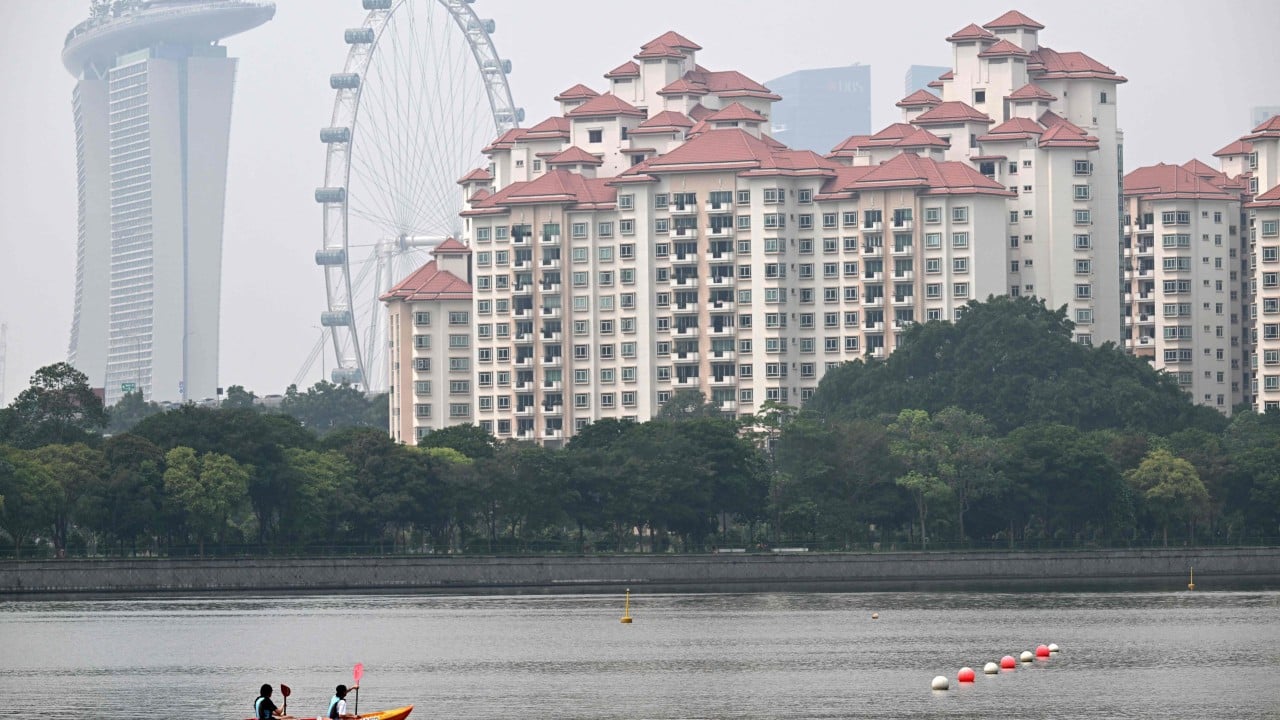
Most people outside Southeast Asia think transboundary haze is just a seasonal weather annoyance. They're wrong. When Singapore starts expanding an expert panel to investigate haze-linked firms, it means the legal net is tightening around corporate actors whose land-clearing practices choke entire cities.
You don't bring in heavier technical expertise unless you plan to build a case that survives courtroom scrutiny. That's the real story here. For years, Singapore's Transboundary Haze Pollution Act (THPA) looked great on paper, yet enforcing it across national borders proved notoriously difficult. Proving that smoke drifting into Singapore came from a specific concession thousands of kilometers away requires airtight scientific evidence, satellite attribution, and corporate ownership tracing. By adding muscle to its expert panel, Singapore is signaling that its investigation into haze-linked firms isn't stalling out in bureaucratic limbo—it's accelerating toward actual enforcement. If you enjoyed this article, you should check out: this related article.
What Most People Miss About Cross-Border Haze Enforcement
If you've ever lived through a severe haze episode in Singapore, you know the routine. Air quality drops, schools close, N95 masks sell out, and everyone asks why nobody is stopping the fires in Sumatra or Kalimantan.
The honest answer? Jurisdiction is a nightmare. For another look on this development, refer to the recent coverage from Reuters.
Under the Transboundary Haze Pollution Act, passed in 2014, Singapore took an unusually bold legal step. The law establishes extraterritorial liability. In plain English, Singapore can fine companies—even foreign ones with no physical office in the city-state—if they cause or contribute to severe air pollution in Singapore. Fines can reach up to S$100,000 per day of haze, capped at S$2 million, and can climb even higher if a company ignores preventive notices.
Sounds straightforward. In practice, it's anything but.
When a fire burns on peatland in Indonesia, smoke doesn't carry a corporate logo. To hold a specific company liable under Singapore law, investigators at the National Environment Agency (NEA) have to connect several fragile dots at once:
- Meteorological proof showing wind trajectories carried smoke directly from a specific geographic coordinate into Singapore.
- Satellite imagery pinpointing thermal hotspots and burn scars within a mapped concession boundary.
- Land tenure records proving which legal entity actually controlled or managed that specific plot of land at the time of the fire.
- Corporate veil tracing to identify parent companies, subsidiaries, or supply-chain partners operating behind shell structures.
Miss even one link in that chain, and a well-funded legal team will tear the case apart. That's why expanding the expert panel matters so much right now. Technical specialists in remote sensing, peatland hydrology, forensic accounting, and atmospheric modeling aren't window dressing. They're the difference between a public accusation and a legally enforceable penalty.
Why Technical Expertise Is the Real Weapon Here
Let's be real about how corporate accountability works in the palm oil and pulpwood sectors. Large agribusiness groups rarely hold land under one neat, transparent banner. Instead, plantations are frequently split across dozens of local subsidiaries, joint ventures, and third-party suppliers. When fires break out, companies routinely claim the land belonged to local smallholders, encroachers, or rogue contractors operating without permission.
Without independent forensic verification, regulators hit a brick wall.
By reinforcing its expert panel, Singapore is strengthening its ability to counter those exact defenses. Think about what modern environmental forensics can actually prove today compared to a decade ago:
High-Resolution Satellite Attribution
Commercial satellite constellations now capture sub-meter imagery almost daily. Experts don't just see a blurry red dot indicating heat. They can see newly dug drainage canals—a classic precursor to drying out peatland before burning—months before a fire starts. They can track road construction, mechanized land clearing, and exact burn perimeters down to individual plantation blocks.
Atmospheric Dispersion Modeling
Wind patterns over the Malacca Strait and South China Sea shift constantly. Atmospheric scientists use complex dispersion models to trace particulate matter (specifically PM2.5) backward from Singapore's air monitoring stations to exact burn zones. When an expert panel validates those models, a defendant can't simply blame "regional weather" or neighboring fires.
Corporate Supply Chain Forensics
Even when a plantation company lacks assets in Singapore, its parent company, financiers, or buyers often do. Tracing corporate ownership and financial flows allows investigators to see who actually profits from cleared land.
Honestly, this is where enforcement gets uncomfortable for major firms. Many multinational commodity traders and consumer goods companies maintain strict "No Deforestation, No Peat, No Exploitation" (NDPE) policies. Being formally linked to an active Singapore haze investigation doesn't just invite government fines—it triggers instant scrutiny from global banks, institutional investors, and sustainability certification bodies like the Roundtable on Sustainable Palm Oil (RSPO).
The Diplomatic Tightrope Singapore Has to Walk
Nobody talks enough about the regional politics underneath all this. Environmental enforcement in Southeast Asia never happens in a vacuum.
Indonesia has historically been sensitive about Singapore exercising extraterritorial jurisdiction over fires occurring on Indonesian soil. From Jakarta's perspective, land governance and forestry enforcement fall under Indonesian sovereignty. In past years, diplomatic friction flared whenever Singapore issued legal notices to Indonesian-registered firms, complicating bilateral cooperation on sharing concession maps.
And concession maps are everything.
If you have satellite coordinates of a fire, those coordinates only become legally actionable when overlaid onto official government land-use maps showing who holds the concession license. Because official cadastral maps in parts of Indonesia have often been contested, outdated, or treated as sensitive data, independent verification becomes twice as hard.
Singapore's move to bolster its own expert panel reflects a pragmatic reality. Rather than waiting passively for cross-border data sharing to become effortless, Singapore is building internal analytical capacity that can evaluate open-source satellite data, independent mapping databases, and corporate disclosures with rigorous scientific authority.
Still, there are real limitations you shouldn't ignore. Even if Singapore's NEA builds an airtight technical case and imposes fines, collecting payment from a foreign entity with zero assets or bank accounts in Singapore remains a hurdle. Arrest warrants or court summonses only carry immediate bite when company directors travel through Changi Airport or conduct business within Singapore's jurisdiction.
How Green Financing and Market Pressure Changed the Game
If you think this is just about government fines, you're looking at yesterday's playbook. The financial architecture around Southeast Asian agribusiness has shifted dramatically over the last few years.
Major Singaporean banks—including DBS, OCBC, and UOB—now enforce strict environmental risk assessments before lending to palm oil, forestry, and agricultural clients. Sustainability-linked loans tie interest rates directly to verified environmental performance. If an expert panel tied to Singapore's investigation produces credible findings linking a firm to illegal burning, the financial fallout hits fast:
- Credit lines freeze. Compliance teams at regional banks are legally required to reassess environmental and reputational risk once official investigations escalate.
- Buyer contracts get suspended. Global food and consumer brands audit their supply chains aggressively to avoid public boycotts and regulatory penalties under European and international anti-deforestation rules.
- Insurance premiums spike. Underwriters treat unresolved environmental liability as a major red flag.
In other words, Singapore doesn't necessarily need to collect a S$2 million fine in cash to inflict serious financial pain on a non-compliant operator. Reputational and regulatory contagion across Singapore's financial hub does plenty of damage on its own.
Common Misconceptions About Singapore's Haze Laws
Whenever haze headlines return, the same myths circulate online. Clearing them up helps explain why this latest development actually matters.
Myth 1: Singapore's law only targets Indonesian companies.
False. The Transboundary Haze Pollution Act applies to any entity—regardless of nationality or where it is incorporated—whose actions cause or contribute to haze in Singapore. Several major agribusiness groups operating in Indonesia actually have corporate headquarters, regional offices, or listings in Singapore or Malaysia.
Myth 2: Fires are always caused by natural droughts or El Niño.
Weather sets the stage, not the match. El Niño conditions dry out vegetation and make peatlands dangerously flammable, sure. But intact tropical peat swamp forests are naturally waterlogged and rarely burn on their own. Fires happen overwhelmingly where peatlands have been drained by canals for agricultural conversion.
Myth 3: Once the rainy season starts, investigations stop.
Wrong again. Smoke clears when monsoon rains arrive, which means public outrage fades from the news cycle. Behind the scenes, that's actually when forensic work ramps up. Clear skies allow optical satellites to capture unobstructed images of burn scars, boundary markers, and post-fire planting activity—often proving whether land was burned intentionally to clear it for new crops.
What Businesses and Observers Should Watch Next
If you work in regional supply chains, ESG compliance, or commodities trading, don't treat this as routine bureaucratic news. Expanding an expert panel signals that formal notices, interviews, and evidentiary reviews are moving into a more active phase.
Companies operating in agricultural supply chains across Sumatra and Kalimantan should audit their third-party supplier maps immediately rather than relying on self-reported compliance forms. Verify concession boundaries against independent satellite monitoring platforms like Global Forest Watch, check whether suppliers are operating on drained peatland, and ensure grievance mechanisms actually flag hotspot alerts in real time.
For everyone else watching from Singapore, pay attention to whether the strengthened investigation leads to formal notices under the Transboundary Haze Pollution Act—and more importantly, whether corporate directors or Singapore-linked parent entities get named publicly. When technical expertise meets legal enforcement, anonymity is the first thing to disappear.