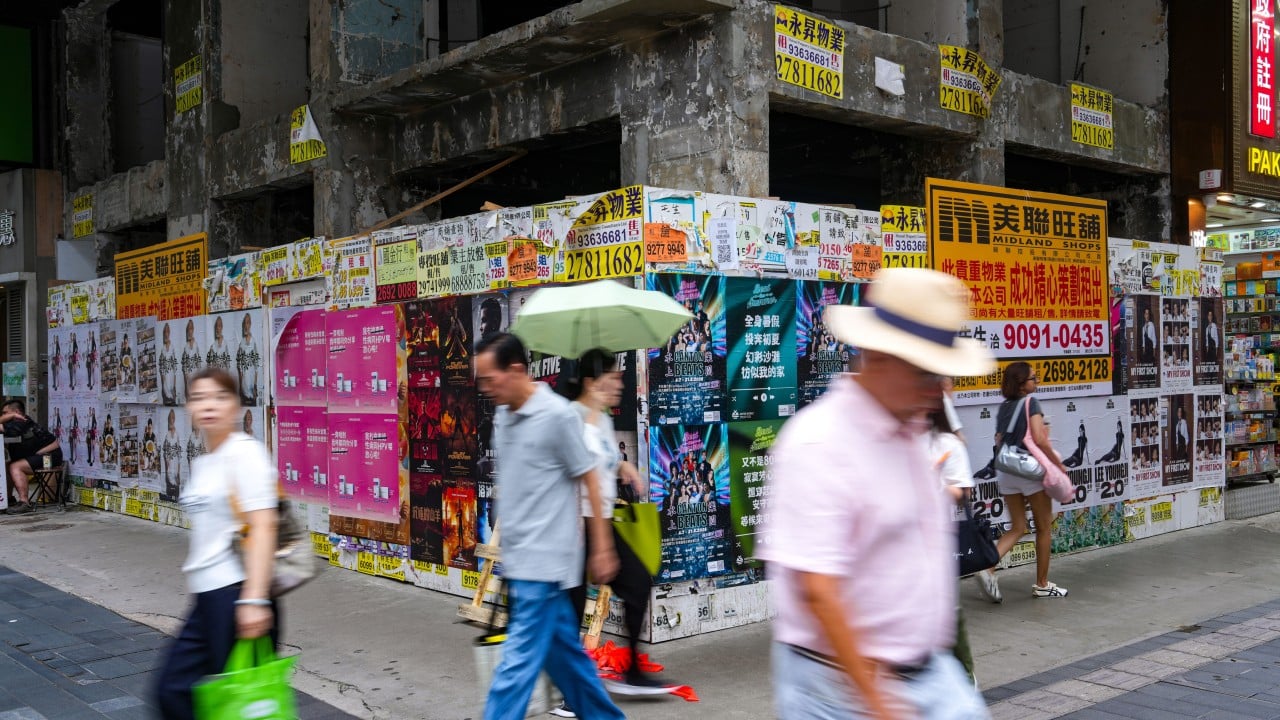
The metal gate of a storefront drops with a heavy, industrial rattle that echoes down Queen’s Road Central. To anyone passing by at dusk, it is just another shop closing for the night. But if you stand closer, you notice the small white paper taped to the glass behind the iron grille: Lease Available.
Walk this pavement long enough, and the white rectangles begin to blur together like teeth missing from a familiar smile.
For decades, Hong Kong’s retail sector did not just thrive; it dictated the rhythm of global luxury. This was a city where rent per square foot in Causeway Bay routinely went toe-to-toe with New York’s Fifth Avenue and London’s New Bond Street, often leaving them in the dust. Landlords held all the cards. Tenants paid premiums just for the privilege of a footprint. Today, the question humming through the boardroom towers in Admiralty and the family-run cha chaan tengs in Mong Kok is no longer about how high the market can climb.
It is a quiet, anxious question: When does the bleeding stop?
To understand the modern reality of Hong Kong retail, look past the cold vacancy percentages and macro-level asset devaluations. Consider instead a hypothetical business owner we will call Mrs. Wong. For fourteen years, she operated a boutique jewelry and lifestyle space tucked into a mid-tier mall in Tsim Sha Tsui. Her business survived the geopolitical shifts of 2019. It endured the punishing, years-long isolation of the pandemic. She held on because the conventional wisdom of Hong Kong real estate whispered that the return of normal travel would instantly turn the faucets back on.
The gates opened. The tourists returned. But the money did not.
Mrs. Wong’s experience is the human face of a structural shift that the city’s oldest property dynasties are currently forced to confront. The old playbook is broken. The belief that a simple return to open borders would restore the glory days of 2018 has collided with a brand-new consumer psychology, one that cannot be fixed by merely slashing rent by another ten percent.
The Great Migration North
The immediate instinct of analysts is to point at the exchange rates. It is an easy, mathematical villain. Because the Hong Kong dollar is pegged to a remarkably strong US greenback, spending money inside the city has become an expensive proposition for everyone—including the locals.
But the real problem lies elsewhere. It rests in a profound behavioral shift that has transformed weekends in the territory.
Every Friday afternoon, a quiet exodus occurs at the border checkpoints. Tens of thousands of Hong Kong residents pack their bags and head north into Shenzhen. Why? Because the value proposition has flipped entirely. A dinner that costs eight hundred dollars in local currency in Wan Chai can be had for a fraction of that price across the border, often accompanied by the kind of attentive, spacious service that Hong Kong’s cramped quarters rarely permit.
Our city used to be the playground where mainland consumers came to acquire prestige goods. Now, mainland hubs have matured into experiential destinations that draw local capital out of Hong Kong.
This is not a temporary trend or a seasonal dip. It is a fundamental rewiring of regional commerce. When a family discovers they can take a short high-speed rail journey, enjoy a luxury weekend of dining and shopping, and still save money compared to spending a Saturday afternoon in a local mall, a habit is formed. Habits are notoriously difficult to break.
For a retail leasing market to experience a true turnaround, it must first reckon with this loss of domestic loyalty. Landlords cannot expect to fill vacancies while their own neighbors are voting with their wallets at the Luohu checkpoint every weekend.
The Illusion of the Luxury Floor
Walk through the glittering atriums of Central’s high-end retail hubs and the glitz seems intact. The window displays are pristine. The guards wear tailored suits. Yet, the conversation among leasing agents in these halls has taken on a distinctly sober tone.
The era of the mainland mega-shopper—the traveler arriving with empty suitcases specifically to fill them with Swiss watches and Italian leather—has evolved. Today’s luxury consumer is younger, more cautious, and highly informed. They know exactly what an item costs in Paris, Tokyo, or Shanghai. They are no longer willing to pay a premium just for the experience of buying it in Hong Kong.
Consequently, the massive, multi-level flagship stores that defined the golden age of Hong Kong retail are becoming liabilities. Brands are downsizing. They are consolidating three floors into one, or moving away from prime street-front positions into less exposed mall units.
Consider what happens next when a major anchor tenant decides not to renew a lease. The impact ripples outward like a stone dropped in a pond. The smaller operators—the boutique coffee shops, the independent bookstores, the local cosmetics brands that relied on the foot traffic generated by that giant anchor—suddenly find themselves stranded in a ghost town of polished marble.
Retail Lease Evolution: The Balance of Power
+-----------------------+-----------------------+
| Old Era (Pre-2020)    | New Era (Current)     |
+-----------------------+-----------------------+
| Landlord Dominance    | Tenant Leverage       |
| Long-term Commitments | Flexible Pop-ups      |
| Pure Transactional    | Experiential Focus    |
| High Street Premium   | Neighborhood Centers  |
+-----------------------+-----------------------+
This rebalancing of power is painful, but it reveals a truth that many in the industry were reluctant to admit during the boom years: high street rents were inflated beyond the bounds of long-term economic sustainability. The current correction is not just a downturn; it is a market shedding its illusions.
Redefining the Value of Space
When will the market turn around? The answer depends entirely on how one defines a turnaround. If the industry is waiting for rents to climb back to their historic peaks while relying on the same old mix of high-end watchmakers and luxury fashion houses, the wait will be indefinite.
The recovery will not look like a sudden surge. It will look like a slow, deliberate reinvention.
The landlords who are beginning to see light at the end of the tunnel are those who have abandoned the traditional landlord-tenant dynamic. They are no longer just collecting rent; they are entering into partnerships. We are seeing the rise of short-term pop-ups, spaces dedicated to local independent artists, and dining concepts that prioritize community interaction over sheer transactional volume.
Instead of a sprawling flagship store that remains empty for eighteen hours a day, spaces are being carved up to accommodate experiential retail. Think of a wellness space that blends athletic wear with a juice bar, a meditation zone, and a community workspace. These are concepts that cannot be easily replicated by an online store or an overseas trip.
The return of stability to Hong Kong’s retail leasing market lies in embracing this vulnerability. The city must accept that its role as a pure shopping destination has changed forever. To survive, it must become a place where people want to gather, not just spend.
The Light in the Windows
The transformation is visible if you look closely enough at the neighborhoods that sit just outside the premium commercial districts. In areas like Sham Shui Po or the quieter alleys of Sheung Wan, a different kind of energy is stirring.
Small, independent operators are taking advantage of the lowered barriers to entry. Young entrepreneurs who were priced out of their own city for a generation are finally signing leases. They are opening specialty bakeries, vinyl record cafes, and craft workshops. They are injecting personality back into a concrete landscape that had become sterile from an over-reliance on international conglomerates.
These small businesses do not move the needle on global real estate indices. They do not make headlines in quarterly financial reports. But they do something far more critical for the long-term health of the city: they build a destination. They give people a reason to stay in Hong Kong on a Saturday afternoon.
The path forward is not about recapturing a past that no longer fits the global economy. It is about navigating the reality of the present with agility and clear eyes. The market will find its footing when it realizes that value is not derived solely from the prestige of a brand name, but from the vitality of the human connection happening inside the four walls of a shop.
As the evening rush hour peaks, the lights of the city flicker on, casting long shadows across the pavement. The white paper signs indicating empty spaces remain, but beneath the surface, the city is doing what it has always done best. It is adapting. The turnaround is not a specific date on a calendar or a magic percentage on a chart; it is the slow, unmistakable sound of a city reinventing itself from the ground up.
The metal gate will rise again tomorrow, perhaps for someone completely new.