The air in New Delhi during autumn carries a specific weight. It smells of dust, distant woodsmoke, and the invisible electricity of millions of lives brushing against one another in the damp morning haze. Diplomats call this season a diplomatic window. Street vendors call it another Tuesday. But beneath the routine hum of traffic, something fundamental is tilting on its axis.
A plane touches down.
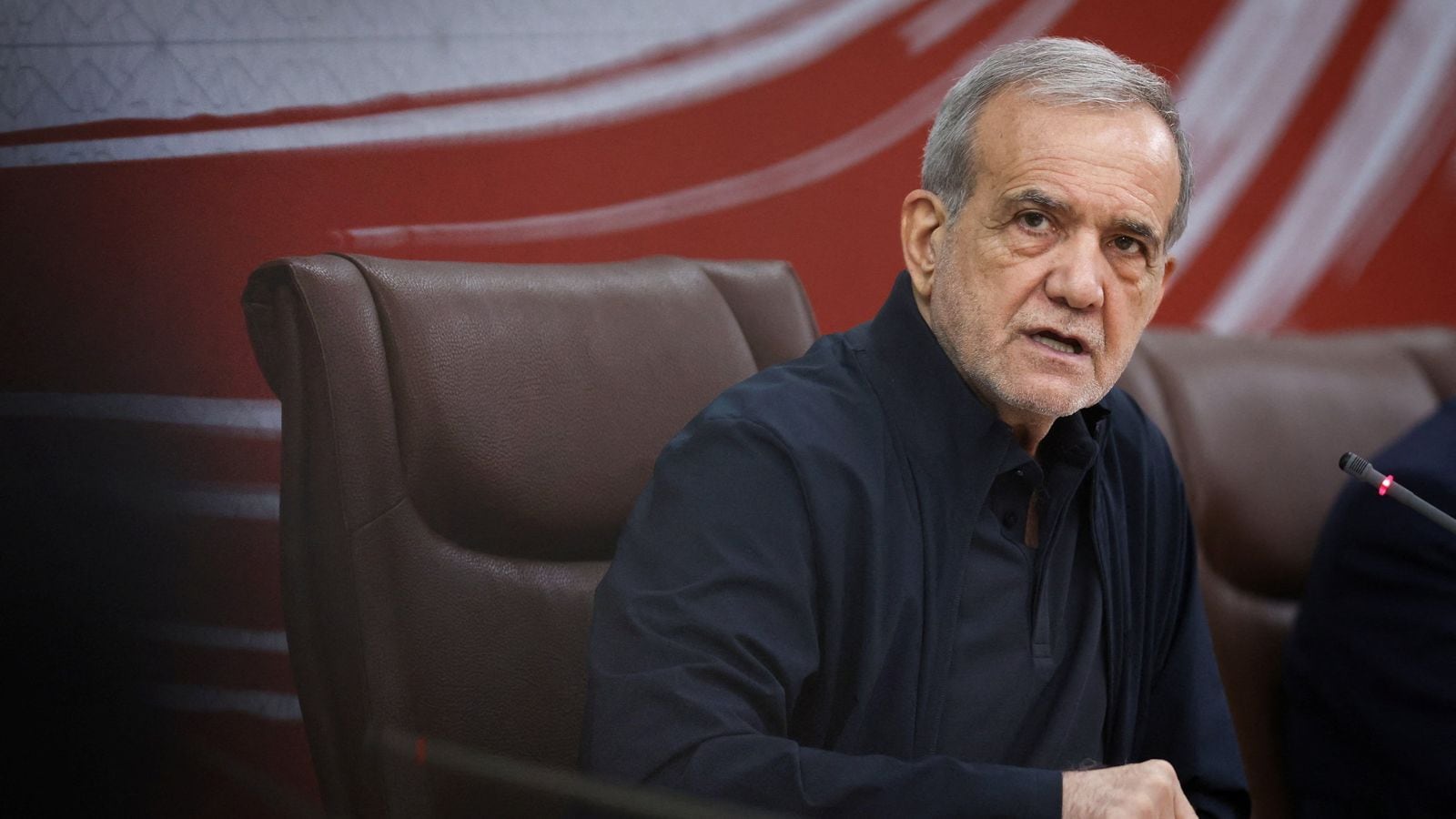
Iranian President Masoud Pezeshkian steps onto the tarmac.
To the casual observer half a world away, staring at a phone screen while waiting for a commuter train, this is just another headline in a scrolling blur of foreign policy briefs. Another summit. Another handshake in front of flashing cameras. Another communiqué drafted by exhausted bureaucrats who survive on lukewarm coffee and acronyms.
Look closer.
Listen to the rumble of engines. Watch the posture of the guards standing at attention. This arrival is not about protocol. It is about gravity.
For decades, the global financial and political map was drawn with a very specific ink. Western capitals held the pen. If you wanted to trade, you asked permission. If you wanted validation on the world stage, you sought it in specific ZIP codes across North America and Western Europe. Entire nations were treated as footnotes in someone else's ledger.
Gravity is shifting.
When leaders like Pezeshkian travel to New Delhi for the BRICS Summit, they are not merely attending a conference. They are participating in the construction of an alternate architecture. Imagine two tectonic plates grinding together in slow motion. You cannot hear the rock fracture from the surface, but you can feel the teacups rattle on the kitchen table.
BRICS used to be an acronym coined by an investment analyst trying to sell mutual funds. Just a clever grouping of rising economies. Brazil, Russia, India, China, South Africa. Letters on a page. Today, those letters spell out a massive demographic and economic mass that refuses to orbit a single sun. With Iran officially joining the fold, alongside other heavyweights, the bloc now controls a staggering share of global energy resources and population centers.
It is easy to dismiss this as mere political theater. Speeches are cheap. Joint communiqués are forgettable.
Yet, money moves where power settles. Trade agreements are quietly signed away from the glare of Western television networks. Local currencies are tested for bilateral trade to bypass the dominant global payment rails. These are not grand explosions. They are termites in the floorboards of the old order.
Consider a hypothetical merchant in Isfahan, sitting behind a glass of dark tea, watching the rial fluctuate against a backdrop of crushing economic sanctions. To that merchant, New Delhi is not a distant dot on a map. New Delhi is an open door. It is a market where oil finds a buyer without needing the blessing of Washington or Brussels. It is a lifeline woven from pragmatic self-interest rather than ideological alignment.
Geopolitics is often taught in universities as a game of chess. Clean boards. Wooden pieces moved with calculated precision.
Real life is messier. It is mud, sweat, and desperate choices made by nations backed into financial corners. Iran has spent decades under the heavy boot of isolation. Its citizens have felt the pinch of inflation, the frustration of blocked medical supplies, the quiet erosion of middle-class dreams. When a leader like Pezeshkian boards a flight to India, he carries the hopes of millions who want off the economic sidelines.
India plays a fascinating, delicate role in this unfolding drama. New Delhi has mastered the art of strategic autonomy. It shakes hands with Washington one afternoon and sits down with Moscow and Tehran the next. Critics call it fence-sitting. Realists call it survival in a multipolar world. India needs energy to power its surging industrial base—factories humming with young workers building everything from smartphones to electric rickshaws. Iran has oil. Geography makes them neighbors separated only by a restless sea and shared history.
Why does this matter to you?
Because the cost of your morning coffee, the stability of global supply chains, the price of fuel in your car, and the safety of shipping lanes halfway across the globe are all tethered to these handshakes. When powerful nations build alternative financial and security networks, the shockwaves eventually reach every corner of the globe. The unipolar era is fraying at the edges. What replaces it is messy, complicated, and entirely unmapped.
As the motorcade rolls away from the airport, swallowed by the chaotic, beautiful roar of New Delhi traffic, the cameras stop flashing. The reporters pack up their gear.
The summit begins.
Behind closed doors, away from public posturing, maps are being redrawn in real-time. The old world order is not collapsing in a dramatic cinematic crash. It is simply being outgrown. And as the engine noise fades into the humid Indian night, the rest of the world wakes up to a morning that feels just a little bit different than the one before.