The coffee in Shenzhen is always too hot, served in paper cups that sweat against the humidity of a Tuesday morning. I sat across from Lin, a powertrain engineer whose fingers were permanently stained with graphite dust and industrial grease. He traced a circle on the condensation of his cup.
"We won the battery war," he said, his voice dropping beneath the roar of a passing scooter. "And nobody noticed how tired we are."
For years, the headlines belonged to pure battery electrics. The narrative was simple, clean, and aggressively forward-looking: plug in, charge up, and throw away the internal combustion engine forever. Gigafactories rose from empty fields like concrete mushrooms. Silicon Valley celebrated; Detroit panicked. We watched charging stations multiply across parking lots like strange, metallic flowers. The transition felt absolute.
Except it was never that simple.
Consider what happens next: the charging cord meets the reality of a freezing midnight in Harbin, or a three-day harvest haul across rural Sichuan where power grids are miles away and thin as thread. Lin’s team spent three years looking at data logs from millions of battery-electric vehicles humming along highways. They saw the cold-weather range anxiety. They saw the grid strain. They saw the weary drivers waiting forty minutes for a fast charge while children slept in the back seat.
Pure electric was a magnificent sprint. But the race isn't over.
The Old Guard in the Rearview
For decades, traditional automotive giants in Japan and Europe built their empires on a different kind of alchemy. They perfected the full-hybrid.
To the Silicon Valley mindset, a hybrid was a compromise. A half-measure. A polite wave goodbye to the future. That arrogance was a mistake. Companies like Toyota mastered the delicate choreography of blending a tiny internal combustion engine with an electric motor, recycling kinetic energy that would otherwise turn into wasted heat. They built machines that never needed to be plugged in, sipping fuel with astonishing parsimony.
While the new wave of battery-focused manufacturers spent billions chasing maximum range through heavier packs and massive lithium reserves, the hybrid incumbents quietly refined their craft. They owned the fuel stations of the mind. They owned the markets where charging infrastructure is a distant dream.
Lin did not see them as dinosaurs anymore. He saw them as entrenched fortresses.
"You cannot bully physics," Lin told me, tapping the table. "Every extra hundred kilometers of battery range adds weight. Weight demands more energy. More energy demands a bigger battery. It is an ouroboros."
The Pivot
The shift happened quietly in corporate boardrooms across Shanghai and Guangzhou, obscured by the louder theater of price wars and autonomous driving trials. The dominant electric vehicle makers turned their gaze toward the full-hybrid market.
(Note: When I speak of this pivot, I am describing a strategic redirection of research capital and engineering talent away from purely battery-electric architectures toward plug-in hybrids and extended-range electric systems.)
They realized something profound. The next billion car buyers do not live in downtown Oslo with a dedicated garage charger. They live in apartments where running a heavy-gauge copper wire from the fourth-floor window is an urban sport. They live in regions where power outages are common and grid reliability is a luxury.
So, the engineers went back to the drawing boards. They took the lightning-fast software integration, the advanced electronics, and the aggressive cost-control models born in the battery wars and applied them to hybrid systems. They built dual-power systems that can run purely on electricity for daily urban commutes, yet seamlessly transition to a hyper-efficient gasoline generator for cross-country drives.
This is not a retreat. It is an encirclement.
The Human Cost of the Grid
Walk through a charging hub in a congested tier-three city on a Friday evening. The atmosphere is tense. Drivers pace beside their cars, watching percentage counters tick upward like ticking clocks. Tempers flare over broken plugs.
This is the friction of the transition. The physical world is stubborn. It resists clean lines and absolute decrees.
When a driver buys a modern extended-range vehicle or an advanced full-hybrid system, they are buying absolution from that friction. They get the silent, torque-rich acceleration of an electric motor without the psychological tax of hunting for a working charger in the rain.
The market noticed before the analysts did. Sales figures began to tell a story of pragmatic compromise. Consumers voted with their wallets, choosing flexibility over ideological purity. The traditional hybrid behemoths suddenly found themselves sharing the stage with aggressive, tech-first challengers who had learned how to build better electronics at a fraction of the cost.
The Road Ahead Without a Map
Lin wiped the condensation from his table with a napkin. The cup was empty now, the coffee cold.
"We thought we were building the end of history," he said, staring out at the chaotic, beautiful traffic of the avenue. "Turns out we were just building chapter two."
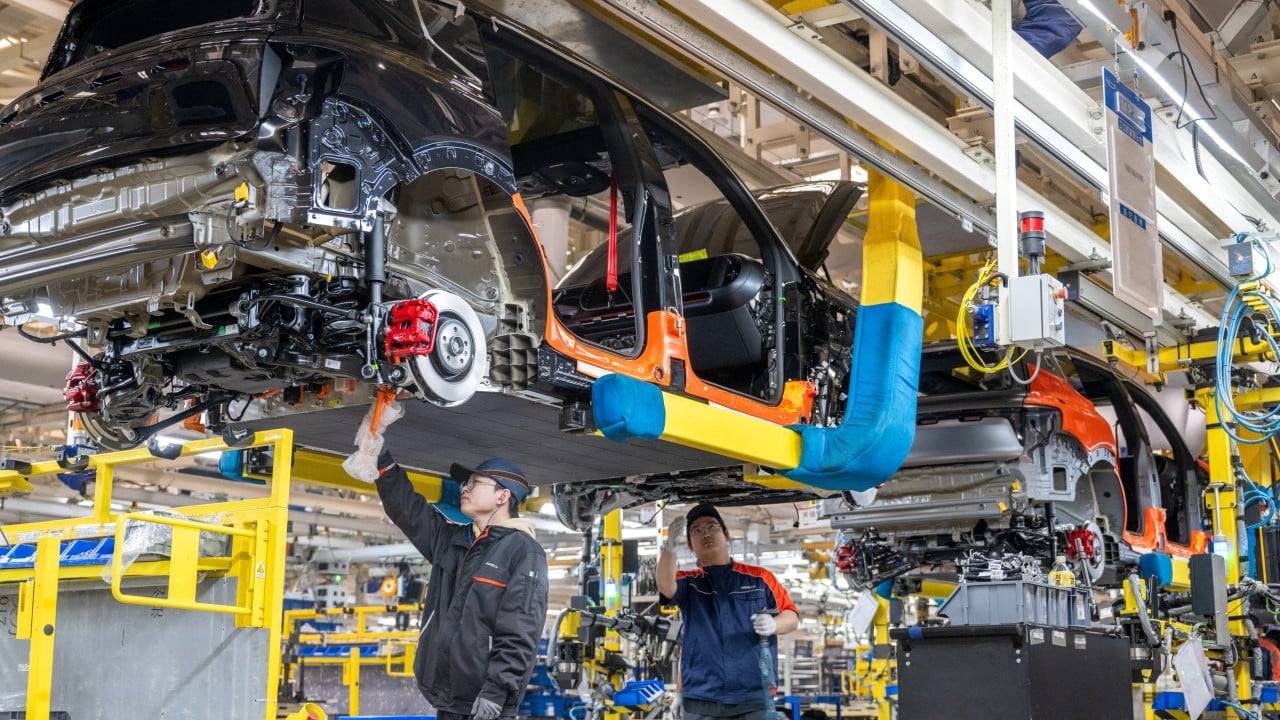
The factories are retooling again. The assembly lines that once spat out monolithic battery packs are now weaving together complex dual-source powertrains. The boundaries between pure electric and hybrid are blurring into a single, pragmatic pursuit of efficiency.
The giants of the old world thought their hybrid moats were deep enough to keep the newcomers out. They miscalculated the speed of their adversaries. Now, the battleground has shifted from who can pack the most lithium into a chassis to who can make the most seamless, invisible transition between power sources.
The future of mobility is not a clean break from the past. It is a messy, brilliant collision. And the engines are humming in a completely new key.