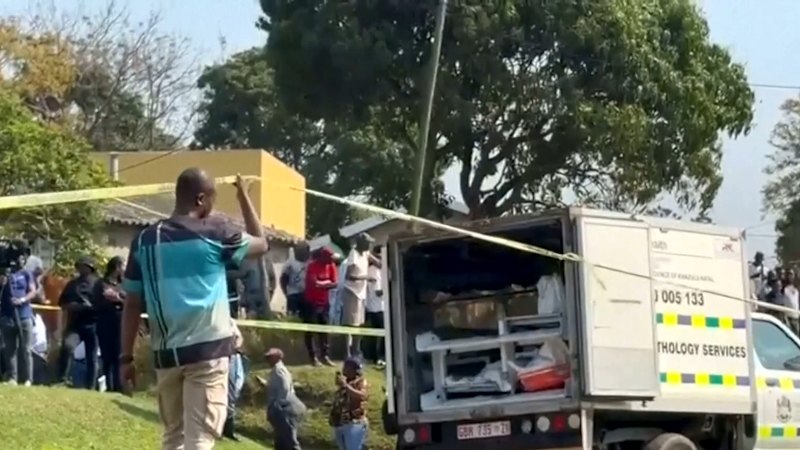
The wind off the Indian Ocean does not whisper in the Eastern Cape; it scours. It tears across the corrugated iron roofs of townships like Lusikisiki, rattling windowpanes and carrying the distant, heavy scent of eucalyptus smoke and red dust. By ten o'clock on a Saturday night, the roads usually empty. The stray dogs curl beneath stray porch lights. The elders drift inside.
Except for the celebrations.
A traditional ceremony. A family gathering. Laughter spilling out into the dark, defying the perimeter walls and the iron burglar bars that every household installs like armor. In South Africa, joy is often an act of quiet defiance against a backdrop of chronic uncertainty. People gather to mark milestones—birthdays, homecomings, the passing of ancestral duties—because community is the only currency that never devalues.
Then came the shattering of glass. The sharp, rhythmic cracks that a terrified ear learns to distinguish from fireworks within a fraction of a second.
Eleven lives, extinguished in the span of a single loaded magazine. Thirteen wounded. Families shattered not across a sprawling battlefield, but inside the intimate, brightly lit rooms of two neighboring homesteads in the village of Ngobozana.
We read the casualty counts on glowing screens thousands of miles away, or in crisp morning papers over lukewarm coffee. We reduce human beings to integers. Eleven dead. Seven women. Four men. A ledger entry.
Stop.
Close your eyes and imagine the mundane perfection of the moments right before. A grandmother passing a plate of food. A cousin laughing at a bad joke, head thrown back. The reassuring weight of family under one roof. Security isn't just about locks; it is the psychological sanctuary of being surrounded by the people who know your history. That sanctuary was breached.
What happens to a community when the sanctuary becomes a tomb?
To understand the tragedy of Lusikisiki is to understand a deeper, more insidious structural crisis. It requires looking past the immediate horror of the massacre—the frantic blue flash of police vans tearing down rutted dirt tracks, the yellow crime scene tape fluttering futilely in the coastal gale—and examining the geography of vulnerability.
South Africa's rural hinterlands exist in a strange temporal and spatial vacuum. They are places of profound beauty, rolling green hills, and deep cultural roots. They are also places where the state is often represented by a distant promise rather than a daily presence. When local police stations are understaffed, underequipped, and responsible for policing areas the size of small European countries with a handful of vehicles, the social contract frays.
Criminal syndicates know this arithmetic.
In many parts of the country, violent crime has mutated from opportunistic theft into calculated, industrial-scale violence. Hit squads, illegal firearms proliferation, and local vendettas form a toxic cocktail. Revenge killings and extortion rackets operate in the shadows, fueled by an illicit gun market where weapons pass easily across porous borders. When justice feels slow or entirely absent, the barrel of a gun becomes the ultimate arbiter of disputes.
Consider the sheer psychological weight carried by the survivors.
Imagine waking up tomorrow, and half your bloodline is simply gone. Not by illness. Not by the slow, predictable erosion of old age. But by the deliberate, chilling malice of masked intruders kicking open a door in the dead of night. The survivors do not just grieve; they inhabit a permanent state of hyper-vigilance. Every creak of the floorboards becomes an assault. Every sudden shadow at the window is a ghost in the daylight.
The national outcry was swift. Condemnations from the highest offices. Pledges of enhanced police visibility. Specialized tactical units deployed to comb the hills. Ministers arriving in glossy convoys, offering solemn condolences and promising swift retribution.
We have seen this script before.
The tragedy occurs. The state reacts with maximum force and media attention. The spotlight burns white-hot for a week. And then, the convoy departs. The dust settles back onto the dirt roads. The cameras pack up and chase the next catastrophe.
Meanwhile, the villagers of Ngobozana are left alone with the silence.
A society cannot police its way out of a collective trauma of this magnitude. True security requires weaving a fabric of social stability that stops violence before a single trigger is pulled. It demands economic dignity in regions where joblessness is the default state for the young. It demands dismantling the underground arsenals that flood rural provinces with military-grade weaponry. Most of all, it demands a relentless, grinding commitment to institutional trust—ensuring that every citizen, whether living in an affluent suburb of Johannesburg or a remote homestead in the Eastern Cape, feels the protective arm of the law rather than the chilling isolation of abandonment.
The sun rises over the hills of Lusikisiki the morning after. The ocean breeze continues to scour the earth, indifferent to human grief.
In the courtyard of the devastated home, a single pair of children's shoes sits unclaimed near the threshold. The dust settles over them, quiet, heavy, and profound.