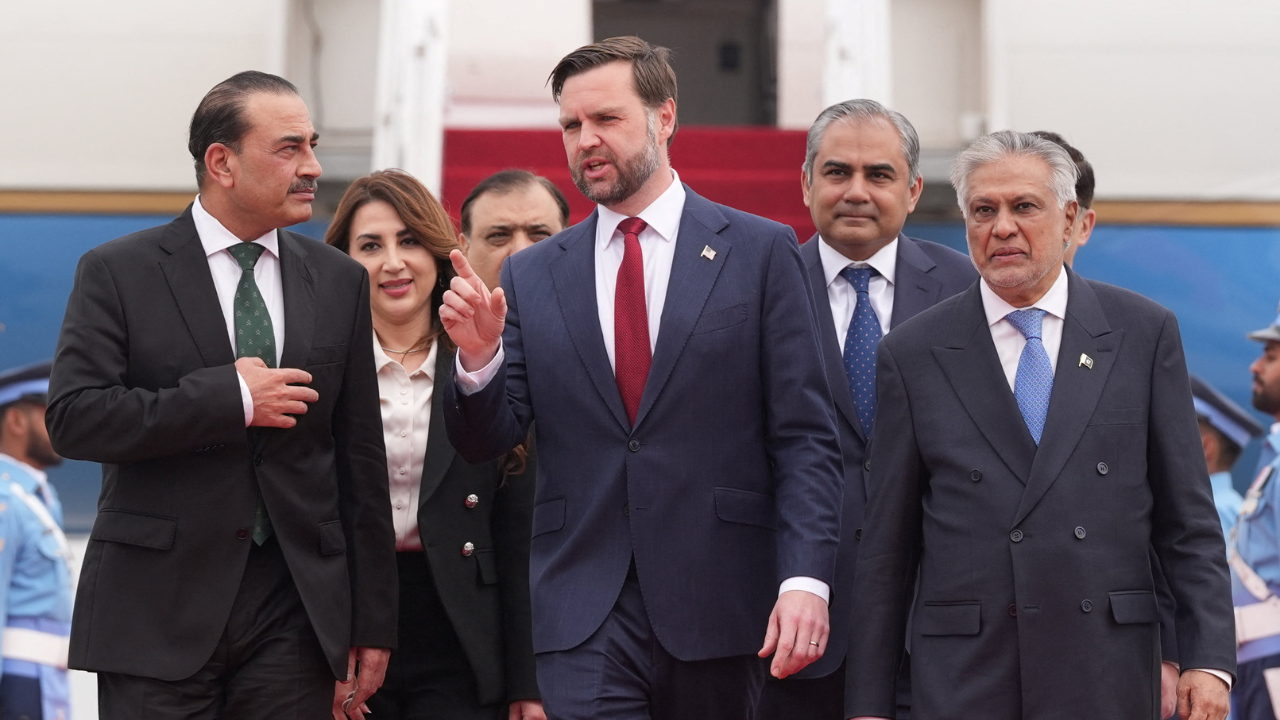
The air in Islamabad during the transition into spring carries a heavy, humid stillness that clings to the skin. It is a city of wide avenues and quiet enclaves, a place designed for the muffled conversations of diplomacy. Inside a secure room, far removed from the bustling markets of Rawalpindi, a group of men sat across from one another. They did not shake hands. They did not share a meal. Instead, they performed a ritual as old as the written word: they exchanged papers.
This was the first phase of a high-stakes dialogue between the United States and Iran. To a casual observer, the event might seem like a bureaucratic footnote. Media reports summarized it in a few dry sentences about "written texts" and "concluded sessions." But look closer at the sweat on a translator's brow or the way a diplomat grips his fountain pen. There, you find the real story. This is not about policy. It is about the terrifying, fragile attempt to bridge a chasm of forty years with a few sheets of A4 paper.
Every word on those pages was fought over for months. In Washington and Tehran, teams of lawyers and analysts stayed up until three in the morning, arguing over the placement of a comma or the specific nuance of a verb. They were not just writing a document. They were trying to define the terms of a temporary peace. Imagine the pressure of knowing that a single mistranslated word could be interpreted as a threat, potentially shifting the movement of carrier strike groups or the enrichment levels of centrifuges.
The stakes are invisible but absolute.
To understand why Islamabad matters, you have to look past the official titles. Think of a family in Isfahan wondering if the cost of medicine will ever drop. Think of a sailor in the Persian Gulf, staring at a radar screen, waiting for a signal that never comes. These are the people who live in the gaps between the lines of text. When the United States and Iran stop talking, the world holds its breath. When they exchange folders in a neutral third-party capital, the world takes a shallow, cautious sip of air.
The choice of Islamabad as a venue was no accident. Pakistan has long walked a tightrope between these two giants, acting as a postman for messages that neither side wants to admit they are sending. In this specific phase, the focus was on establishing a baseline. You cannot build a house on a swamp. These initial sessions were about pouring the concrete. They were about deciding what could be discussed and, perhaps more importantly, what was currently too volatile to touch.
The process is agonizingly slow. It is a dance performed in lead boots.
One side presents a set of demands. The other side retreats to a separate room, or perhaps a separate wing of the building, to dissect those demands. There is no face-to-face heated debate. There is only the clinical, cold delivery of paper. This "indirect" method is a safeguard against the heat of human ego, but it also creates a strange, ghostly atmosphere. You are negotiating with a ghost. You are responding to a ghost. You are hoping that the person on the other side of the wall is reading your intent correctly, rather than just your syntax.
Consider the physical reality of those documents. They contain the blueprints for sanctions relief, the technical specifications for nuclear monitoring, and the shadowy outlines of regional security. But they also contain the pride of nations. For the Iranian delegation, the text must reflect a resistance to bullying. For the Americans, it must reflect a commitment to non-proliferation and the safety of allies.
The papers were exchanged, and the doors were opened. The first phase is over.
Some critics will say nothing was achieved. They will point to the lack of a signed treaty or a joint press conference as evidence of failure. They are wrong. In the world of high-stakes international relations, the mere act of not walking away is a victory. The fact that folders changed hands means that both sides still believe a solution is possible—or at least preferable to the alternative.
The alternative is a darkness that no one wants to contemplate. It is a return to the cycle of provocation and retaliation, where a single mistake in the Strait of Hormuz could ignite a fire that burns across three continents. Against that backdrop, a quiet room in Islamabad feels like a sanctuary.
We often think of history as a series of loud explosions and grand speeches. We remember the fall of walls and the signing of famous treaties on sun-drenched lawns. But most of history is actually made in rooms like this one. It is made in the silence between the words. It is made by exhausted civil servants who just want to go home to their families but stay to check the wording one more time.
The men have left the room now. The motorcades have wound their way back through the leafy streets of the capital. The diplomats are on planes, flying back to their respective hubs of power, carrying the responses of their rivals in locked briefcases. They will land, they will report to their superiors, and the cycle will begin again.
There is no "game-changer" here. There is only work. Gritty, thankless, repetitive work. It is the work of keeping the peace, one sheet of paper at a time. The world is a slightly safer place today because a few people chose to write instead of scream. That might not make for a sensational headline, but it is the only way forward.
The envelopes are sealed, the first phase is in the books, and the long, difficult road to the next room has already begun. Somewhere in a darkened office, a printer is warming up. The next draft is coming.