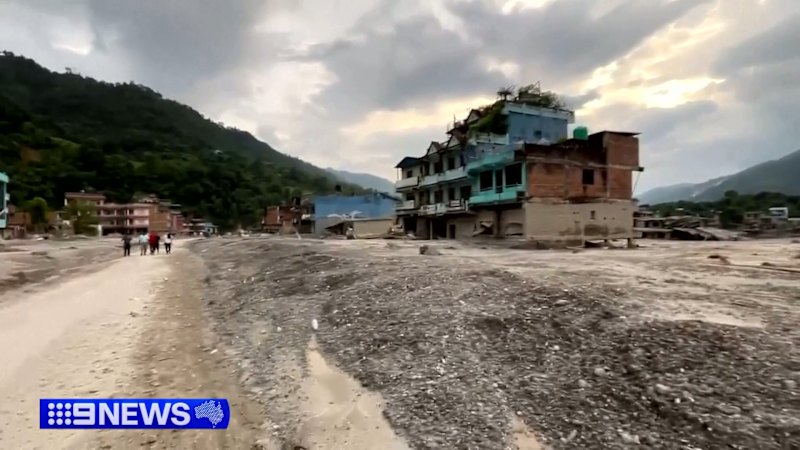
The clock does not tick in the rubble. It bleeds.
Every second that slips past in the fractured streets of Kathmandu is marked not by the sweep of a hand, but by the settling of grey powder, the shifting of heavy concrete slabs, and the agonizing arithmetic of survival. Seventy-two hours. That is the invisible boundary drawn by emergency medicine and cold physics. Beyond that threshold, human bodies, trapped in dark pockets of air and crushed stone, begin to yield to dehydration, trauma, and the crushing weight of their own despair.
I remember the smell of pulverized brick and dry lime from an earlier disaster, a scent that clings to the back of the throat like metal and dust, refusing to leave for weeks. It is an olfactory signature of catastrophe. When you stand before a collapsed four-story building that has pancaked into a single, smoking pancake of masonry, your mind tries to reject the scale of it. You look for doors. You look for windows. You find only fragments. A torn curtain fluttering from a broken reinforcing bar. A single, dusty child's shoe resting absurdly atop a mountain of grey debris.
Rescue workers call this the golden window. But gold is a cruel name for something so fleeting.
Consider the mathematics of the search. Imagine standing on a ridge of jagged concrete with a thermal imaging camera or an acoustic listening device. The machine is silent. The street is silent, save for the low, panicked hum of generators and the muffled weeping of families clustered behind police tape. They wait. They clutch damp photographs. They watch every movement of the heavy excavators with eyes wide and hollow. In disaster zones, time warps. Minutes stretch into hours while hands claw desperately at jagged rebar until fingernails split and bleed into the grit.
Statistically, the curve of successful extractions drops precipitously after the third day. Dehydration kills faster than hunger. Crush syndrome—where toxins flood the bloodstream the moment a trapped limb is finally released—demands split-second medical intervention that field hospitals struggle to provide amidst chaotic aftershocks. The ground beneath the rescuers' boots still trembles. Every minor tremor sends a fresh wave of panic through the crowd, whispering a dark reminder that the earth is not yet finished shaking.
Behind every cold statistic reported in foreign news bulletins—the rising death toll, the count of missing persons, the tonnage of international aid arriving at Tribhuvan International Airport—is an intimate, shattered universe. There is the physics teacher whose basement classroom became a tomb. There is the young couple whose wedding albums are now buried beneath ten tons of shattered brick.
International rescue teams arrive with trained canine units and heavy hydraulic cutters, but geography fights them at every turn. Narrow alleyways in historic districts block the passage of cranes. Landslides choke mountain highways, cutting off remote villages where entire communities lie beneath the debris of traditional mud-brick homes. In these outer districts, rescue is not a matter of high-tech gear; it is a matter of bare hands and desperate neighbors digging through the ruins with kitchen utensils and garden tools.
By the fourth and fifth days, the nature of the operation shifts. The language spoken by commanders changes. The desperate push to find signs of life begins to give way to the grim, necessary labor of recovery. It is a transition nobody wants to announce, yet everyone feels in the sudden softening of voices, the slower pace of the search dogs, the quiet weeping of families who finally understand that the silence beneath the dust is permanent.
Yet, even as the hope of finding survivors fades into the cruel reality of passing time, human resilience refuses to pack up its tents. Makeshift kitchens smoke by the side of ruined roads. Volunteers distribute bottles of warm water to dazed survivors who have nowhere else to go. They sleep under plastic tarps beneath the open sky, watching the stars above a city that has changed forever, waiting for the earth to steady beneath their feet, carrying the names of the missing like an unyielding shield against the dark.


