The metal cools long before the traffic clears.
At 1:25 p.m. on a Saturday, the intersection of Dixie Road and Queen Street in Brampton is typically defined by its mundane rhythm. It is the sound of weekend errands, indicators clicking, rubber humming against heated asphalt, and the collective rush to make the most of a fleeting June afternoon. Then, a sound that does not belong to the weekend. A sudden, violent crunch of steel meeting steel.
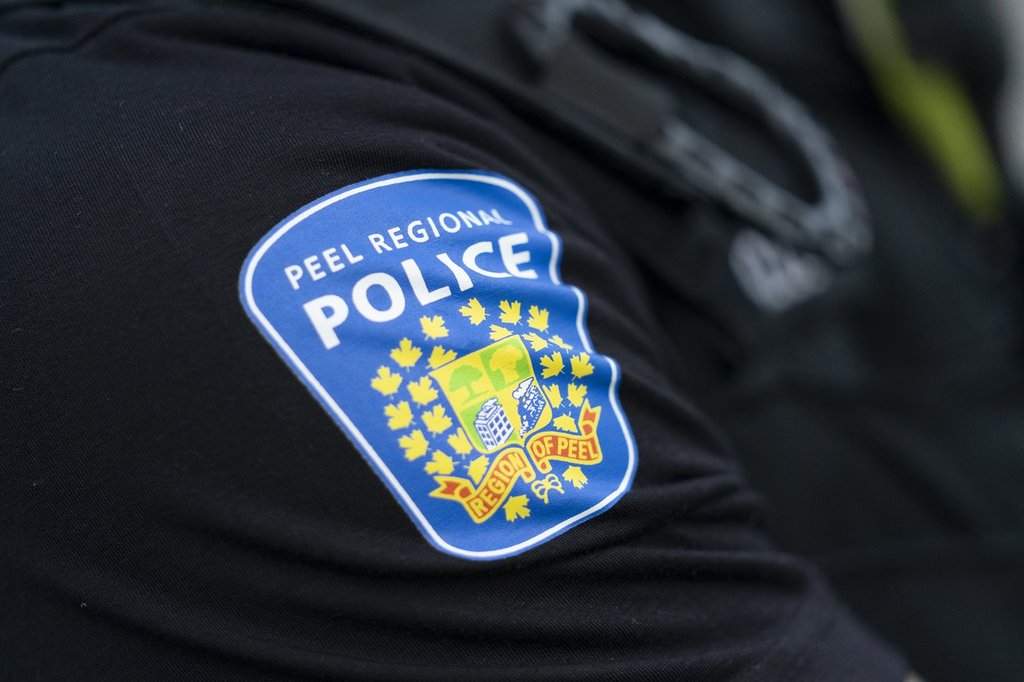
Sirens soon punctured the air. First responders from Peel Regional Police and emergency medical teams arrived to find two vehicles mangled, their frames locked in a catastrophic embrace. Brampton Fire and Emergency Services personnel moved quickly, using specialized tools to cut into the crushed metal to reach those trapped inside.
Three lives were irrevocably altered in that singular fragment of a second. Paramedics rushed three adults to a local hospital. For two, the ride was a race against time, their injuries classified as life-threatening. The third suffered minor injuries, a physical reality that will likely bear a massive psychological weight in the days to come.
Shortly after arrival at the hospital, one of the adults succumbed to their injuries. Dead. One word that transforms a routine weekend drive into a permanent tragedy.
The Ripples Behind the Police Tape
By mid-afternoon, Peel Regional Police took the necessary step of closing the intersection of Dixie Road and Queen Street in all directions. Crimson cruiser lights painted the surrounding buildings. Investigators from the Major Collision Bureau walked the empty lanes, measuring skid marks, analyzing impact points, and piecing together a digital reconstruction of the chaos.
To the thousands of drivers diverted down alternate routes, the closure was an inconvenience. A frustrating delay on the way to a grocery store or a family gathering. But look closer at what those blockades actually represent. They are a temporary perimeter around a profound human absence.
Inspector Andrew Harris spoke to reporters as the investigation got underway, explaining that officers were working diligently to inform the next of kin. Because of this, the victim's identity, age, and gender were withheld. This standard police protocol is, in truth, an act of mercy. It ensures that a family does not discover the worst moment of their lives via a casual scroll through a social media feed.
Somewhere in or around Brampton, a phone is ringing, or a cruiser is pulling up to a driveway. Someone’s relative, friend, or partner is currently living in the final, innocent moments of their old life, entirely unaware that the person they expect to walk through the door this evening is never coming home.
The Anonymity of the Statistics
We read these reports constantly. They occupy a tiny corner of our morning routine. A headline scanned between sips of coffee, a brief mention on the radio before the music returns. We shrug them off because the data feels cold.
Consider how we process these events. When an article states "one dead, two injured," our brains categorize it as a metric. We look at the intersection, we note the traffic delays, and we move on. But consider a hypothetical scenario where we treat every vehicle on the road not as a machine, but as a moving home containing someone’s entire universe. The perspective shifts. The intersection of Dixie and Queen ceases to be just a coordinate on a GPS; it becomes the exact geographic point where a universe ended.
The cause of the crash remains undetermined. Investigators are looking for anyone with dashcam footage or eyewitness accounts to help clarify the moments leading up to 1:25 p.m. Was it a distracted glance at a phone? A mechanical failure? A momentary lapse in judgment at a yellow light?
The technical answer will eventually surface in a police report. Yet no mechanical explanation can fill the sudden vacuum left in the lives of the survivors and the loved ones of the deceased. One hospital bed holds a person fighting for survival, their body broken by the physics of a sudden halt. Another holds someone dealing with minor physical wounds but an unimaginable emotional shock.
The emergency vehicles will eventually leave. The debris will be swept away. The yellow police tape will be rolled up and discarded. By tomorrow, traffic will flow through Dixie Road and Queen Street exactly as it did before, cars passing over the very spot where a life vanished, their drivers completely oblivious to the invisible scar left on the pavement.