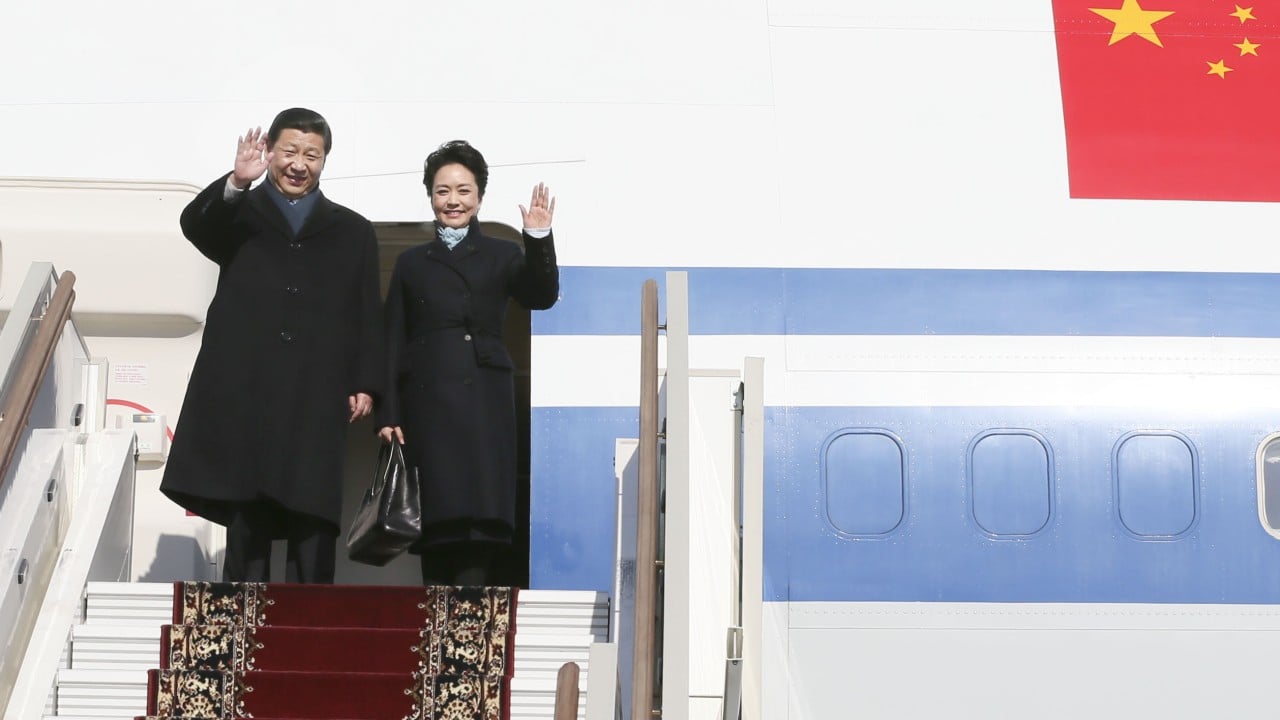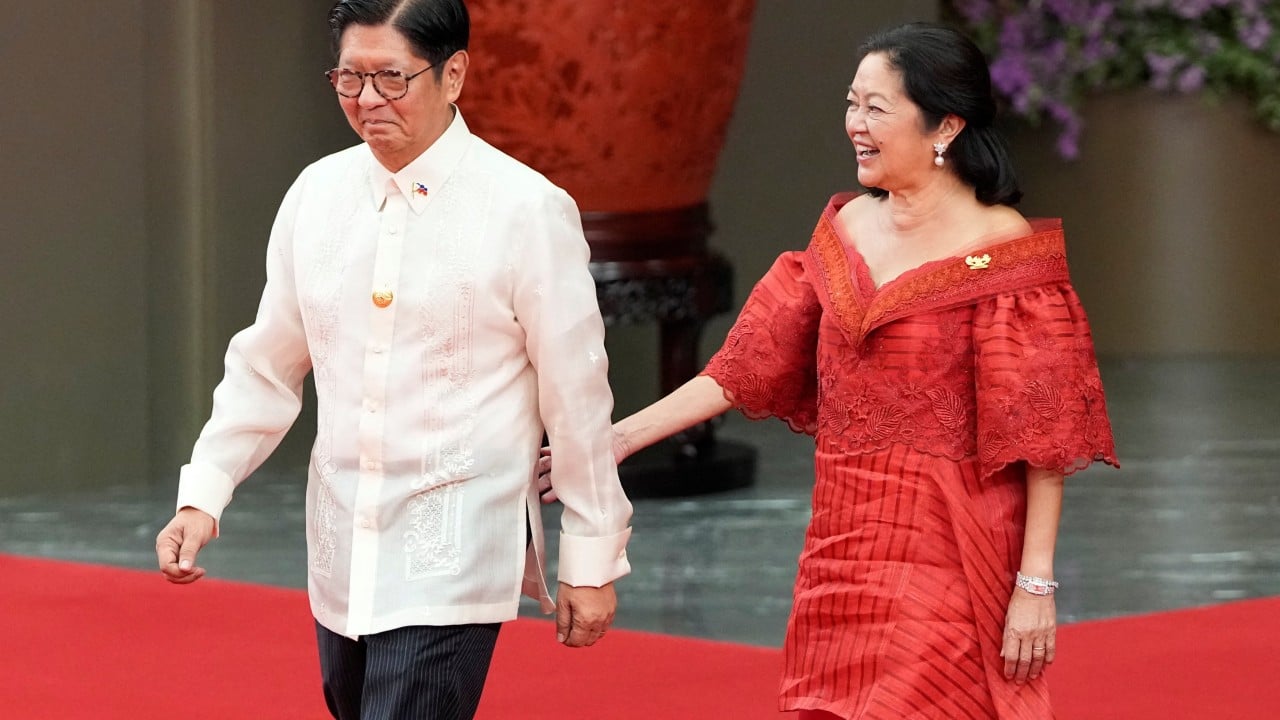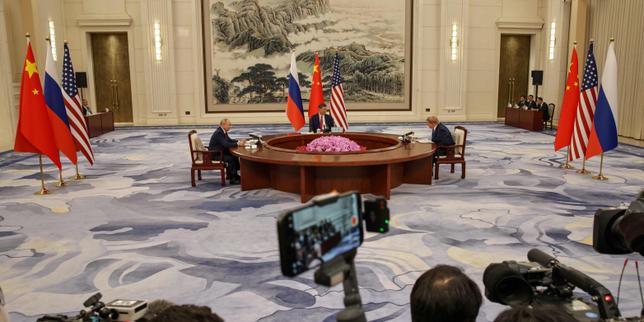
A trilateral summit bringing together Donald Trump, Xi Jinping, and Vladimir Putin in Shenzhen represents a structural departure from post-Cold War multilateral diplomacy. Standard media summaries of such high-level meetings tend to catalog public rhetoric, handshakes, and vague pledges of cooperation while ignoring the underlying incentive structures driving each leader. When three heads of state representing competing economic and security blocs converge in China’s premier technology and manufacturing hub, the physical venue itself operates as a strategic signal. Analyzing the public statements from a Shenzhen summit requires stripping away diplomatic theater and examining the hard constraints—trade deficits, semiconductor chokepoints, energy flows, and territorial security—that dictate what each actor can actually concede versus what they must protect.
The Structural Logic of the Shenzhen Venue
Selecting Shenzhen over Beijing, Moscow, or a neutral third-party territory like Geneva or Riyadh alters the bargaining baseline before a single word is spoken. Beijing functions as the administrative and ideological center of the Chinese state, whereas Shenzhen serves as the operational engine of China’s export-oriented manufacturing and hardware ecosystem. Hosting Trump and Putin in the Pearl River Delta forces both visiting delegations to negotiate inside a physical monument to Chinese supply-chain dominance. You might also find this connected story useful: The Night the Sirens Never Rang and the Trial That Refuses to End.
For Xi Jinping, the venue establishes immediate spatial asymmetry. It visually reinforces the reality that global hardware production, battery manufacturing, and telecommunications infrastructure remain deeply anchored in southern China, regardless of Western decoupling initiatives. For Donald Trump, negotiating in Shenzhen places him directly adjacent to the trade imbalances and industrial offshoring patterns that form the core of his domestic economic platform. The backdrop turns abstract tariff negotiations into a tangible confrontation with Chinese industrial capacity. For Vladimir Putin, Shenzhen highlights Russia’s structural dependence on Chinese industrial goods, dual-use components, and consumer electronics following Western sanctions regimes.
Deconstructing the Three Strategic Vectors
Public statements emerging from a trilateral summit of this magnitude rarely contain binding legal commitments. Instead, they serve as signaling mechanisms aimed at domestic constituencies, financial markets, and secondary geopolitical actors. Mapping the rhetoric across the three delegations reveals three distinct optimization functions. As extensively documented in detailed reports by The New York Times, the effects are notable.
1. The United States Transactional Equilibrium
Donald Trump’s diplomatic posture operates on bilateral, transactional reciprocity rather than institutional alliance maintenance. Within a trilateral setting, his statements focus on compressing trade deficits, securing direct foreign investment commitments into American manufacturing, and decoupling the Moscow-Beijing axis through targeted economic incentives.
- Tariff Escalation as a Bargaining Floor: Public references to sweeping import duties function not merely as protectionist policy, but as an initial anchor in a high-stakes negotiation. By establishing an extreme baseline cost for accessing the U.S. consumer market, Trump forces Beijing to offer concrete purchasing agreements—spanning agricultural commodities, energy exports, and aerospace components—simply to restore the status quo ante.
- The Wedge Strategy: In addressing Putin alongside Xi, the American objective centers on raising the opportunity cost of Sino-Russian alignment. Offering Moscow a pathway toward selective sanctions relief or normalized energy trade in exchange for security concessions in Eastern Europe creates a direct conflict of interest between Beijing’s desire for a distracted West and Moscow’s need for economic liquidity.
- Industrial Repatriation: Statements emphasizing domestic energy production and manufacturing reshoring signal to global capital markets that access to American consumers requires physical capital expenditure inside the United States.
2. The Chinese Dual-Circulation Defense
Xi Jinping’s rhetoric balances two competing imperatives: maintaining access to Western technology and consumer markets while insulating the Chinese economy from external coercion. Statements from the Chinese side consistently emphasize "win-win cooperation," "sovereign development models," and opposition to "unilateral sanctions" and "technological blockades."
- Supply-Chain Entanglement: Xi’s core mechanism for deterring severe U.S. economic warfare is demonstrating the mutual assured destruction of rapid decoupling. By framing Chinese manufacturing as indispensable to global inflation control and green-energy transitions, Beijing seeks to mobilize American corporate lobbyists and financial institutions against aggressive White House trade actions.
- Sanctions Neutrality: Vis-à-vis Putin, Xi must project rhetorical solidarity against Western hegemony while avoiding secondary sanctions that would sever major Chinese state banks from the U.S. dollar clearing system. Consequently, Chinese statements endorse broad principles of indivisible security without committing to formal mutual defense treaties.
- Technological Self-Reliance: Located in the headquarters city of Huawei, Tencent, and BYD, Xi’s emphasis on "new quality productive forces" serves as a warning that export controls on advanced lithography and high-end semiconductors accelerate domestic Chinese substitution rather than halting technological progression.
3. The Russian Asymmetry Mitigation
Vladimir Putin enters a Shenzhen trilateral summit from a position of acute economic asymmetry relative to the other two participants. With Russia’s nominal GDP representing a fraction of either the American or Chinese economies, Putin’s primary objective is converting military resilience, nuclear parity, and raw commodity exports into diplomatic equal footing.
- Commodity and Transit Monopolization: Putin’s statements emphasize long-term energy security, Arctic shipping routes, and fertilizer and grain supply chains. By positioning Russia as the indispensable resource hub for Eurasia, Moscow seeks to lock in multi-decade off-take agreements that insulate its fiscal budget from price caps.
- Multipolar Architecture: Rhetoric championing the expansion of BRICS, non-dollar settlement mechanisms, and alternative financial messaging systems aims to erode the structural power of the U.S. Treasury. Even if alternative currencies remain technically unviable for global reserve status, localized bilateral currency swaps reduce Moscow’s vulnerability to asset freezes.
- Balancing Beijing: While public statements celebrate a "no-limits" partnership with China, participating in a direct trilateral dialogue with Washington allows Putin to signal to Xi that Moscow retains independent diplomatic optionality and will not accept permanent status as a junior economic vassal.
The Trilemma of Trilateral Bargaining
Standard journalistic analyses treat statements from Trump, Xi, and Putin as independent declarations. In reality, their positions are locked into a classic geopolitical trilemma where optimizing any two bilateral relationships destabilizes the third.
First, a Washington-Beijing trade stabilization requires China to drastically increase purchases of American liquefied natural gas, crude oil, and agricultural products. Every barrel of American crude or metric ton of U.S. soybeans imported by China directly displaces market share currently held by Russian exporters. Therefore, meaningful U.S.-China economic reconciliation inherently damages Russian fiscal revenues.
Second, a Washington-Moscow security accommodation—involving territorial settlements in Eastern Europe and phased sanctions relief—removes Russia’s existential dependence on Chinese financial and industrial lifelines. Once Moscow regains access to European energy markets or Western capital goods, Beijing loses its monopsony buyer power over discounted Russian pipeline gas and crude oil.
Third, a Beijing-Moscow strategic consolidation—deepening military-industrial integration and alternative payment networks—triggers unified bipartisan retaliation in Washington, accelerating secondary sanctions, capital controls, and complete tariff walls that threaten China’s export-driven growth model.
Because no single outcome satisfies all three parties simultaneously, the rhetoric produced during a Shenzhen summit relies heavily on constructive ambiguity. Each leader issues broad statements of principle that allow them to claim diplomatic victory domestically while deferring the zero-sum distributional conflicts to lower-level working groups.
Evaluating the Credibility of Summit Signals
To separate actionable policy shifts from routine diplomatic noise, analysts must evaluate summit statements against structural constraints and observable cost functions. Statements carry zero predictive weight unless backed by irreversible resource allocation or institutional friction.
High-Signal Indicators (Credible Commitments)
- Specific Quota and Tariff Schedules: Vague pledges to "expand bilateral trade" consistently fail to materialize. Credible shifts require published Harmonized System (HS) tariff code exemptions, specific tonnage commitments for agricultural and energy commodities, and clear enforcement mechanisms with automatic snap-back provisions.
- Export Control Modifications: Watch for precise technical adjustments to Entity List designations or Bureau of Industry and Security (BIS) rules regarding semiconductor manufacturing equipment, AI accelerators, and critical mineral processing. Changes in licensing thresholds indicate genuine strategic bargaining.
- Central Bank Settlement Infrastructure: Rhetoric surrounding de-dollarization only becomes operational when accompanied by formal clearing-bank authorizations, cross-border liquidity swap lines, and sovereign bond issuance in local currencies.
Low-Signal Indicators (Diplomatic Noise)
- Joint Communiqués on Global Governance: Shared statements endorsing climate cooperation, artificial intelligence safety frameworks, or counter-narcotics task forces serve primarily as low-cost confidence-building measures. They do not alter the core balance of economic or military power.
- Personal Rapport Narratives: Media fixation on personal chemistry between leaders ignores institutional inertia. National security bureaucracies, legislative bodies, and corporate supply chains operate on multi-year capital cycles that override temporary personal warmth between executives.
- Memorandum of Understanding (MOU) Totals: Headline figures touting hundreds of billions of dollars in non-binding MOUs rarely translate into deployed capital. Without sovereign guarantees or project-level financing structures, these figures function purely as public relations metrics.
Limitations of Summit Diplomacy in Fractured Markets
Even when trilateral negotiations produce concrete frameworks, three structural constraints limit their durability.
First, domestic political cycles create severe time-inconsistency problems. Executive agreements reached without legislative ratification remain vulnerable to immediate reversal during subsequent election cycles or shifts in congressional control. Global corporations recognize this fragility and refuse to reverse multi-billion-dollar supply-chain diversification strategies—such as "China Plus One" manufacturing shifts to Vietnam, India, or Mexico—based solely on executive promises.
Second, technological competition operates on an exponential curve that outpaces diplomatic treaties. By the time negotiators finalize definitions and verification protocols for dual-use technologies like advanced semiconductors, quantum computing, or autonomous weapon systems, the underlying hardware architectures have already shifted, rendering the regulatory text obsolete.
Third, private-sector risk aversion acts as an independent enforcement mechanism. Even if governments lift formal sanctions or tariffs, global commercial banks, maritime insurers, and multinational conglomerates maintain strict compliance regimes. The fear of future regulatory penalties or reputational damage prevents capital from flowing back into high-risk jurisdictions at the speed politicians anticipate.
Operational Playbook for Capital and Supply-Chain Allocation
Decision-makers managing cross-border supply chains, sovereign risk exposure, or commodity procurement cannot base capital allocation on the optimistic tone of summit press conferences. Instead, corporate and institutional strategy must hedge against the structural friction inherent in the U.S.-China-Russia triangle.
- Audit Tier-2 and Tier-3 Supply Dependencies: Do not rely on Tier-1 assembly location as a metric of geopolitical insulation. Map raw material sourcing, sub-component fabrication, and chemical processing back to the origin jurisdiction to identify hidden exposure to sudden tariff snap-backs or export bans on critical minerals like gallium, germanium, and graphite.
- Price Political Risk into Long-Term Off-Take Contracts: Commodity and energy buyers must build force majeure clauses and currency-conversion triggers directly into supply agreements to account for sudden shifts in secondary sanctions enforcement or maritime insurance availability.
- Maintain Dual-Track Infrastructure: Enterprises operating across both Western and Eurasian markets must structurally ring-fence their data governance, enterprise resource planning (ERP) systems, and financial clearing channels. Operating parallel compliance architectures increases baseline overhead by 12% to 18%, but prevents catastrophic operational paralysis when bilateral relations inevitably cycle back into confrontation.