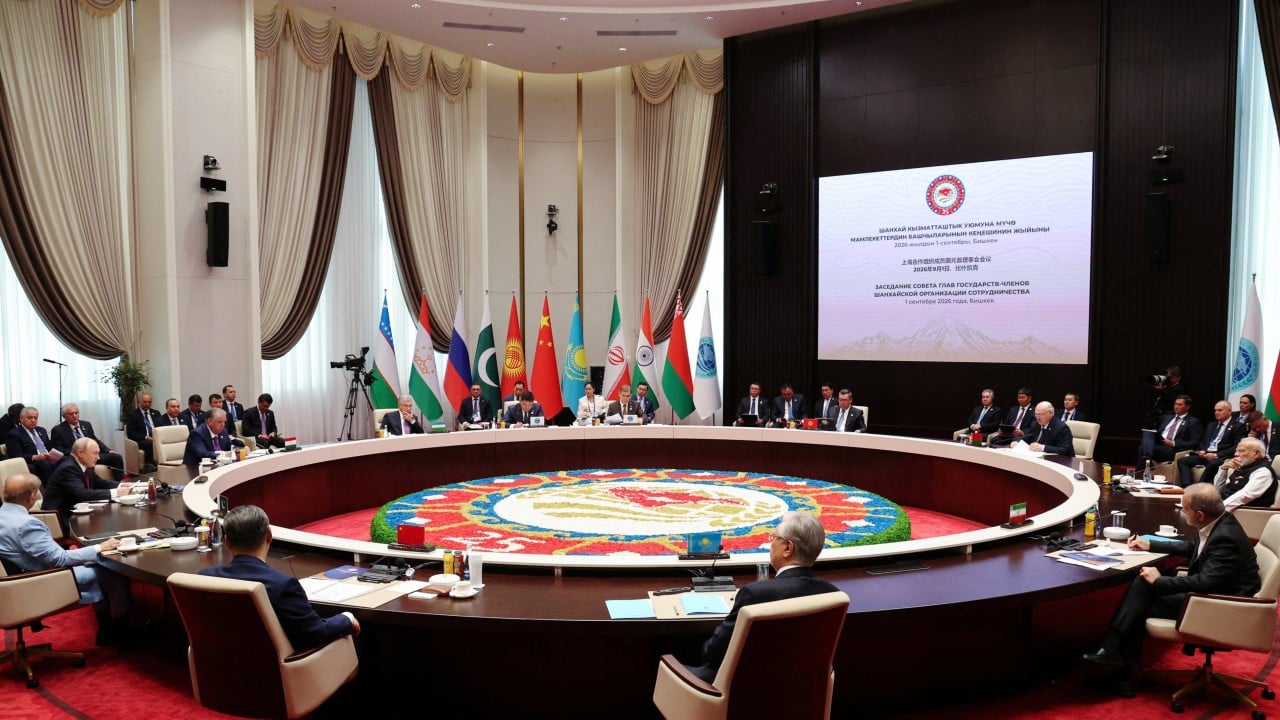
Western foreign policy minds spent decades waiting for a conventional rival to emerge. They expected a mirror image of NATO—a hard military pact with unified command structures, mutual defense clauses, and clear red lines. They built their entire containment strategy around tracking troop movements and signing bilateral defense treaties. Meanwhile, the Shanghai Cooperation Organisation grew into the largest regional grouping on earth by doing the exact opposite.
It doesn't have an integrated military command. It doesn't force members into rigid defense commitments. Yet, the organisation systematically chips away at American global preeminence.
You won't find Washington's traditional tools of statecraft working effectively here. When an institution explicitly rejects the alliance model while still coordinating diplomatic, economic, and security positions among nations spanning from Beijing to Moscow and New Delhi, standard diplomatic playbooks break down.
The Power of Non-Alignment
Most analysts misunderstand the group because they view it through a Cold War lens. If a bloc isn't a military alliance, conventional wisdom assumes it lacks teeth. That's a massive blind spot. The Shanghai Cooperation Organisation functions as a diplomatic bazaar where nations with vastly different interests come together to coordinate positions against Western hegemony.
Take India and China. They share a heavily militarized border and have historical rivalries. In a traditional Western alliance framework, housing both nations under one roof would be impossible. Yet, both participate actively. They sit at the same table because membership requires zero surrender of strategic autonomy.
Washington relies heavily on exclusivity. Treaties like NATO or bilateral security pacts in the Indo-Pacific demand alignment, often forcing smaller states into binary choices between competing superpowers. The Shanghai Cooperation Organisation offers an alternative template. States can hedge their bets. They can maintain trade ties or security dialogues with the West while coordinating regional security and economic alternatives with Eurasian heavyweights.
Economic and Technological Routing
The real erosion of American power happens away from the diplomatic microphones. Financial sanctions and dollar-domination form the bedrock of modern US coercive power. When Washington cuts a country off from the SWIFT banking system or imposes unilateral trade restrictions, it relies on a unipolar financial architecture.
Within this Eurasian grouping, members are quietly building redundancies. Discussions around alternative development funding mechanisms, non-dollar trade settlements, and integrated technological systems—such as alternative satellite navigation networks—provide a cushion against Western economic pressure.
When nations can trade, secure borders, and finance infrastructure projects without needing Washington's blessing or Western institutional backing, the leverage of the US dollar diminishes. It is a slow bleed rather than a sudden rupture. Trade corridors expand across Central Asia, energy deals bypass Western intermediaries, and local currencies handle a growing share of regional commerce.
Security Coordination Without Mutual Defense
Security cooperation inside the bloc focuses heavily on what Beijing and Moscow term the three evils: terrorism, separatism, and extremism. Through regional counter-terrorism structures based in Tashkent, member states share intelligence, conduct joint drills, and manage regional stability independently of Western oversight.
This creates a self-contained security bubble across Eurasia. When regional crises flare up, local actors turn to regional frameworks rather than appealing to Western security guarantees or United Nations bodies dominated by Western votes. By managing internal Eurasian stability on their own terms, these governments deny the United States the geopolitical entry points it historically used to project power into Central and South Asia.
Dealing With a Distributed System
Traditional deterrence fails against a diffuse network. You cannot sanction a club that refuses to act as a formal bloc, nor can you pressure individual members to leave an organization that demands so little formal subordination.
The challenge for Western strategists is that this multilateral forum offers tangible utility to its participants. It solves real regional security problems, facilitates trade, and provides a unified voice against unilateral Western sanctions. As long as it delivers those practical benefits without choking off its members' independent foreign policies, its gravity will only pull more states into its orbit.
Ignoring this dynamic or dismissing it as mere talk misses how international order actually changes. Empires rarely fall to sudden invasions; they get bypassed by alternative systems that slowly render their rules obsolete.


